Market Context and the Economic Landscape of Tech
The current fiscal climate for technology procurement is defined by the ripple effects of the 2024–2025 supply chain disruptions, which saw the cost of NAND flash memory and DRAM modules climb steadily. Manufacturers have responded by refining their entry-level offerings, focusing on essential features rather than superfluous aesthetics. Industry analysts note that the sub-$50 market has shifted from "disposable" hardware to devices that prioritize durability and long-term utility. This shift is partially driven by a consumer base that is increasingly wary of planned obsolescence, pushing manufacturers to integrate replaceable components, such as standard USB-C charging cables, rather than proprietary, non-serviceable connectors.
Audio Solutions: Balancing Performance and Portability
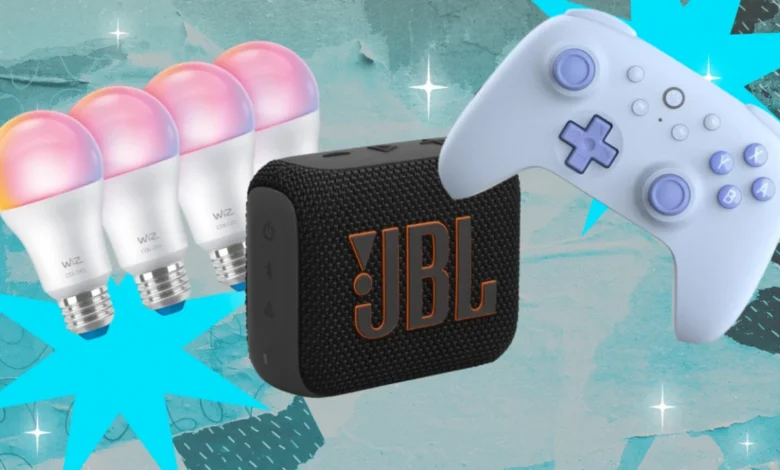
The portable speaker market, once dominated by devices that sacrificed fidelity for extreme portability, has seen a technological convergence. The JBL Go 4 exemplifies this trend. Despite its compact form factor, it maintains an IP67 rating, meaning it is entirely protected against dust ingress and can withstand immersion in up to one meter of water for 30 minutes. This durability profile marks a significant improvement over the standard consumer-grade speakers of the early 2020s.
A critical, often overlooked feature in this sector is the implementation of multi-device synchronization. The ability to daisy-chain portable speakers via a single-button interface—a feature now standard in many sub-$50 units—allows users to create an ad-hoc sound system without the need for complex software or high-end proprietary hubs. Alternatively, the Anker Soundcore 2 remains a cornerstone of the budget audio segment, offering a stark contrast to the JBL Go 4 by prioritizing battery longevity. With 24 hours of playback, it caters to users who prioritize endurance over the ruggedized, dust-proof protection of more specialized outdoor speakers.
Tracking and Ecosystem Integration
The rise of object-tracking technology has fundamentally changed consumer behavior regarding personal asset management. Apple’s AirTag, retailing at approximately $30, remains the gold standard for users within the iOS ecosystem. Its efficacy is derived from the "Find My" network, which leverages the billions of active Apple devices globally to act as a mesh-networked beacon.
For those outside the Apple ecosystem, the landscape is more fragmented. The Life360 Tile ecosystem provides a robust, platform-agnostic alternative. While the subscription model associated with advanced tracking features has drawn some criticism, the hardware itself—including the Pro and Slim iterations—remains highly functional for Android and cross-platform users. The Tile Slim, specifically, demonstrates the evolution of thin-film technology, fitting into standard wallets while maintaining a Bluetooth range that satisfies the needs of most urban users.
The Evolution of Wearable Audio
The transition from wired to wireless earbuds has accelerated, yet wired options maintain a significant market share due to their inherent lack of latency and the absence of charging requirements. The Sennheiser CX 80U serves as a reminder of the benefits of a direct, analog-to-digital connection. In scenarios where lossless audio is prioritized, the absence of Bluetooth compression ensures a higher fidelity experience that wireless alternatives—even those with high-end codecs—struggle to match at similar price points.

Conversely, the Anker Soundcore P31i represents the current apex of budget wireless audio. The inclusion of Active Noise Cancellation (ANC) at this price point would have been technically unfeasible five years ago. Modern, low-power DSP (Digital Signal Processing) chips have enabled manufacturers to deliver effective noise attenuation in sub-$50 earbuds, utilizing multiple microphones to analyze and cancel ambient frequencies in real time.
Smart Home and Connectivity
The democratization of the smart home has been largely fueled by affordable, interoperable hardware. WiZ smart light bulbs, currently available in multi-pack configurations that bring the per-unit cost down significantly, are a prime example of the "utility-first" design philosophy. By leveraging existing Wi-Fi protocols rather than requiring a dedicated, expensive hub, these devices lower the barrier for home automation.
In the realm of media consumption, the Amazon Fire TV Stick 4K Plus has become a benchmark for streaming performance. By supporting modern HDR standards including Dolby Vision and HDR10+, the device ensures that hardware is not the bottleneck for content quality. The inclusion of Wi-Fi 6 compatibility is a notable upgrade, as it allows for the high bandwidth required for 4K streaming even in congested network environments.
Gaming and Power Management
Third-party gaming peripherals have historically suffered from poor build quality, but the 8BitDo Ultimate 2C highlights a shift toward high-quality hall-effect sensors and ergonomic designs in the budget sector. By mirroring the layout of professional-grade console controllers, 8BitDo has captured a significant portion of the market that demands precision without the $70–$90 price tag associated with first-party hardware.
Power management remains a critical concern for mobile-first consumers. The Iniu 10,000mAh portable charger has gained traction by prioritizing standardized, high-wattage output. With 45W of power delivery, it is capable of fast-charging modern smartphones and even lower-power tablets, effectively bridging the gap between a portable emergency battery and a travel-ready power supply.
Broader Implications and Future Outlook
The continued availability of high-quality electronics under $50 suggests that manufacturers are finding success in high-volume, low-margin business models. This strategy is largely enabled by the standardization of USB-C as a universal power and data protocol. As the European Union and other jurisdictions enforce stricter electronic waste regulations, the industry is seeing a move toward modularity. Future iterations of these devices will likely focus on even greater repairability, with a focus on battery replacement, which remains the primary failure point for most portable consumer electronics.
For the consumer, the takeaway is clear: the threshold for "quality" technology has shifted. Where once a $50 purchase was considered a compromise, it now frequently secures a device that performs within 80-90% of the capability of a product costing three times as much. The primary difference now lies in luxury materials and brand-specific software ecosystems, rather than core functional performance. As 2026 progresses, the competitive nature of this price bracket will likely continue to drive innovation in power efficiency and wireless connectivity, ensuring that the budget-conscious consumer remains well-served by the market.