Neil LaBute Returns to Indie Roots With Dark Thriller Murderous Ahead of Oldenburg Lifetime Achievement Honor

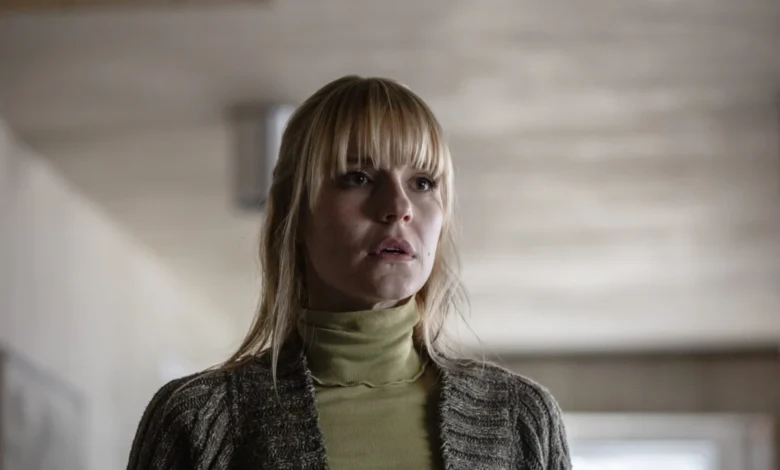
Over a career spanning nearly three decades, playwright and filmmaker Neil LaBute has consistently navigated a provocative intersection between critical acclaim and heated public controversy. Emerging in the late 1990s as a vital and unapologetic voice in contemporary drama, LaBute is now stripping away the layers of Hollywood bureaucracy to return to the low-budget, highly controlled indie aesthetics that originally defined his ascent. His latest feature, the dark comedy thriller Murderous, is set to make its world premiere at the prestigious Oldenburg Film Festival in Germany, where the director will also be honored with a lifetime achievement award.
Shot entirely on a shoestring budget across two intense one-week production blocks in the historic Hudson Valley, Murderous represents a deliberate homecoming for an auteur who has spent decades alternating between boundary-pushing independent theater, major studio missteps, and television projects. Co-starring Gia Crovatin, Thomas Sadoski, and Jordan Baker, the film channels the tightly wound, psychologically fraught atmospheric tension of early Alfred Hitchcock.
From Indie Darling to Hollywood Contender
LaBute’s cinematic journey began with a pair of sharp, fiercely observed indie darlings that instantly galvanized the film community: In the Company of Men (1997) and Your Friends & Neighbors (1998). Both films earned immediate festival buzz and established LaBute as a fearless chronicler of the darker impulses of human behavior. However, the biting, deeply cynical dialogue he assigned to his male characters also earned him an early and persistent label as a misogynist—a cross the filmmaker has carried throughout his professional life.

Despite the controversy, LaBute successfully parlayed his indie notoriety into mainstream commercial viability. In 2000, he directed the dark comedy hit Nurse Betty, starring Renée Zellweger, Morgan Freeman, and Chris Rock. The film proved that the independent provocateur could comfortably manage larger budgets, complex scheduling, and star-studded studio casts. He maintained this momentum with the literary adaptation Possession, starring Gwyneth Paltrow, and the critically lauded 2011 film adaptation of his own stage play, The Shape of Things, which featured Paul Rudd and Rachel Weisz.
Yet, LaBute’s encounter with major studio tentpoles also highlighted the precarious nature of high-profile Hollywood ventures. His high-profile 2006 remake of The Wicker Man—starring Nicolas Cage in a famously meme-ified, bee-tormented nightmare—was mercilessly dissected by purist fans of the 1973 original. Reflecting on the misfire years later, LaBute acknowledged the miscalculation, noting that if he had understood how fiercely guarded the original film was within the horror community, he might have avoided the project entirely.
Anatomy of an Independent Production: The Making of Murderous
Murderous marks a sharp pivot away from studio machinery and back to the scrappy, resource-efficient methodologies of LaBute’s early career. The genesis of the film was entirely organic, sparked when a New York Times photographer friend introduced LaBute and his real-life partner and collaborator, Gia Crovatin, to an 18th-century mill-turned-residence in Salt Point, New York. Featuring a still-turning water wheel and the constant, ambient sound of rushing water, the historic location provided an instantly cinematic and unsettling backdrop.
Crovatin, who stars as an up-and-coming screenwriter named Marion, faced the familiar hurdles of independent casting. While LaBute initially sent the script out with the intention of securing a prominent "scream queen" actress to attract larger financing, the realities of the independent market proved difficult. Crovatin, who came close to landing a major role in the HBO series The Pitt before facing the disappointment of rejection, urged LaBute to find a way to make the film locally and independently.

With funding secured through a singular, dedicated investor who believed in the vision, the production moved with remarkable speed. The crew utilized a decentralized, grassroots approach reminiscent of a community barn-raising. Local entities, including the Hudson Valley Film Commission, regional crews, and local friends, donated time, resources, and housing to ensure the production crossed the finish line.
The film was shot across ten total days divided into two blocks—one in November and one in January—complete with a single day of rehearsal for each block. Due to the rapid turnaround and ultra-low budget, the production did not qualify for state tax incentives, a hurdle the filmmakers bypassed in favor of absolute creative control.
A Hitchcockian Thriller and a Critique of the Industry
Narratively, Murderous explores themes of paranoia, creative ownership, and escalating psychological terror. The plot follows Marion as she contends with an ex-boyfriend and possible stalker—portrayed by The Newsroom and John Wick actor Thomas Sadoski—who aggressively claims she stole his writing idea. The film deliberately inverts traditional thriller tropes, positioning Marion as seemingly vulnerable in the opening acts before the power dynamics shift violently as she finds herself cornered.
The film’s second half incorporates a biting critique of the modern studio system and the fickle nature of Hollywood financing—sentiments drawn directly from LaBute’s extensive, decades-long experience within the industry. The director noted that the fragility of studio greenlights, where a single missing financier can collapse an entire multi-million-dollar enterprise overnight, reflects a system built on "smoke and mirrors."

Navigating Controversy and the Digital Landscape
LaBute’s return to low-budget filmmaking arrives at a time of profound transformation for the entertainment industry. Embracing the digital age, LaBute views the current media landscape—spanning smartphones, streaming platforms, and decentralized distribution networks—as an unprecedented frontier for independent creators. Despite the ongoing challenges of securing visibility in a crowded marketplace, he argues that the proliferation of viewing formats has created a "Wild West" of opportunity for filmmakers willing to bypass traditional gatekeepers.
Concurrently, the discourse surrounding LaBute’s legacy continues to evolve. Discussing the accusations of misogyny that dogged his early career, Crovatin and LaBute reflect on the vital function of theater and cinema as safe spaces to confront uncomfortable, polarizing ideas. LaBute maintains that artists must embrace divisiveness rather than aim for an inert, easily forgotten audience response.
Following its world premiere at the Oldenburg Film Festival—where LaBute’s career will be commemorated with a lifetime achievement honor—Murderous will seek domestic distribution partners. Whether the film finds its ultimate home on a streaming platform or in traditional theaters, its production model stands as a testament to the enduring viability of guerrilla-style independent filmmaking in the 21st century.