Scholars at Risk Report Highlights Rapid Erosion of Academic Freedom and Institutional Autonomy in the United States

The landscape of American higher education is undergoing a profound and troubling transformation, marked by an accelerating erosion of institutional autonomy, increased government interference, and mounting pressure on free expression. According to a comprehensive global analysis released by the advocacy network Scholars at Risk (SAR), the United States increasingly stands out among democratic nations for implementing illiberal policies, laws, and extralegal actions targeting universities, colleges, and campus communities. While the deterioration of academic freedom is a global phenomenon, the pace and nature of the decline within the United States have alarmed civil liberties advocates, educators, and legal scholars alike, prompting urgent calls for defensive institutional strategies and systemic policy reforms.
The findings from Scholars at Risk form part of a broader, ongoing international assessment evaluating attacks on higher education across various political regimes. Against a backdrop of deteriorating global conditions for academic freedom, the United States has transitioned from a recognized bastion of open intellectual inquiry to a cautionary example of how democratic institutions can be undermined from both within and outside the government. State legislation limiting curricula, weakening tenure protections, and subverting shared governance structures have combined with federal funding threats and political pressures to create a chilling effect across campuses nationwide.
The Chronology of Decline: A Decade of Policy Shifts
To fully understand the current crisis facing American higher education, it is necessary to examine the historical trajectory of academic freedom over the past decade. The warning signs highlighted by SAR align closely with empirical findings from the Academic Freedom Index, which tracks institutional autonomy and scholarly expression globally. In 2019, the Academic Freedom Index formally classified the United States as a nation with fully free academic freedom. However, the intervening years have witnessed a dramatic and unprecedented downward spiral.
Between 2015 and 2025, the United States experienced a staggering 50% decline in university autonomy. More alarming still is the velocity of this regression. Data from the index indicates that the rate of decline in the U.S. over the past six years has surpassed the early downward trajectories observed in Hungary and Turkey during those nations’ transitions toward autocratic governance. By 2025, the index downgraded the United States from "fully free" to "moderately restricted," placing it precariously on the verge of being reclassified as "severely restricted." For context, Hungary currently languishes in the "severely restricted" tier, while Turkey is rated as "completely restricted."
This decade-long degradation has not occurred in a vacuum; it has been driven by coordinated political campaigns, legislative overreach, and the weaponization of public funding. Over successive administrations, government entities at both the state and federal levels have increasingly viewed universities not as independent centers of critical thought and public good, but as ideological battlegrounds that require external correction and administrative control.
Government Interference and Ideological Control
Government intervention in higher education has assumed numerous forms, ranging from explicit legislative mandates to coercive financial maneuvers. SAR’s report emphasizes that political actors frequently disguise their interventions in neutral, appealing terms such as fiscal discipline, public accountability, and anti-discrimination measures. However, behind these administrative euphemisms lies a concerted effort to impose ideological control over curricula, research agendas, and personnel decisions.
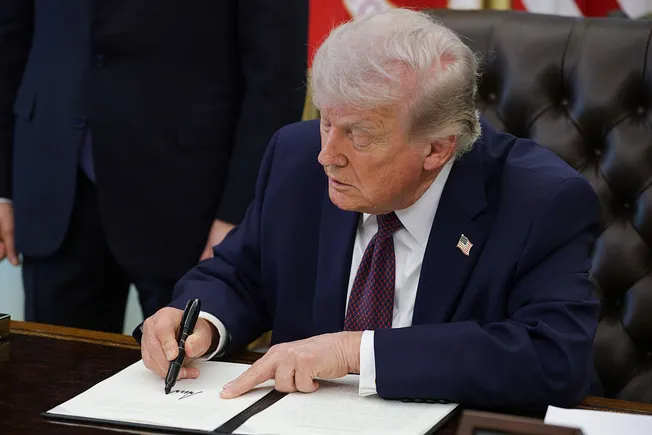
At the federal level, these tactics have frequently involved the use of financial leverage. The report highlights instances from previous years, including threats by the Trump administration to withhold federal funding from colleges that failed to comply with specific policy demands. High-profile institutions, such as Harvard University, famously resisted these federal ultimatums, leading to protracted legal and institutional standoffs. Nevertheless, the administration successfully brokered settlements and compliance agreements with several other prominent universities. Furthermore, the introduction of proposed federal compacts designed to reward institutions that adopted designated policy goals with priority access to research funding demonstrated an ongoing effort to align academic priorities with partisan objectives.
State-level interventions have proven equally damaging, particularly regarding classroom instruction and faculty governance. State legislatures have increasingly enacted statutes restricting how sensitive topics—most notably race, gender, and systemic inequality—can be taught in public universities. For instance, public university systems in Texas, including the Texas A&M University System and the Texas Tech University System, have implemented restrictive policies limiting faculty instruction on gender and race. These measures have triggered significant legal pushback, including lawsuits filed by the American Association of University Professors (AAUP) challenging the constitutionality and statutory authority of these teaching bans.
The Rise of Self-Censorship and Internal Repression
While direct state and federal actions represent a clear danger, SAR’s analysis underscores that the threats to academic freedom do not originate solely from external government bodies. Internal pressures, institutional risk aversion, and politically appointed leadership boards have compounded the crisis from within.
Under intense political scrutiny, several public universities and university systems have adopted vaguely worded and overly broad institutional policies aimed at curbing personal expression and student protest. These administrative frameworks have drastically increased the likelihood that faculty members and students will engage in preemptive self-censorship out of fear of professional retaliation, termination, or disciplinary action. Legal challenges mounted against these speech-restrictive policies argue that they violate foundational First Amendment protections and chill legitimate academic discourse.
The human cost of this climate of fear was vividly illustrated following events on individual campuses. The report noted that at least 60 instructors faced severe professional retaliation over commentary related to the killing of right-wing activist Charlie Kirk on the campus of Utah Valley University. These disciplinary actions subsequently entangled universities in costly litigation and forced them into expensive legal settlements to resolve claims of wrongful retaliation and violations of free expression rights.
Moreover, the appointment of political figures and partisan loyalists to university leadership roles and governing boards has accelerated the erosion of shared governance. When institutional leadership prioritizes political alignment over academic integrity, the traditional firewall protecting faculty and students from outside interference collapses.
Broader Impact and Implications for Democracy
The systematic dismantling of academic freedom carries profound implications for the broader health of American democracy. Historically, universities have served as society’s primary incubators for objective research, rigorous debate, and evidence-based policy formulation. When governments ban specific research topics, cut funding on ideological grounds, and penalize dissenting viewpoints, the societal capacity to address complex challenges—ranging from public health crises to economic inequality—is severely diminished.
Experts point out that the erosion of university autonomy weakens public trust in scientific and educational institutions. When academic institutions are perceived as partisan instruments rather than independent arbiters of knowledge, society loses a vital mechanism for truth-seeking and accountability. Furthermore, the chilling effect on students ensures that the next generation of citizens and leaders is trained in an environment that discourages critical inquiry and rewards ideological conformity.
Legal scholars analyzing the trend emphasize that the increasing frequency of litigation—such as the AAUP lawsuits against the Texas university systems—represents both a symptom of the disease and a vital line of defense. However, reliance on the judicial system to protect academic freedom is inherently reactive and costly, often draining institutional resources that should be dedicated to education and research.
Recommendations and Path Forward
In response to these multi-front threats, Scholars at Risk has issued a series of concrete recommendations aimed at safeguarding the integrity of higher education. SAR urges colleges and universities to take a proactive stance in defending the free speech and expression rights of all members of the campus community, including faculty, students, and staff.
Additionally, academic institutions are encouraged to push state and federal authorities for greater accountability regarding actions that undermine academic freedom. Rather than quietly conceding to political pressure or rushing into compliance agreements, university leadership must stand firm in defense of institutional autonomy.
Finally, SAR emphasizes the critical need to strengthen shared governance procedures. Robust shared governance ensures that faculty members retain authority over curriculum, academic standards, and faculty appointments, thereby creating a structural defense against the arbitrary whims of external politicians and donors. Only through a recommitment to these foundational principles can American higher education hope to reverse its rapid descent and restore its standing as a global model of academic freedom.