Werner Herzog Receives Donostia Award at Politically Charged San Sebastian Film Festival Opening Ceremony

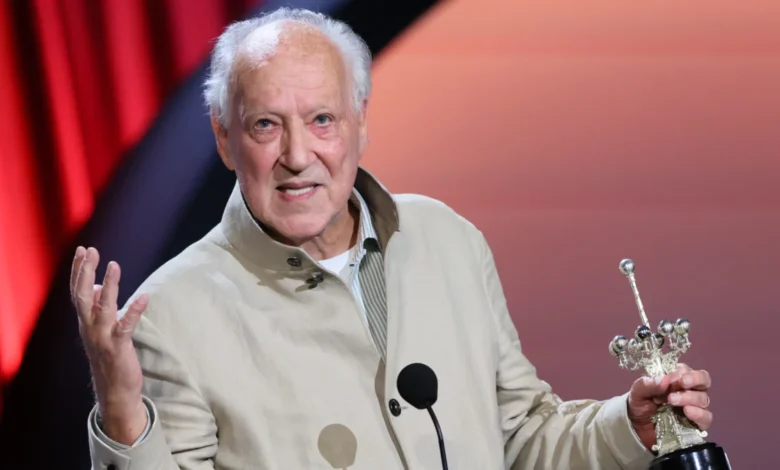
German cinematic pioneer Werner Herzog was honored with the prestigious Donostia Award on Friday evening at the Kursaal Theatre, highlighting the inauguration of the San Sebastian International Film Festival in northern Spain. The ceremony, which brought together luminaries of European cinema, served as a platform for both artistic celebration and direct geopolitical commentary. Surrounded by peers who greeted him with a prolonged standing ovation, Herzog reflected on his decades-long career, his unique historical connection to the Basque region, and the evolving landscape of global filmmaking.
The event, running from September 18 to 26, 2026, officially commenced with the screening of Fatih Akin’s Ghost Song, a visually striking feature heavily influenced by anime and manga aesthetics. However, the festival’s opening night balanced its cinematic showcases with strong political messaging, addressing ongoing international conflicts, civil liberties, and the safety of filmmakers worldwide.
Herzog Honored by Orlando Bloom and Reflects on Basque Roots
The highlight of the early evening proceedings was the presentation of the Donostia Award, San Sebastian’s highest accolade, which recognizes lifetime achievement and significant contributions to the world of cinema. Actor Orlando Bloom presented the honor to the legendary German director, screenwriter, and producer.
Taking the stage to accept the award, Herzog expressed profound admiration for his presenter. "What an honor to receive it from the very hands of Orlando Bloom," Herzog told the rapt audience. "He’s a living legend at his young age already. He is a treasure of cinema."
Herzog, whose cinematic footprint spans masterworks such as Aguirre, the Wrath of God (1972), Fitzcarraldo (1982), Grizzly Man (2005), and Cave of Forgotten Dreams (2010), used his acceptance speech to share a personal anecdote tying him to the Basque Country. Rejecting the notion that he was an outsider, the director recounted a massive pilgrimage he undertook decades ago.
"I’m here standing in front of you, not as a foreigner," Herzog remarked. "I’ve had a connection to you, the Basque people, through an early film of mine—[1972’s] Aguirre, the Wrath of God."
The director detailed how he once traveled entirely on foot, traversing more than 1,000 kilometers from the Cannes Film Festival up into the rugged Pyrenees mountain range. With characteristic self-deprecating humor, he added, "But I must confess, I ended up in Biarritz, not San Sebastian."
Despite missing his intended destination, Herzog noted that his interactions with the Basque people left an indelible impression on him. Furthermore, he revealed a surprising personal interest, stating that he closely follows Spain’s national poetry competitions. "I feel like as if I belong here. It is a country of poetry. It’s a country of poets, and I receive this here from the poets. Thank you very much," he concluded.
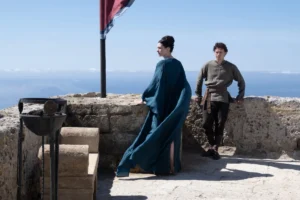
At the festival, Herzog is also presenting his latest feature, Bucking Fastards, a star-studded project featuring Kate Mara, Rooney Mara, Orlando Bloom, and Domhnall Gleeson.
A Politically Charged Opening Night
While the celebration of Herzog’s career anchored the artistic portion of the evening, the opening ceremony was heavily punctuated by explicit political declarations from the stage. Hosts Fariba Sheikhan and Mariona Terés delivered remarks that directly addressed humanitarian crises and threats to free expression, drawing thunderous applause from the gathered film community.
"We join the myriad of voices calling for an end to genocide, like the one happening in Gaza," Sheikhan and Terés told the crowd. "And we stand in solidarity with the directors of the film NAZA, Yuval Abraham and Rachel Szor, who have been threatened by the Israeli government."
The festival’s outspoken stance on the Middle East follows a precedent set at the previous year’s event, where organizers issued a formal call for an immediate ceasefire in Gaza. At the time, festival leadership condemned the actions of Israeli Prime Minister Benjamin Netanyahu’s government, labeling the military campaigns against the Palestinian population as unimaginable massacres.
The continued focus on the region at the 2026 edition highlights the growing intersection between contemporary international cinema and geopolitical advocacy. Beyond the situation in Gaza, the ceremony’s presenters broadened their address, emphasizing the collective necessity to put an end to the unilateral breaking of international law, colonialist looting, sexual violence, and systemic human rights violations across the globe.
The Controversy Surrounding NAZA and Its Creators
The mention of directors Yuval Abraham and Rachel Szor at the San Sebastian opening underscores the high-stakes political environment surrounding their breakout documentary, NAZA. The film recently captured significant international attention at the Venice International Film Festival, where it set a new record for the longest standing ovation during its Lido premiere before ultimately winning the Special Jury Prize.
NAZA centers on harrowing testimony from 24 Israeli military officers. In the film, these whistleblowers outline the systematic protocols and operational frameworks they allege the Israeli military utilizes to target and neutralize civilians in Gaza. While the film has been lauded by festival juries and international critics for its investigative courage, it has simultaneously provoked fierce political backlash in Israel.
Following the film’s premiere and critical success, Israeli Culture Minister Miki Zohar publicly targeted the filmmakers. Zohar took to social media to threaten Abraham and Szor, going so far as to suggest that the Israeli government should revoke their citizenship in response to the film’s release. These threats have drawn widespread condemnation from international film bodies, human rights organizations, and artistic communities worldwide, who argue that the intimidation of documentary filmmakers represents a direct assault on freedom of speech and artistic integrity.
Festival Lineup and the Opening Feature Ghost Song
The 2026 San Sebastian International Film Festival continues through September 26, hosting a diverse slate of international features, retrospectives, and industry panels. The festival officially commenced following Friday’s ceremony with the screening of Fatih Akin’s Ghost Song.
Akin’s latest directorial effort has been described as a haunting cinematic exploration deeply informed by the filmmaker’s long-standing affinity for Japanese anime and manga. The narrative tracks two university students whose sudden, love-at-first-sight connection is abruptly shattered by an untimely tragedy, cutting their relationship short and forcing the surviving protagonist to navigate a landscape of grief and memory.
As the festival progresses through its week-long schedule, industry analysts and cinephiles will be monitoring how subsequent panels, press conferences, and award presentations navigate the delicate balance between high-profile commercial cinema, independent artistic expression, and the pressing socio-political realities voiced so prominently on opening night. With figures like Werner Herzog receiving career accolades alongside urgent appeals for human rights and protection for threatened artists, the 2026 San Sebastian Film Festival has firmly established itself as a vital forum for both the soul of international cinema and the conscience of the global community.
Related posts: