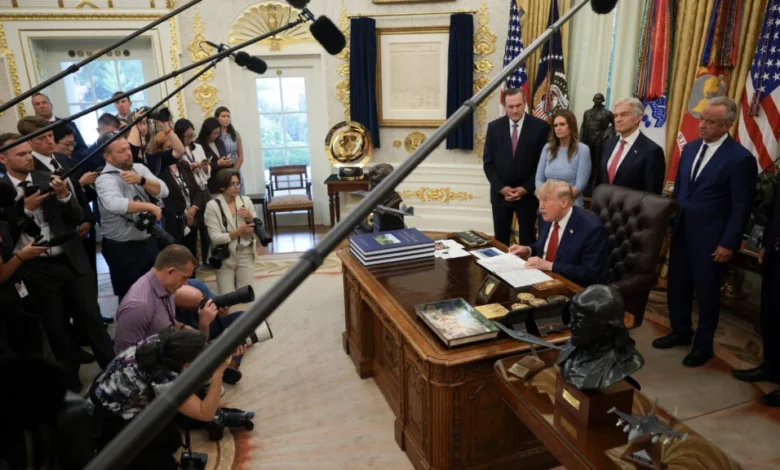
WASHINGTON — In a high-profile move aimed at curbing the escalating costs of prescription medications for the nation’s most vulnerable populations, the Trump administration announced on Friday the formal rollout of the GENEROUS model. This initiative, designed to fundamentally alter how Medicaid programs across the country procure and pay for pharmaceuticals, was presented as a cornerstone of the White House’s strategy to tackle systemic price inflation in the healthcare sector. However, while the administration touted universal participation, the rollout was immediately met with a mix of bureaucratic scrutiny and questions regarding the long-term efficacy of the model in a complex, multi-state regulatory environment.
The GENEROUS model—an acronym for the Guaranteeing Equitable Negotiations and Ensuring Reasonable Outcomes Under State-led systems—represents an ambitious attempt to leverage the combined purchasing power of states to negotiate more favorable drug pricing agreements. By centralizing certain aspects of drug payment, the administration hopes to reduce the financial strain on state Medicaid budgets, which have been consistently stretched by the rising costs of specialty drugs and chronic care medications.
The Scope of Participation and Bureaucratic Discrepancies
During the Friday announcement, the administration stated that all 50 states, the District of Columbia, and Puerto Rico would participate in the model. This broad claim of universal adoption was intended to project a sense of national consensus on a policy typically fraught with partisan tension. However, internal documentation released by the Centers for Medicare and Medicaid Services (CMS) later that afternoon revealed a more nuanced reality.
According to official CMS records, while the administration’s goal remains total coverage, only 40 states and Puerto Rico had officially signed binding participation agreements by the time of the press conference. The remaining jurisdictions, while having submitted preliminary applications or expressions of interest, had yet to finalize the legal frameworks required for implementation. The discrepancy between the President’s broad assertion and the administrative status of the state agreements underscores the logistical challenges inherent in implementing federal health policy across disparate state-level Medicaid programs. States have been granted a deadline of the end of the current month to reconcile these differences and sign final agreements, a window that some policy analysts argue is tight given the complexity of the contracts involved.
Chronology of the GENEROUS Model Initiative
The introduction of the GENEROUS model is not an isolated event but rather the culmination of years of policy development aimed at reforming the drug procurement pipeline.
- Early 2019: The White House initiates a series of internal working groups focused on Medicaid drug pricing, identifying significant variances in the rebates and net costs states pay for the same medications.
- Late 2020: CMS releases preliminary drafts of the model, inviting state Medicaid directors to provide feedback on how a centralized negotiation platform might function without infringing on existing state-specific pharmacy benefit manager (PBM) contracts.
- Mid-2021: Legislative discussions gain momentum as healthcare expenditures reach record highs, prompting the administration to prioritize the formal launch of the model as a flagship policy achievement.
- Friday Announcement: The official unveiling of the model, accompanied by the announcement that the majority of states have either signed on or committed to the framework.
- The Upcoming Deadline: The end of the current month serves as the final cutoff for states to finalize their participation, setting the stage for the first round of negotiated contracts.
Economic Context: Why Medicaid Costs Matter
The urgency surrounding the GENEROUS model is supported by stark economic data. According to data from the Kaiser Family Foundation and the Medicaid and CHIP Payment and Access Commission (MACPAC), prescription drug spending in Medicaid has grown at a compound annual rate that has frequently outpaced overall medical inflation. This growth is largely driven by the adoption of high-cost specialty biologics and therapies for rare diseases.
In many instances, the net cost to state Medicaid programs is significantly higher than the price paid by private insurers or federal entities like the Department of Veterans Affairs. This disparity is often attributed to the fragmented nature of state-level negotiations. Under the current system, each state acts independently, limiting their ability to demand the volume-based discounts that large-scale entities can command. The GENEROUS model seeks to rectify this by creating a unified negotiation block, theoretically enabling states to secure deeper rebates that could return millions of dollars to state coffers.
Official Responses and Industry Skepticism
The announcement has triggered a range of responses from stakeholders, including state officials, healthcare providers, and the pharmaceutical industry.

Proponents of the plan, including various governors who have signed onto the model, view it as a necessary step toward fiscal sustainability. "For years, we have been at the mercy of opaque pricing structures," a representative for a state health agency noted. "By aligning our negotiation power through the GENEROUS model, we are essentially leveling the playing field."
Conversely, the pharmaceutical industry has expressed caution. Trade groups representing drug manufacturers have raised concerns that the model could inadvertently lead to restricted access if manufacturers decide that the negotiated price points do not cover the costs of research, development, and distribution. Industry analysts warn that if the model focuses too heavily on price suppression, it could potentially discourage the launch of new, innovative therapies in the Medicaid market, thereby creating a "two-tier" system where beneficiaries have access to older, cheaper drugs but are blocked from newer breakthroughs.
Furthermore, some healthcare economists have questioned the administrative burden the model will place on states. Integrating federal negotiation standards with existing state-run pharmacy benefits is a monumental task that requires significant software updates, staff training, and legal restructuring.
Broader Implications for the Healthcare Sector
The implications of the GENEROUS model extend far beyond the immediate reduction in drug prices. If successful, the model could serve as a template for future federal interventions in the pharmaceutical market. By demonstrating that the federal government can coordinate effectively with state-level administrators to control costs, the administration may seek to expand these principles to other areas of the healthcare economy, including Medicare Part D negotiations.
However, the potential for failure remains high. If the model fails to deliver significant savings, or if it results in the disruption of drug supplies to patients, it could lead to a significant political backlash. Moreover, the reliance on state participation creates a "weakest link" scenario; if key states with large Medicaid populations opt out or encounter significant hurdles in implementation, the aggregate purchasing power—and therefore the model’s overall efficacy—will be diminished.
Analyzing the Path Forward
The coming weeks will be critical. As the deadline for participation approaches, the focus will shift from the political announcement to the technical execution. The success of the GENEROUS model will likely hinge on three key factors:
- Administrative Integration: How effectively can CMS integrate the model into the existing, highly varied Medicaid systems of 50 different states?
- Negotiation Efficacy: Will the combined purchasing power actually result in lower net costs, or will the costs of administering the program negate the savings?
- Manufacturer Compliance: Will pharmaceutical companies engage in good-faith negotiations, or will the model face legal challenges regarding the federal government’s authority to dictate pricing for state-run programs?
For now, the GENEROUS model stands as a bold, if untested, attempt to address the "drug pricing crisis" that has long plagued American healthcare. As the administration works to secure the remaining signatures, the public, the medical community, and the pharmaceutical industry wait to see if this initiative will provide the relief it promises or if it will join a long list of well-intentioned but overly complex healthcare reforms that failed to fundamentally move the needle on patient costs.
The true test, however, will be the impact on the patients themselves. If the model succeeds, beneficiaries may see better access to essential medications without the budgetary constraints that have historically forced states to restrict formularies. If it fails, the consequences—ranging from higher state taxes to reduced drug availability—could prove to be a significant political and public health challenge for the years to come.