XRISM Observatory Captures First Direct Evidence of Stellar Wind Fueling X-ray Flares in Cosmic Binary System

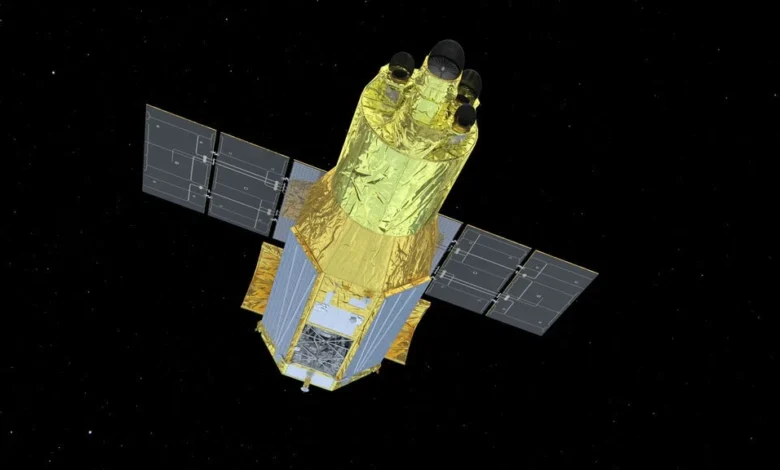
Astronomers utilizing the advanced capabilities of the Japan-led XRISM (X-ray Imaging and Spectroscopy Mission) observatory have successfully recorded the direct capture of a giant star’s stellar wind by a compact companion object. This groundbreaking observation reveals the precise mechanism that powers intense X-ray flares in high-mass stellar systems, providing astrophysicists with unprecedented data to model the extreme physics governing the universe.
The findings, detailed in a peer-reviewed study published in the journal Science Advances, center on a binary system designated as BP Crucis. Located roughly 13,000 light-years away in the southern constellation Crux, this system offers a unique laboratory for studying gravity, plasma dynamics, and stellar evolution on a cosmic scale.
Anatomy of a Cosmic Colossus and Its Dense Companion
The BP Crucis system is classified as a high-mass X-ray binary, composed of two vastly different astronomical bodies locked in a gravitational dance. The primary star, known formally as Wray 977, is a luminous blue hypergiant. It possesses a mass approximately 40 times that of our Sun and stretches to a size roughly 60 times solar radii. Due to its extreme mass, intense surface temperature, and blinding luminosity, Wray 977 experiences a continuous, forceful mass-loss event. Ionized gas streams away from the hypergiant in all directions, creating a phenomenon known as a stellar wind.
Orbiting this massive star is an extraordinarily compact and dense companion: a neutron star named GX 301-2. Representing the collapsed, crushed core of a massive star that ended its life in a cataclysmic supernova explosion, GX 301-2 crams a mass greater than the Sun into a sphere merely 12 miles (20 kilometers) across. This neutron star rotates rapidly, completing a full revolution every 11 minutes, and sweeps a powerful beam of X-rays across space toward Earth, earning it classification as a pulsar.
The two objects follow an eccentric 41.5-day orbit. Twice during each complete orbital cycle—specifically near the closest and farthest points between the neutron star and the hypergiant—the system exhibits dramatic, multi-day surges in X-ray brightness known as flares. For decades, scientists theorized that these flares occur because the pulsar’s intense gravitational field pulls in matter from the hypergiant’s dense plasma stream. However, direct observational proof of this wind plasma actually falling onto the compact object had remained elusive until now.
Chronology of the Observation and XRISM’s Campaign
The breakthrough came during a targeted observation campaign conducted on February 1, 2025. Researchers turned the sophisticated instruments of the XRISM observatory—a collaborative mission led by the Japan Aerospace Exploration Agency (JAXA) and NASA, alongside contributions from the European Space Agency (ESA)—toward BP Crucis.
The observation window lasted approximately 16 hours, strategically timed to coincide with the tail end of one of the system’s powerful X-ray flares. XRISM utilized its Resolve instrument, a high-resolution X-ray microcalorimeter spectrometer designed to measure the energy of incoming X-ray photons with remarkable precision. This instrument captured highly detailed X-ray spectra of the region immediately surrounding the neutron star, uncovering rapidly shifting emission and absorption lines.
Upon analyzing the data, lead researcher Roi Rahin, a scientist at the University of Maryland, Baltimore County (UMBC) and NASA’s Goddard Space Flight Center in Greenbelt, Maryland, realized the team had captured something entirely unprecedented in high-energy astrophysics. Extensive searches through existing scientific literature confirmed that no prior mission had recorded spectra of this nature with such fidelity.
Unraveling the Physics of Accretion and Plasma Dynamics
The core of the discovery lies in the behavior of iron absorption lines detected within the X-ray spectra. When measured, these spectral lines were visibly displaced to lower energy levels compared to baseline laboratory measurements. In physics, this phenomenon is known as a redshift.

While redshifts are frequently used by astronomers to measure the expansion of the universe on a cosmological scale, in this localized context, the redshift signifies motion away from the observer—indicating that dense gas is actively flowing toward the pulsar. By quantifying the extent of the redshift, the research team calculated that the plasma is hurtling toward the neutron star at velocities reaching approximately 335,000 miles per hour (540,000 kilometers per hour).
By synthesizing these spectroscopic findings with orbital models, the researchers constructed a comprehensive timeline of how the pulsar interacts with the stellar wind during its four-day transit through the plasma stream:
- Initial Entry and Accretion Disk Formation: As the pulsar enters the dense outer regions of the stellar wind, its gravitational pull sweeps up the surrounding gas. This matter forms a thick, turbulent, and messy accretion disk that spirals downward toward the neutron star, heating up intensely and generating the X-ray emissions that power the flares.
- Disk Dissolution and Direct Fall: As the pulsar pushes deeper into the core of the plasma stream, the dynamics shift. The incoming stream loses the necessary angular momentum to sustain the structured accretion disk. Consequently, the disk breaks apart and dissipates entirely, forcing the plasma to fall in a direct, unbuffered stream straight onto the surface of the neutron star. The XRISM observations were captured precisely near the end of this turbulent phase.
- Reversal and Exit: As the pulsar nears the outer boundary of the stream on its way out, a chaotic accretion disk briefly reforms. Due to the angle and momentum of the stellar wind, this new disk spins in the opposite direction of the initial disk. Finally, as the neutron star exits the stream completely, this secondary disk disperses as well.
Official Responses and Expert Insights
The uniqueness of the data demanded rigorous verification. Nazma Islam, a co-author of the study formerly affiliated with UMBC and NASA Goddard, and currently an assistant professor at the Manipal Centre for Natural Sciences in India, emphasized the complexity of the analytical process.
"It was clear that these observations were groundbreaking, but at the same time this meant the analysis had to be especially detailed," Islam noted. "We could see how the dense stream of plasma acts very close to the neutron star, giving us a front-row seat to processes that were previously only theoretical."
Project scientists have underscored the ideal nature of the target and the instrumentation used to study it. Brian Williams, the XRISM project scientist at NASA Goddard, highlighted the synergy between the celestial laboratory and modern technology.
"The BP Crucis system is an ideal laboratory for studying wind-fed pulsar accretion, and XRISM’s sensitive, high-resolution Resolve spectrometer is an ideal instrument for advancing our understanding of the processes involved," Williams stated.
Broader Implications for High-Energy Astrophysics
The successful observation of stellar wind capture in BP Crucis carries significant implications for the broader field of high-energy astrophysics. High-mass X-ray binaries serve as natural laboratories for testing the laws of physics under extreme conditions, including intense gravitational fields, supersonic plasma flows, and relativistic speeds.
Understanding how matter is transferred from a donor star to a compact remnant like a neutron star or a black hole is crucial for explaining a wide array of cosmic phenomena. These include the lifecycle of massive binary systems, the production of galactic X-ray sources, and the evolutionary pathways that lead to gravitational wave events when compact objects ultimately merge.
Prior to the deployment of high-resolution X-ray microcalorimeters like XRISM’s Resolve, researchers were largely limited to inferring the mechanics of wind-fed accretion through indirect brightness measurements and lower-resolution spectra. The ability to directly track the velocity, trajectory, and structural evolution of infalling plasma opens a new chapter in observational astronomy.
Moving forward, the research team aims to apply the techniques developed during the BP Crucis campaign to other high-mass X-ray binary systems across the Milky Way. By comparing data from multiple systems with varying stellar wind densities and orbital eccentricities, astronomers hope to build a universal framework for understanding how compact objects interact with their stellar environments, refining our comprehension of the violent and dynamic universe.