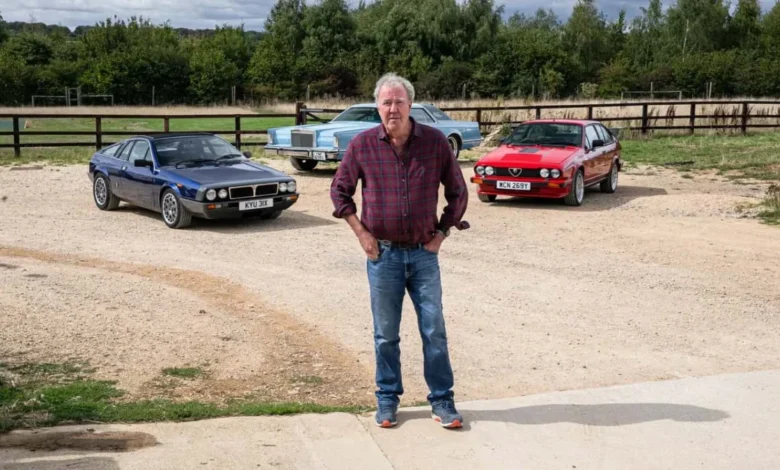
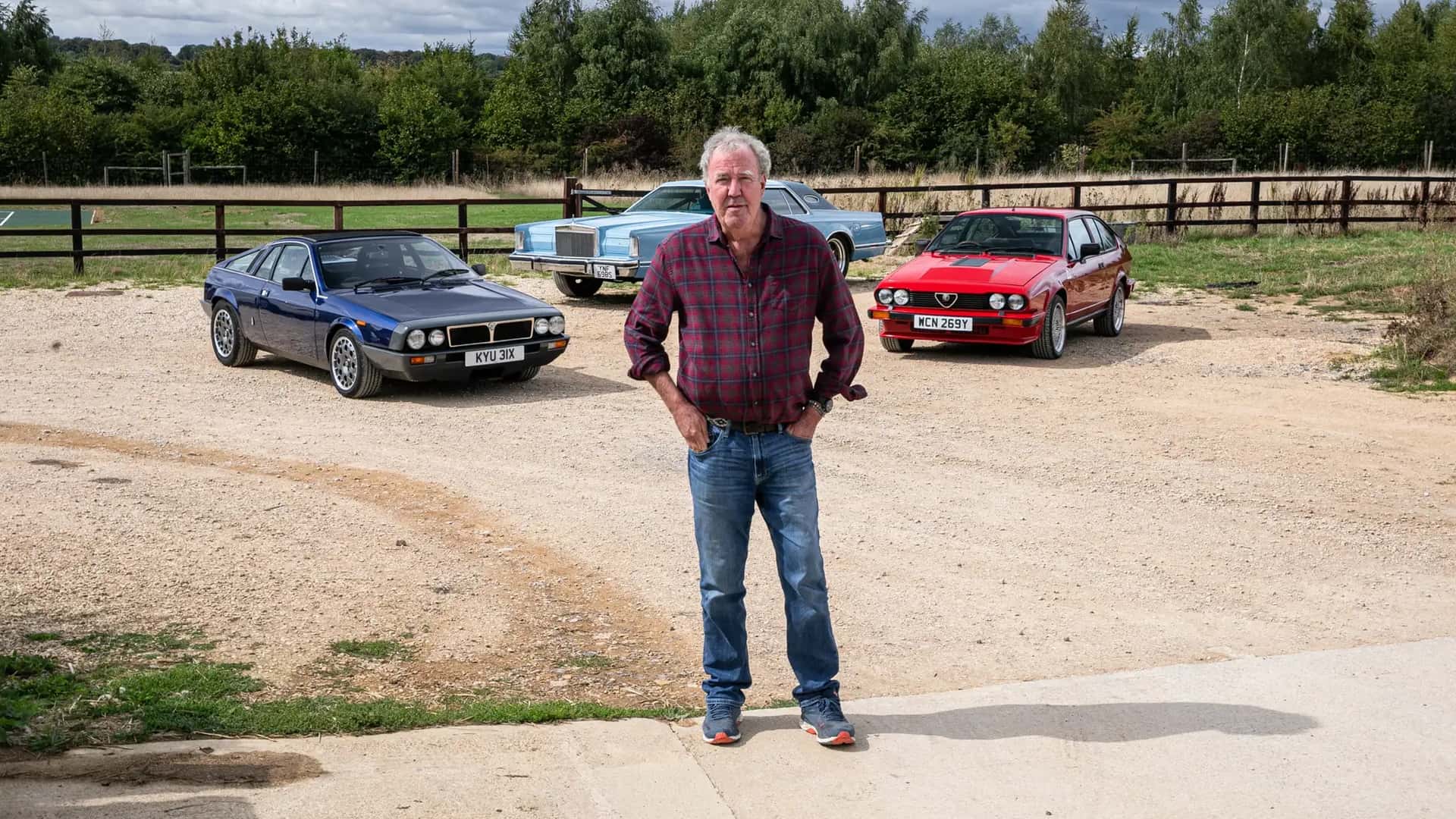
The automotive world is bracing for a significant sale as former Top Gear and The Grand Tour presenter Jeremy Clarkson prepares to offload three vehicles synonymous with his recent television career. These automobiles, which have featured prominently in high-stakes specials across the globe, will be presented by Iconic Auctioneers during The Iconic Sale at the NEC Classic Motor Show in Birmingham, England, on November 14 and 15. The collection is being offered without a reserve, a strategy that ensures each vehicle will be sold to the highest bidder regardless of the final hammer price, potentially creating a highly competitive environment for collectors and fans of the long-running motoring series.
A Defining Moment in Television History
The centerpiece of this trio is undoubtedly the 1982 Lancia Montecarlo Spider, a vehicle that carries immense sentimental value for both the presenter and the global audience of The Grand Tour. This specific car was utilized by Clarkson in The Grand Tour Presents: One for the Road, the emotional final special that concluded the partnership between Clarkson, Richard Hammond, and James May. As the final car driven by Clarkson on the program, it serves as a tangible artifact marking the end of a decades-long era in British motoring journalism.
The history of this Lancia is as rugged as the terrain it covered during the final production. To navigate the demanding environments of Zimbabwe and Botswana, the vehicle underwent extensive modifications. It features Ferrari 308 rear lights, a distinct four-exhaust outlet system, and Lancia Delta Integrale wheels. Under the skin, the car was optimized for reliability in extreme heat, including the replacement of original leather upholstery with cooling cloth seats and the installation of a simplified, button-less Alcantara steering wheel to avoid the pitfalls of complex, aging electronics. Clarkson opted to retain ownership of the vehicle following the conclusion of filming, rather than returning it to the production company, and it has since undergone a comprehensive refurbishment to bring it back to road-ready status.
The Evolution of the Collection
The second vehicle included in the sale is a 1983 Alfa Romeo GTV6, which gained notoriety during the 2019 episode titled Well Aged Scotch. Clarkson piloted this car through the picturesque but challenging North Coast 500 in Scotland. The GTV6, a model famously associated with the presenter’s well-documented affinity for Italian engineering, has approximately 28,315 miles on the odometer.
The history of this specific Alfa Romeo is particularly poignant; Clarkson had owned a GTV6 previously in his career and reportedly harbored regrets after parting with it. This led him to track down and reacquire this example, which he then utilized for the Scottish special. Its inclusion in the auction marks a cycle of ownership that highlights the emotional connection often felt by automotive enthusiasts toward specific mechanical platforms. The vehicle has been maintained in-house, ensuring that the 2.5-liter V6 engine—a power plant celebrated for its distinctive acoustic signature—remains in peak operating condition.
Rounding out the trio is the 1978 Lincoln Continental Mark V, an automotive titan that featured in the Lochdown special. Representing the quintessential "big American car" archetype, this Lincoln was a primary subject of the Scotland-based episode where the trio attempted to navigate narrow rural roads in massive, oversized luxury cruisers. The vehicle is powered by a 6.6-liter V8 engine and retains a nitrous-injection system installed specifically for the show. While the system was intended to boost performance during filming, it reportedly offered limited utility due to the lack of accompanying engine modifications. Notably, the car remains in the same configuration as seen on screen, complete with the original Cartier clock and a set of bagpipes stored in the trunk, serving as a humorous memento of the production’s lighthearted approach to the challenge.
Market Context and Auction Dynamics
The decision to sell these vehicles at the NEC Classic Motor Show provides a unique platform for the transition of ownership. Iconic Auctioneers has positioned the sale as a rare opportunity for private collectors to acquire pieces of television history. By opting for a no-reserve format, the seller removes the friction of price negotiation, allowing the market to dictate the valuation based on historical provenance and celebrity association.
From a broader market perspective, the sale of "hero cars" from popular media typically attracts a premium. Automotive historians and memorabilia collectors often value the documentation and visual records associated with these cars, which verify their participation in specific, culturally significant television events. The provenance of being the "final car" of a long-running trio, in the case of the Lancia, is a powerful driver for auction interest.
Implications for Clarkson’s Future Projects
While the official reason provided for the sale is that Clarkson rarely finds the time to drive or maintain these vehicles in his current lifestyle, industry observers suggest that the upcoming season of his successful television program, Clarkson’s Farm, may provide further insight into his shifting priorities. The transition from high-budget travelogues to domestic agricultural management has marked a significant pivot in his public persona. As the presenter focuses more on his farming venture at Diddly Squat, the logistics of storing and maintaining a collection of vintage performance cars become increasingly secondary to his daily operational needs.
Technical and Historical Significance
The inclusion of these three vehicles offers a cross-section of 1970s and 1980s automotive design. The Lancia Montecarlo represents the fragile brilliance of Italian mid-engine sports cars; the Alfa Romeo GTV6 highlights the appeal of the transaxle layout and the Busso V6 engine; and the Lincoln Continental illustrates the excess and comfort of the American luxury segment of the late 1970s.
Each car serves as a case study in why collectors gravitate toward specific machines. The Lancia is a story of survival and adaptation, the Alfa is a story of redemption and nostalgia, and the Lincoln is a story of theatricality and performance art. The fact that all three were modified or specifically sourced for a television narrative adds a layer of "provenance value" that elevates them beyond their standard market equivalents.
A Final Chapter
The auction in Birmingham will undoubtedly be a high-profile event. For fans who have followed the trio’s journey from the early days of Top Gear through the global expansion of The Grand Tour, these vehicles represent the final remnants of a format that defined a generation of automotive entertainment.
As the gavel falls on November 14 and 15, the fate of these cars will be sealed, transitioning from the hands of their most famous pilot to the private collections of those willing to pay for a piece of motoring folklore. Whether they are purchased for their engineering merit, their historical status, or simply the cachet of having been on screen, the sale marks a final, definitive closing of the door on this chapter of Clarkson’s career. The lack of a reserve price ensures that the event will be highly transparent and likely highly active, providing a clear indicator of the enduring demand for vehicles that have achieved global fame through the lens of modern digital and broadcast media.
For the automotive community, the significance lies not just in the cars themselves, but in the cultural shift they represent: the move away from the era of the "big-budget, globe-trotting" motoring show toward a more localized, character-driven style of content. As Jeremy Clarkson moves forward with his agricultural and business endeavors, the disposal of this collection serves as a symbolic shedding of his previous professional skin, making room for the next phase of his multifaceted career. Collectors looking to acquire these machines are not just buying steel, glass, and rubber; they are securing a permanent link to one of the most successful and influential periods in the history of automotive broadcasting.
Related posts: