Angelelli Automobili Unveils Project 754 as an Ultra-Limited 800-Horsepower Coachbuilt Supercar Based on the Porsche 911 Platform

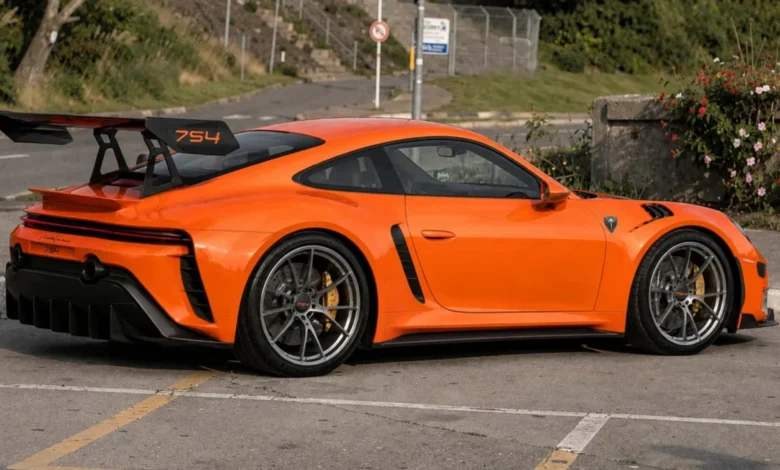
Angelelli Automobili, the Italian boutique manufacturer specializing in high-performance engineering and advanced material science, has officially pulled the wraps off its latest endeavor, Project 754. This new supercar represents a significant departure from standard performance tuning, positioning itself as a coachbuilt masterpiece that utilizes the structural foundations of the Porsche 911 while introducing entirely bespoke design language and mechanical architecture. With a production run limited to just 50 units and power outputs reaching up to 800 horsepower, Project 754 is designed to bridge the gap between traditional Italian craftsmanship and cutting-edge digital manufacturing.
Unlike mass-market sports cars or typical aftermarket modifications, Project 754 is defined by its status as a coachbuilt vehicle. This methodology involves taking a donor chassis—in this case, the Porsche 911 from the 991 and 992 generations—and extensively re-engineering it to the point where the original identity is largely superseded by a new, proprietary design. Angelelli Automobili has explicitly stated that it maintains no official industrial or commercial relationship with Porsche AG, emphasizing that Project 754 is an independent technical exercise in maximizing the potential of a world-class platform through Italian innovation.
A Dual Philosophy: The 754 R and 754 M Configurations
The core of the Project 754 program is built around two distinct driving philosophies, catering to different types of high-performance enthusiasts. The company has divided the 50-unit production run into two equal halves: 25 units of the "754 R" and 25 units of the "754 M." Each variant offers a unique approach to weight distribution and handling dynamics, effectively providing two different supercar experiences from the same conceptual blueprint.
The Project 754 R (Rear) maintains the classic rear-engine layout synonymous with the Porsche 911 lineage. This configuration is engineered to prioritize raw acceleration and mechanical traction. By keeping the engine’s mass over the rear axle, the 754 R maximizes grip during high-speed exits and provides the aggressive, pendulum-like driving character that 911 purists have admired for decades. This version is expected to appeal to those who value the heritage of the rear-engine platform but demand modern, hyper-car levels of performance.
Conversely, the Project 754 M (Mid) represents a radical departure from the donor car’s original geometry. In this configuration, Angelelli Automobili relocates the engine to a mid-ship position. This shift fundamentally alters the vehicle’s center of gravity, resulting in a more neutral weight distribution. The 754 M is designed for track-focused precision and high-speed stability, aiming to eliminate the inherent understeer and "light" front-end feel often associated with rear-engine cars. The transition to a mid-engine setup requires extensive structural modification to the 911’s floorpan and cooling systems, marking it as one of the most ambitious engineering feats in the modern coachbuilding sector.
Advanced Engineering and Generative Design
The development of Project 754 is characterized by the use of proprietary digital design tools that go beyond traditional CAD modeling. Angelelli Automobili has integrated generative design systems and topology optimization into the vehicle’s DNA. These technologies allow engineers to input specific load and stress parameters, after which AI-driven software "grows" the most efficient structural shapes. This often results in organic, skeletal-like components that provide maximum rigidity with minimum material weight.
A significant portion of the car’s hardware is produced using metal 3D printing. By utilizing titanium and high-strength alloys in an additive manufacturing process, Angelelli can create complex geometries that would be impossible to manufacture through traditional casting or milling. These components—ranging from suspension uprights to internal chassis braces—are engineered to be significantly lighter than their factory counterparts, contributing to a drastically improved power-to-weight ratio.
The exterior of Project 754 is composed entirely of carbon fiber. Every body panel has been redesigned to optimize aerodynamic efficiency. The design language is aggressive, featuring deep air intakes, integrated diffusers, and bespoke aerodynamic surfaces that manage airflow for both downforce and component cooling. Despite the modern tech, the company insists that the proportions of the car were crafted to give it a unique identity, ensuring it is not mistaken for a mere body kit on a standard Porsche.
Performance Metrics and Customization
While final performance figures can vary based on specific customer requests, Angelelli Automobili has targeted a power range of 700 to 800 horsepower. This power is derived from heavily modified versions of the flat-six engines found in the 991 and 992 generations. Enhancements likely include upgraded turbochargers, bespoke exhaust systems, and proprietary engine management software designed to handle the increased thermal loads generated by such high outputs.
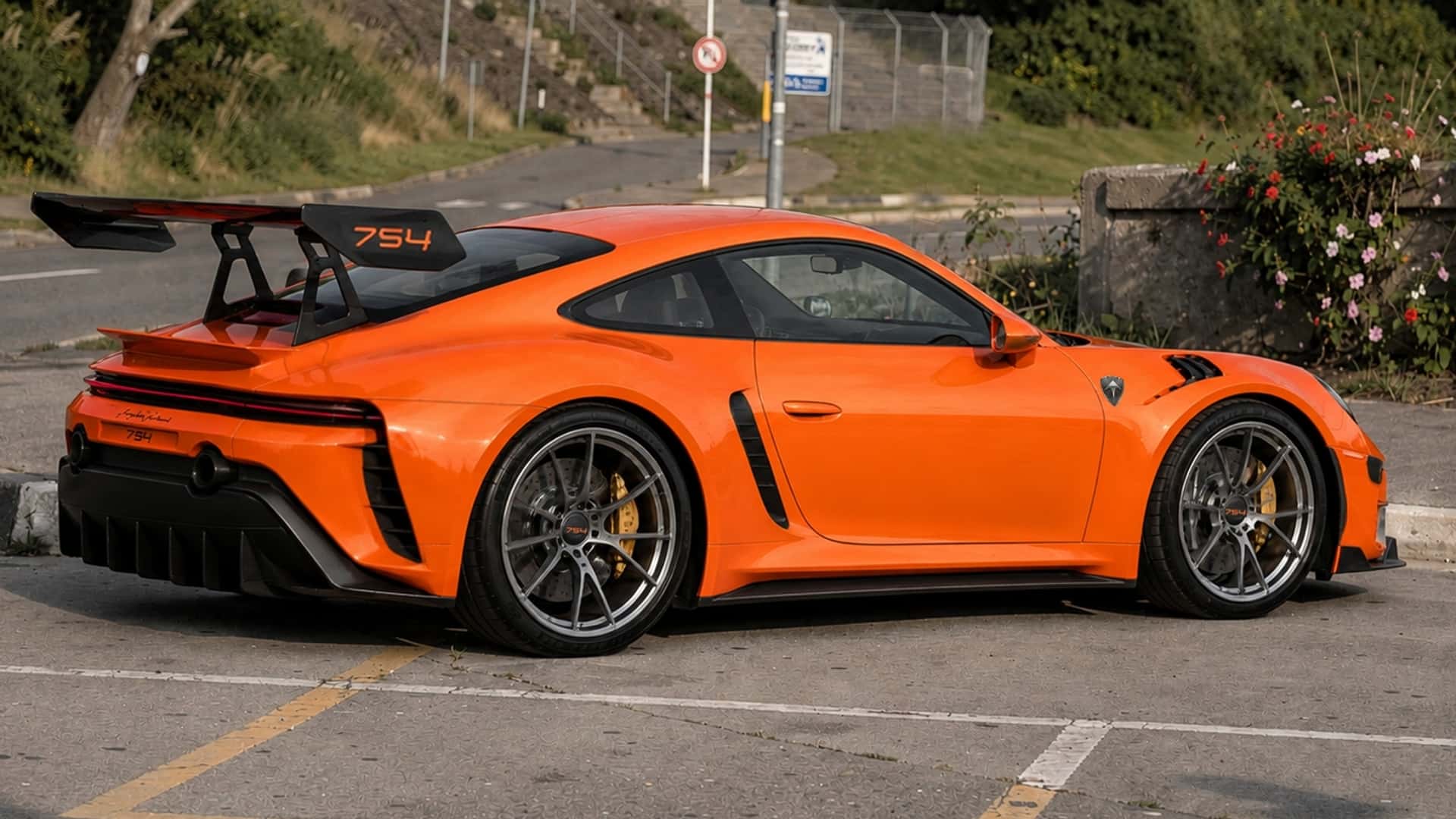
Beyond the engine, the level of customization offered to the 50 owners is exhaustive. Because each car is built to order, clients can influence the suspension tuning, selecting between track-biased stiffness or a more compliant setup for grand touring. The interior is similarly bespoke, with materials ranging from aerospace-grade Alcantara to traditional Italian leathers and exposed carbon fiber. Each of the 50 vehicles will be individually numbered, further cementing their status as collectible automotive art.
The Evolution of the Coachbuilding Market
Project 754 enters a market that is currently experiencing a renaissance. In recent years, the demand for "restomods" and "continuation cars" has shifted toward high-tech coachbuilding. Companies like Singer Vehicle Design, Gunther Werks, and RUF have demonstrated that there is a significant global appetite for vehicles that take the Porsche 911’s soul and elevate it with modern performance and exclusive aesthetics.
However, Angelelli Automobili distinguishes itself by moving beyond the "restoration" label. By offering a mid-engine conversion (754 M) and utilizing 3D-printed titanium, the company is positioning itself more as a technology firm that happens to build cars. This approach mirrors the trends seen in Formula 1 and aerospace, where the focus is on "computational fluid dynamics" (CFD) and "additive manufacturing" rather than just traditional mechanical tuning.
Timeline and Production Strategy
The production of Project 754 is scheduled to take place in Italy, leveraging the country’s deep-rooted network of specialized automotive suppliers. The timeline for the project involves a meticulous assembly process, where donor 911s are stripped to their bare chassis before the transformation begins.
- Phase One: Acquisition and Stripping. Donor vehicles (991 or 992) are sourced and inspected for structural integrity.
- Phase Two: Structural Modification. For the 754 M, the chassis undergoes significant surgery to accommodate the mid-engine layout. For both models, the 3D-printed titanium reinforcements are integrated.
- Phase Three: Aerodynamic Integration. The carbon fiber body panels are fitted, and the car undergoes wind tunnel testing or advanced CFD simulation to ensure high-speed stability.
- Phase Four: Final Calibration. The engine is tuned to the customer’s power preference (up to 800 hp), and the interior is handcrafted.
Deliveries are expected to be staggered, with each car taking several months to complete. This slow-burn production model ensures that the quality control remains at the level required for a vehicle of this price point and performance capability.
Industry Implications and Analysis
The emergence of Project 754 signals a broader shift in the supercar industry. As major manufacturers like Porsche, Ferrari, and Lamborghini move toward hybridization and electrification, a niche has opened for boutique firms to offer "pure" mechanical experiences enhanced by modern science.
Project 754 challenges the notion that a car must be built from scratch to be considered a supercar. By using the 911 as a foundation, Angelelli avoids the astronomical costs of developing a new engine and safety systems from zero, allowing them to focus their resources on exotic materials and radical design. This "platform-sharing" coachbuilding model is likely to become more common as the cost of developing bespoke internal combustion engines becomes prohibitive for smaller firms.
Furthermore, the choice to offer a mid-engine 911 (the 754 M) is a direct nod to Porsche’s own racing history, specifically the 911 GT1 of the late 1990s and the more recent mid-engine 911 RSR GTE race car. While Porsche has historically kept its road-going 911s rear-engined to maintain tradition, Angelelli’s project satisfies a long-standing "what if" scenario for many enthusiasts: a road-legal, mid-engine 911 with modern hypercar power.
Conclusion
Project 754 by Angelelli Automobili is more than just a high-horsepower Porsche; it is a technical showcase of how generative design and 3D printing can reinvent a classic automotive icon. By splitting the production between the traction-heavy 754 R and the balanced 754 M, the Italian firm provides a tailored experience that addresses the two primary schools of thought in sports car dynamics. With only 50 examples planned, Project 754 is set to become a rare sight on the world’s roads, serving as a testament to the enduring appeal of the Porsche 911 platform when viewed through the lens of extreme Italian engineering.