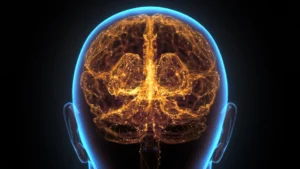
Memory loss, skin atrophy, and the steady degradation of bone density have long been treated by the medical community as disparate symptoms of the aging process. However, recent breakthroughs in neurobiology suggest that these diverse physical and cognitive declines may share a common origin: a regulatory failure within a specific cluster of neurons deep inside the brain. Experiments centered on a protein known as Menin have provided compelling evidence that the hypothalamus—a pea-sized region responsible for metabolic homeostasis—functions as a master control center for systemic aging. By manipulating Menin levels, researchers have successfully reversed markers of aging in murine models, opening a new frontier in the quest to extend human healthspan.
The Hypothalamic Hypothesis
The hypothalamus acts as the body’s command-and-control center, integrating signals from the endocrine and nervous systems to regulate temperature, hunger, thirst, and fatigue. Emerging research indicates that this region is also the primary site for the "aging clock." As individuals age, the hypothalamus becomes increasingly prone to chronic, low-grade inflammation, a phenomenon sometimes referred to as "inflammaging."
In a seminal study published in PLOS Biology on March 16, 2023, a research team led by Lige Leng of Xiamen University identified Menin as a crucial "guardian" protein. Under normal conditions, Menin works to suppress inflammatory pathways within the ventromedial hypothalamus (VMH). The team’s data indicated that as mice age, Menin expression specifically declines in the VMH, leading to a cascade of systemic issues. By using conditional knockout mice—genetically modified subjects where Menin could be selectively deleted—the researchers demonstrated that the loss of this protein was not merely a consequence of aging, but a potential catalyst. The removal of Menin in young, healthy mice prematurely triggered symptoms typically reserved for geriatric subjects, including bone mineral density loss, skin thinning, and significant cognitive impairment.
Chronology of Discovery: From Bench to Biology
The journey to understanding the Menin pathway began with identifying why certain neurons in the hypothalamus lose their protective capacity while surrounding glial cells, such as astrocytes and microglia, remain relatively stable. This specificity suggests that the aging process is not a universal cellular decay, but rather a targeted loss of regulatory proteins in specific neural circuits.
Following the 2023 publication, the scientific community began to build a more comprehensive map of how these brain signals influence peripheral tissues. A timeline of these advancements illustrates the rapid evolution of this field:
- March 2023: The landmark PLOS Biology paper establishes the link between VMH Menin levels, hypothalamic inflammation, and systemic aging phenotypes.
- March 2024: Research in the Journal of Physiology and Biochemistry demonstrates that the compound itaconate can boost Menin levels in hippocampal cells, effectively shielding them from stress-induced death, reinforcing the protein’s protective role.
- May 2024: A study in Cell Metabolism by Washington University researchers identifies a distinct hypothalamic pathway linked to fat tissue communication, proving that multiple, independent neural circuits coordinate the aging of the body.
- January 2025: A massive mapping project published in Nature by the Allen Institute for Brain Science characterizes 1.2 million mouse brain cells, highlighting the third ventricle of the hypothalamus as a "hot zone" for age-related gene expression changes.
- April 2025: A study in Cellular and Molecular Life Sciences introduces a cautionary note, revealing that in Alzheimer’s-modeled mice, D-serine levels can fluctuate in ways that may contribute to, rather than solve, cognitive signaling issues.
The D-Serine Paradox
One of the most intriguing aspects of the Menin pathway is its regulation of D-serine. This amino acid is essential for activating NMDA receptors, which are vital for synaptic plasticity—the brain’s ability to strengthen or weaken connections based on experience. The 2023 study found that when Menin levels drop, the enzyme responsible for producing D-serine becomes less active, leading to a deficiency that directly impacts learning and memory.
While the prospect of D-serine supplementation sounds like a straightforward intervention for cognitive decline, the scientific reality is nuanced. Unlike L-serine, which is found in common dietary sources like nuts, fish, and eggs, D-serine is a distinct chemical form that the body synthesizes through specific enzymatic pathways. The experiments showed that while oral D-serine could improve cognitive scores in aged mice, it failed to replicate the broader, systemic anti-aging effects achieved by restoring Menin levels in the hypothalamus.
Furthermore, later research published in late 2026 suggests that the role of D-serine is context-dependent. In models of Alzheimer’s disease, elevated D-serine levels have been observed alongside neuronal signaling disruptions, suggesting that the "more is better" approach to neurotransmitter supplementation could be counterproductive in certain pathological states. This dichotomy underscores the necessity of clinical precision; the body’s chemistry is a delicate equilibrium, and interfering with it requires a granular understanding of the underlying disease process.
Implications for Human Health
While the data from mouse models is robust, experts caution against extrapolating these findings directly to human longevity. To date, no human clinical trial has confirmed that Menin restoration or targeted D-serine therapy can reverse biological age. A 2016 randomized control trial on healthy older adults using D-serine showed only modest improvements in specific cognitive tasks, with no observable impact on long-term memory or physical markers of aging.
However, the implications for future therapeutic development are significant. By identifying the hypothalamus as a centralized hub for aging, researchers can move away from treating symptoms—such as prescribing osteoporosis medication for bones or cognitive enhancers for memory—and toward addressing the root cause of systemic decline.
"The decline of Menin expression is likely a central driver," Dr. Leng noted in discussions following the 2023 study. "It acts as a bridge between genetic predispositions and metabolic factors."
The Road Ahead
The scientific community currently faces three major hurdles before these findings can translate into clinical applications. First, the trigger for the age-related decline of Menin remains unknown. Identifying whether this is caused by chronic low-level inflammation, oxidative stress, or programmed genetic decay is the next primary objective for researchers.
Second, the risk of "off-target" effects must be rigorously assessed. Because the hypothalamus regulates a vast array of critical hormones, including those controlling the thyroid and reproductive systems, any gene-editing or protein-replacement therapy targeting this region must be exceptionally precise to avoid systemic side effects.
Finally, the field must reconcile the conflicting data regarding serine metabolism. As the 2025 and 2026 studies highlighted, the environment in which these molecules operate—whether it is an aging brain, an Alzheimer’s-afflicted brain, or a healthy brain—dramatically alters the outcome of the intervention.
The research into Menin and hypothalamic signaling represents a paradigm shift in gerontology. It posits that aging is not a diffuse, inevitable decay of every cell in the body, but a top-down process directed by a specific brain region. While a "fountain of youth" pill remains a distant prospect, the ability to potentially reset the body’s metabolic and cognitive clock through the manipulation of a single protein offers a roadmap for the next generation of geriatric medicine. For now, the evidence reinforces the importance of the brain-body connection, suggesting that the key to aging gracefully may indeed be found within the complex, silent signaling of our most vital organ.
Related posts: