International Court of Justice Declares a Clean and Healthy Environment a Fundamental Human Right

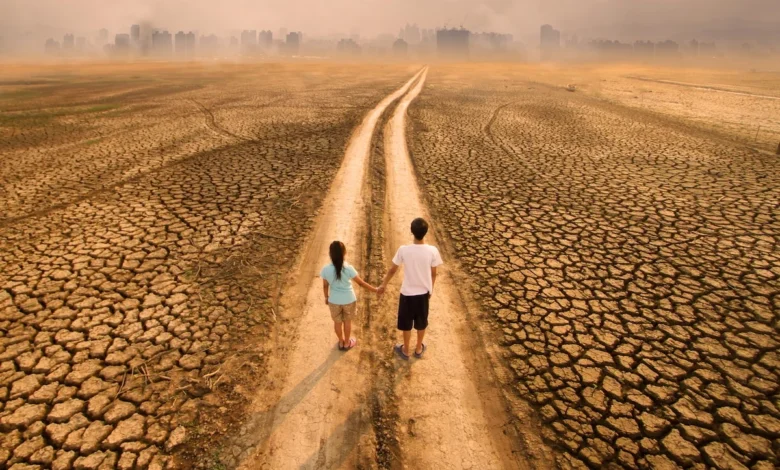
In a landmark legal development that promises to reshape the landscape of international climate litigation, the International Court of Justice (ICJ) has formally declared that a clean, healthy, and sustainable environment is a fundamental human right. This advisory opinion, issued in July 2025, solidifies the obligation of United Nations member states to combat the climate crisis and clarifies the potential legal consequences for nations that fail to adequately mitigate greenhouse gas emissions. The ruling marks the culmination of years of diplomatic pressure from climate-vulnerable nations and establishes a new precedent for how international law intersects with environmental stewardship.
The Legal Framework of the Ruling
The ICJ’s advisory opinion was delivered in response to a request from the UN General Assembly, which sought clarity on two primary questions: the extent of a state’s obligations under international law to protect the environment and the legal repercussions for states that cause environmental harm. In its findings, the court articulated that the environment is not merely a background condition for life but a prerequisite for the enjoyment of essential human rights, including the right to life, health, and a standard of living adequate for well-being.
By integrating existing human rights frameworks—such as the Universal Declaration of Human Rights—with environmental treaties like the Paris Agreement, the Kyoto Protocol, and the Convention on Biological Diversity, the court established that states possess a duty of "due diligence." This means that countries are not only responsible for their own domestic emissions but must also engage in active cooperation to prevent transboundary environmental harm. When a state breaches these obligations, it incurs legal responsibility, which may necessitate the cessation of harmful activities, full reparations for damages caused, and, in some cases, guarantees that such conduct will not be repeated.
A Chronology of the Path to the Hague
The journey to this advisory opinion began in 2021, driven by the small Pacific Island nation of Vanuatu. Facing existential threats from rising sea levels and increasingly severe weather events, the government of Vanuatu sought to move beyond voluntary climate pledges. A group of law students, the Pacific Island Students Fighting Climate Change, proved instrumental in the initial advocacy, mobilizing support across the Pacific region and eventually gaining the backing of a diverse coalition of UN member states.
The UN General Assembly formally adopted the resolution requesting the ICJ’s guidance in March 2023. The subsequent proceedings were historic in scale, representing the largest case ever reviewed by the court. Over the course of the process, 97 member states participated in oral proceedings, and 91 written statements were submitted, reflecting the global significance of the inquiry. The hearings, which concluded in December 2024, saw a stark divide between climate-vulnerable nations advocating for stronger legal accountability and major greenhouse gas emitters who argued that their obligations were strictly confined to existing voluntary frameworks like the Paris Agreement.
Supporting Data and Scientific Context
The necessity for this ruling is underpinned by decades of accelerating climate data. According to the Lancet Countdown on Health and Climate Change, the health impacts of global warming have intensified significantly since the turn of the century. Increased exposure to extreme heat, the proliferation of vector-borne diseases, and the degradation of food security systems are no longer future projections but current realities.
Greenhouse gas emissions remain at historically high levels, with urban centers accounting for a disproportionate share of global output. Scientific consensus, echoed by the Intergovernmental Panel on Climate Change (IPCC), indicates that the world is currently off-track to limit global temperature rise to 1.5 degrees Celsius. The ICJ’s opinion addresses the gap between these scientific warnings and the actual implementation of national policies, essentially providing a legal mechanism to hold laggard states to account. While the opinion itself is advisory and not strictly binding in the same manner as a judgment in a contentious case, its status as the highest international judicial authority gives it immense normative weight, influencing domestic court rulings and shaping the discourse of international environmental law for decades to come.

Official Responses and Global Reaction
The international community has reacted to the ruling with a mixture of celebration and calls for immediate action. Prime Minister Jotham Napat of Vanuatu hailed the decision as a "turning point in the fight for climate justice." Napat emphasized that the ruling provides a foundation for vulnerable nations to demand accountability, noting that the recognition of these rights elevates the status of those living on the frontlines of the climate crisis.
Humanitarian organizations, including Oxfam, have also welcomed the decision, noting that it empowers civil society to pressure governments to align their economic policies with their human rights obligations. However, representatives from major industrial economies expressed caution during the proceedings, warning that the expansion of legal liability could complicate ongoing international climate negotiations. Despite these concerns, the prevailing sentiment among legal experts is that the ruling provides a necessary "legal backbone" for climate action, shifting the conversation from what states should do to what they are obligated to do.
Broader Implications and Future Legal Challenges
The implications of the ICJ ruling extend well beyond the halls of The Hague. In the short term, the opinion is expected to influence the arguments used in domestic climate litigation. Plaintiffs around the world are increasingly suing their governments over inadequate climate policies, and this advisory opinion provides a globally recognized legal standard that can be cited in these proceedings.
Furthermore, the ruling clarifies the nature of "full reparations" in an environmental context. For nations that have already suffered catastrophic loss and damage due to climate change, the idea that a state could be held legally responsible for its contributions to that harm opens the door to future claims for financial compensation. While the mechanism for such reparations remains complex and subject to further debate, the ICJ has clearly signaled that the era of complete impunity for environmental degradation is coming to an end.
The court’s emphasis on "due diligence and cooperation" also signals a shift in how international treaties are interpreted. It suggests that states can no longer claim that their adherence to one specific treaty—such as the Paris Agreement—absolves them of their broader obligations under international law to prevent harm to the environment. This holistic approach ensures that human rights and environmental protection are viewed as interconnected, rather than siloed, spheres of legal concern.
Conclusion: A New Era for Environmental Governance
The International Court of Justice’s advisory opinion represents a fundamental shift in international jurisprudence. By codifying a clean and healthy environment as a human right, the court has provided a moral and legal framework that elevates the urgency of climate action. As the world navigates the mid-2020s, the ruling serves as both a warning to those who continue to delay substantive change and a tool for those who are seeking to hold them accountable.
The process that led to this decision—from the grassroots advocacy of Pacific students to the historic participation of 97 nations—demonstrates the power of global consensus when aligned with the principles of justice and equity. While the path toward global compliance remains fraught with political challenges, the ICJ has laid the groundwork for a future where environmental stewardship is no longer a matter of political preference, but a mandatory legal duty of all nations toward their citizens and the planet. Whether this will lead to a rapid reduction in emissions or further international legal friction remains to be seen, but the baseline for state responsibility has been irrevocably altered. As nations move forward, they must now reconcile their economic and energy policies with the new, authoritative reality that the right to a healthy environment is, quite literally, a right to a future.