AI is rapidly transforming theoretical physics as frontier models master complex research problems once reserved for human experts

The landscape of theoretical physics is undergoing a seismic shift as advanced artificial intelligence models demonstrate an unprecedented capacity to solve complex, unpublished research problems. Recent evaluations reveal that high-end AI systems, including iterations like GPT-6 Astra, are not only matching the performance of top-tier human physicists but are occasionally identifying subtle errors in human-led research. This transition marks a departure from the traditional, labor-intensive methods that have defined the field for decades, raising profound questions about the future of scientific discovery, academic training, and the very nature of human contribution to theoretical science.
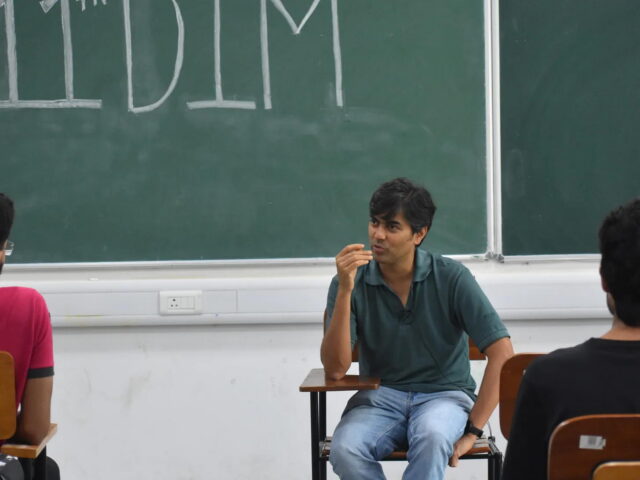
The phenomenon reached a breaking point in late 2026 when Dr. Suvrat Raju, a theoretical physicist at the International Centre for Theoretical Sciences in Bengaluru, India, formalized a benchmark experiment. Six months prior, Raju had tested an AI model against a private physics problem—a task he had solved himself but never published. While the model failed to produce a perfect result, its performance was sufficiently sophisticated to suggest that AI was nearing a threshold of professional competency. Following this, Raju and his colleagues curated a set of “private gems”—minor but rigorous research problems contributed by physicists—to establish the TheoPhysEval benchmark. The findings were stark: by September 2026, leading models could solve 60 percent of these tasks. Within weeks, the performance of GPT-6 Astra climbed to nearly 90 percent accuracy. In a follow-up assessment, when provided with human-written solutions, the AI successfully challenged human errors, ultimately solving 49 out of 50 problems correctly.
A Chronology of Rapid Advancement
The speed at which these models have achieved competency has stunned the scientific community. For much of the early 2020s, AI in physics was viewed as a supplementary tool, useful for literature searches or rudimentary code generation. However, by mid-2026, the utility of these models expanded into the core of theoretical labor.
In October 2026, reports surfaced of a Turkish physicist whose entire PhD thesis—a project requiring a year of manual labor and 500 pages of calculations—was recreated by the Claude Opus 5.5 model in just 10 hours. This anecdote reflects a broader trend among leading scientists. Eminent figures, including Ed Witten and Juan Maldacena, have begun acknowledging the use of AI in their recent publications, citing the technology’s ability to handle calculations that were previously deemed too time-consuming to pursue.
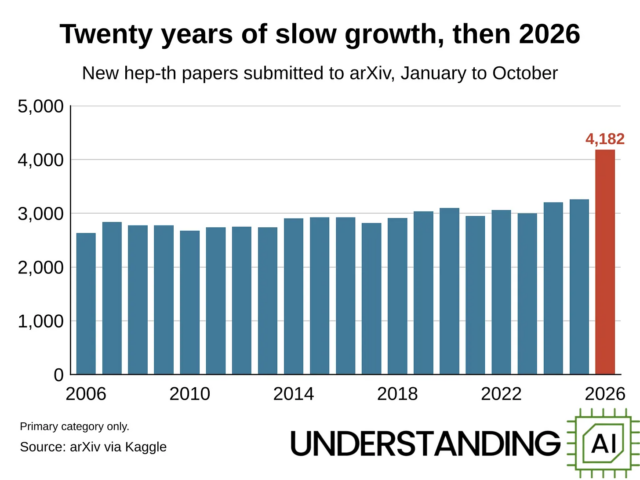
The integration of AI into daily research workflows is now pervasive. At the University of Texas at Austin, physicist Andreas Karch utilizes AI agents to verify his work, running them 24 hours a day to scan for errors in his past and current research. Similarly, Harvard’s Matthew Schwartz has adopted an aggressive approach, coordinating multiple threads of AI agents to tackle complex problems simultaneously. This surge in productivity is reflected in the publication rates on the science repository arXiv, where submissions to the high-energy physics theory (hep-th) category jumped 30 percent between January and October 2026, far outpacing the historical annual average growth rate of 8 percent.
The Saturation of Benchmarks
The rapid success of the TheoPhysEval benchmark has created an unintended consequence: the test is effectively saturated. Raju noted that the models have essentially hit the ceiling of well-defined, verifiable calculations that humans can produce. This leaves the scientific community in a precarious position. If a benchmark meant to measure intelligence is easily surpassed by current models, the metric itself ceases to be a useful tool for evaluating future progress.
The economic efficiency of these solutions is equally striking. Raju noted that each correct answer generated by the AI cost less than $3 in compute power. For the cost of a cup of coffee, a machine performed a day’s worth of work for a top-tier physicist. This realization has led to a mixture of astonishment and apprehension within the field, as experts grapple with the implications of AI systems that are not just faster, but potentially more accurate than the human researchers who trained them.
Implications for the Next Generation
Perhaps the most significant impact of this technological leap concerns the future of early-career physicists. Traditionally, the process of performing long, mechanical calculations was considered a rite of passage—a necessary exercise to build the intuition and conceptual mastery required to address the most profound questions in physics.
"It’s how we judge students, how we decide students have talent," Raju observed. The concern is that if AI removes the "mechanical grinding" of physics, young scholars may lose the opportunity to develop the internal mental architecture that supports high-level research. There is a palpable fear that the path to expertise is being disrupted. If an AI can perform the legwork of a PhD thesis in hours, the pedagogical value of that work is nullified.
Furthermore, the risk of "getting scooped" has increased. Researchers are now more guarded about sharing preliminary findings, fearing that if they reveal a breakthrough, an AI-equipped competitor could potentially solve the remaining steps before they do. This environment has forced some, like Raju, to pause the recruitment of new PhD students, as the long-term career outlook for traditional researchers remains increasingly uncertain.
The Experimental Wall
Despite the strides in computation, a fundamental divide remains between mathematical consistency and physical reality. The most significant open problem in physics—the unification of quantum mechanics and general relativity, or "quantum gravity"—remains largely inaccessible. While AI has recently proven successful in confirming mathematical proofs, such as the Yang-Mills theory, many physicists view these as "tying up loose ends" rather than pioneering discoveries.
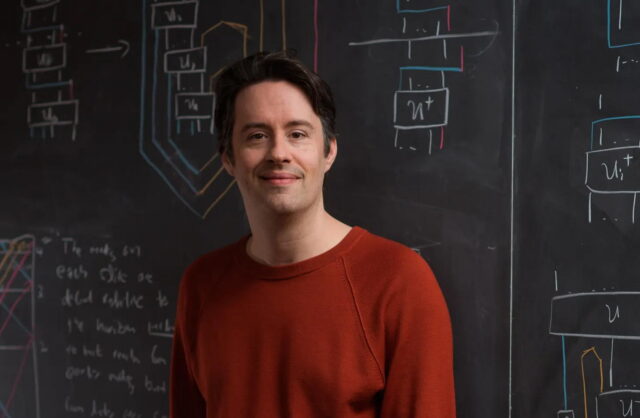
The core challenge, as physicist Andreas Karch noted, is not the lack of ideas, but the lack of experiments. The Large Hadron Collider, while a triumph of engineering, is insufficient to observe the quantum effects of gravity directly. Even if an AI were to generate a brilliant, consistent theory of quantum gravity tomorrow, verifying that theory would require technology far beyond our current capabilities. The irony is that we may soon reach a point where AI provides us with the "what" of the universe, while the "how" remains physically locked away by the limits of our experimental infrastructure.
The Shift Toward Interpretation
As the "shut up and calculate" era of mid-century physics fades, the role of the theoretical physicist may shift from calculation to interpretation. If AI can handle the mathematical heavy lifting, the human value-add becomes the ability to ask the right questions, synthesize disparate ideas, and determine the conceptual significance of AI-generated outputs.
This transition mimics the evolution of fields like biblical studies or art criticism, where scholars interpret existing texts rather than creating new ones. While some, like Daniel Harlow, express skepticism about the prospect of losing the hands-on process of discovery, others see it as a liberation. By offloading the "grind" of calculation, physicists may be freed to focus on the conceptual, philosophical, and ambitious problems that were previously sidelined by the sheer difficulty of the underlying math.
Collective Future or Individual Decline?
The future structure of physics may also change, moving away from the solitary genius model toward a more collective, industry-style approach. As the cost of compute and the complexity of AI agents increase, physicists may find themselves pooling resources, forming large-scale research collaborations, and petitioning government and institutional bodies for the massive computing power required to advance the field.
The industry response has been largely optimistic. Researchers like Matthew Schwartz and Juan Maldacena emphasize the potential for new discoveries, noting that they are more excited than concerned. The prospect of finally understanding dark matter or achieving a unified field theory is a compelling goal that may outweigh the costs of the transition. As Raju summarized, if an AI were to provide the answer to a question that has eluded humanity for centuries, it would be difficult for the community to reject the result simply because it arrived "too fast."
As it stands, the field of theoretical physics is in a state of rapid flux. Whether the integration of AI leads to a new golden age of discovery or a fundamental restructuring of what it means to be a scientist remains to be seen. What is certain is that the tools of the trade have changed, and the community is now tasked with determining how to steer the course of human knowledge in an era where the machine is increasingly becoming a partner in the most intimate aspects of scientific inquiry.