NASA Bolsters Domestic Aerospace Supply Chain Through Newly Revamped Small Business Program With Boeing and GRACE Aerospace Partnership

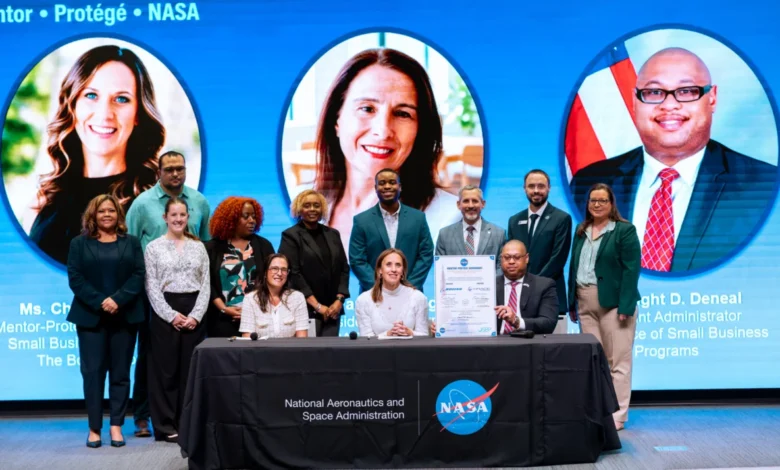
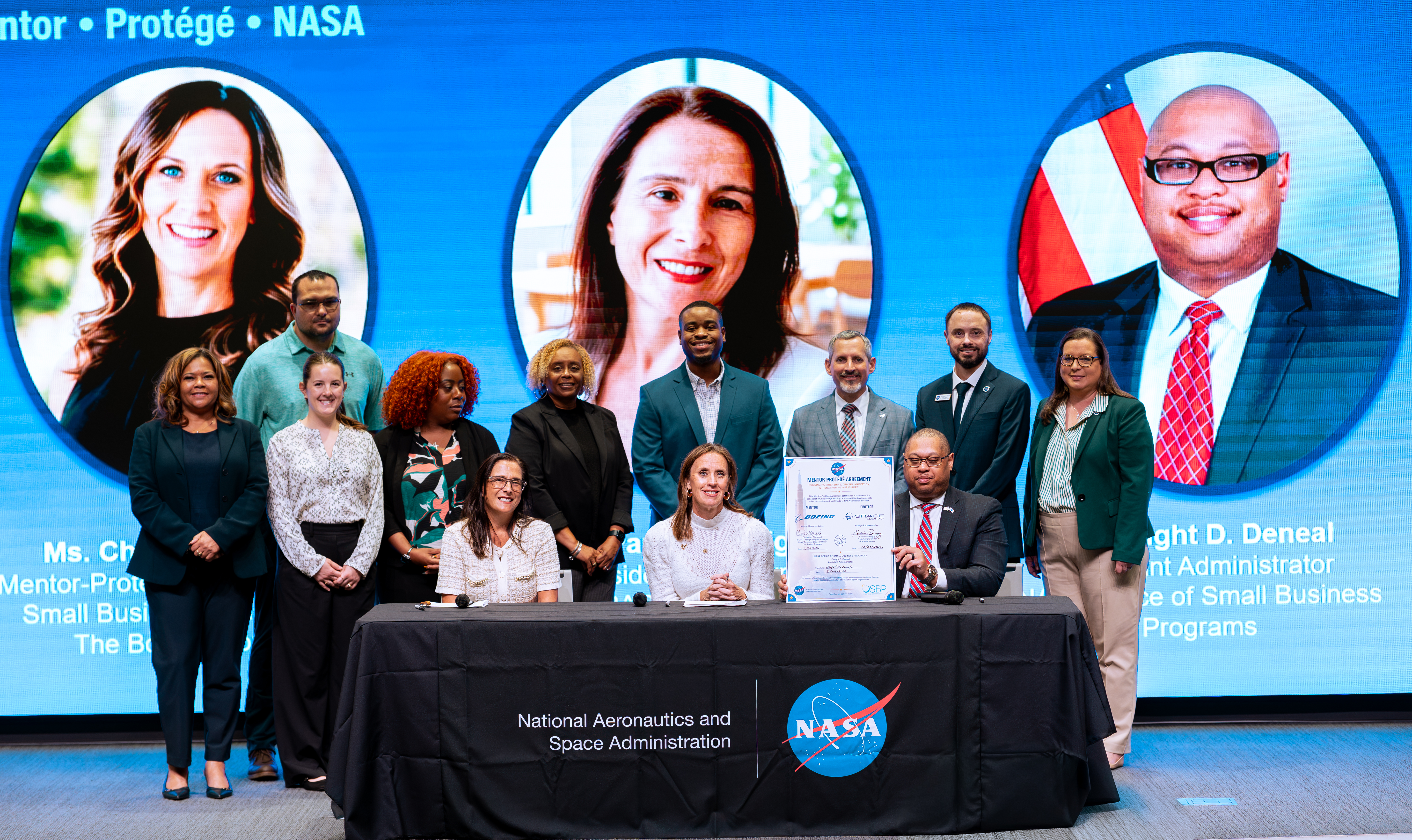
The National Aeronautics and Space Administration (NASA) is aggressively transforming how it collaborates with small businesses across the United States to safeguard and strengthen the nation’s domestic aerospace industrial base. In an effort to secure the robust supply chains required for upcoming crewed exploration, lunar infrastructure development, and deep-space scientific missions, the agency has officially modernized and renamed its core small business initiative to the Small Business Supplier Development Program. As part of this sweeping overhaul, NASA announced a high-profile Mentor-Protégé Agreement pairing global aerospace giant The Boeing Company with GRACE Aerospace, a specialized small business manufacturer.
This strategic partnership highlights a broader federal push to ensure that America maintains a technological and manufacturing edge in aerospace. By uniting the vast infrastructural reach of a prime contractor like Boeing with the specialized manufacturing agility of GRACE Aerospace, NASA aims to cultivate a more resilient, responsive, and innovative network of suppliers capable of weathering geopolitical disruptions, supply chain bottlenecks, and the escalating technological demands of modern spaceflight.
Streamlining Supplier Development for Future Exploration
The restructuring of NASA’s supplier engagement comes at a critical juncture for the United States space program. As the agency advances its Artemis campaign—aimed at establishing a sustainable human presence on the Moon and eventually launching crewed missions to Mars—the reliability of every component in a spacecraft has never been more paramount. Supply chain vulnerabilities exposed during global economic shifts in recent years forced federal agencies to reevaluate their reliance on single-source suppliers and overseas manufacturing dependencies.
To counteract these vulnerabilities, NASA’s Office of Small Business Programs (OSBP) has systematically dismantled bureaucratic hurdles. The agency has streamlined the application process for its supplier development initiatives, drastically reduced administrative burdens, accelerated review and approval timelines, and significantly enhanced financial and contractual incentives for prime contractors to participate. These procedural improvements are designed to lower the barrier to entry for innovative small businesses that might otherwise lack the resources to navigate complex federal procurement channels.
Dwight Deneal, assistant administrator of the Office of Small Business Programs at NASA Headquarters in Washington, emphasized the strategic philosophy behind the overhaul. "We have intentionally redesigned the program as a mission-focused tool for strengthening industrial base readiness and mission success," Deneal stated. "By simplifying participation and focusing developmental assistance on the capabilities NASA needs most, we are helping build a stronger, more resilient supplier base that can support the agency’s highest-priority missions."
Anatomy of the Boeing and GRACE Aerospace Partnership
At the heart of NASA’s latest announcement is a nearly $500,000 Mentor-Protégé Agreement funded entirely by The Boeing Company. Under the terms of this structured partnership, Boeing will provide comprehensive, hands-on technical, operational, and business management assistance to help GRACE Aerospace expand its capabilities as a premier supplier of mission-critical aerospace hardware.
GRACE Aerospace brings to the table two decades of accumulated engineering and manufacturing experience supporting demanding defense and aerospace customers. However, scaling up to meet the exacting, zero-failure tolerances required for deep-space missions demands rigorous quality assurance, advanced material handling, and sophisticated testing protocols. Through this mentorship, Boeing engineers and supply chain specialists will work
closely with GRACE’s leadership and technical teams to transfer institutional knowledge and modernize production workflows.
Christian Diamond, Mentor-Protégé Program manager and small business liaison officer for Boeing, highlighted the mutual benefits of the arrangement. "Boeing is proud to continue its longstanding relationship with NASA in support of its mission and the opportunities this agreement creates for Boeing, GRACE, and the broader aerospace industrial base," Diamond noted. "Through this partnership, Boeing looks forward to sharing our expertise to support the continued growth and long-term success of a small business while strengthening our supplier base."
For GRACE Aerospace, the partnership represents a transformative milestone in its corporate evolution. Pauline Sevigny, president and owner of GRACE Aerospace, expressed deep gratitude for the opportunity to participate in the high-stakes initiative. "GRACE Aerospace is thankful and honored to participate in the program," Sevigny said. "We look forward to growing and learning from industry experts and supporting the mission of resilience and space superiority."
Historical Evolution of NASA’s Mentor-Protégé Framework
The roots of federal mentor-protégé programs stretch back decades, originating within the Department of Defense in the early 1990s as a mechanism to encourage large defense contractors to subcontract work to historically underutilized small businesses, minority-owned enterprises, and disadvantaged businesses. Over the years, civilian agencies like NASA adopted similar frameworks to harness the agility and innovative capacity of the small business sector while ensuring that prime contractors actively transfer valuable technical know-how.
Historically, however, these programs were frequently criticized by industry participants for excessive paperwork, rigid compliance metrics, and lengthy approval cycles that could take up to a year to clear federal review. Small businesses, operating on tight margins and lean staffing models, often found the administrative overhead to be a deterrent rather than an incentive. Large prime contractors, similarly constrained by bureaucratic friction, occasionally struggled to justify the resource allocation required to mentor smaller firms effectively.
Recognizing these systemic challenges, NASA’s OSBP initiated a multi-year review of its policies, culminating in the current transformation. By cutting red tape and tying mentorship outcomes directly to mission-critical hardware production, NASA has repositioned the program from a compliance-driven checkbox into an aggressive industrial readiness engine. The updated framework emphasizes measurable capability gains, ensuring that every participating protégé emerges with enhanced manufacturing readiness levels (MRLs) and the capacity to bid on major federal and commercial space contracts independently.
Economic and Geopolitical Implications for the Domestic Industrial Base
The modernization of NASA’s Small Business Supplier Development Program carries profound economic and geopolitical implications. The global aerospace market is undergoing a structural renaissance characterized by intense international competition, particularly from emerging state-backed space programs in Asia and private-sector commercial space ventures. In this environment, the strength of a nation’s space program is inextricably linked to the depth and resilience of its domestic manufacturing ecosystem.
When a small enterprise like GRACE Aerospace receives targeted mentorship and capital investment from an industry titan like Boeing, the positive economic shockwaves ripple throughout the local and regional economy. Small businesses account for nearly half of private-sector employment in the United States and serve as the primary engine for disruptive technological innovation. By integrating these nimble firms into the high-technology aerospace supply chain, NASA helps inject fresh engineering talent, novel fabrication techniques, and cost-effective solutions into legacy programs that might otherwise suffer from stagnation or inflated costs.
Furthermore, fostering a diverse and redundant supplier network directly addresses national security concerns regarding supply chain choke points. Rare earth elements, specialized alloy processing, precision machining, and advanced avionics manufacturing are domains where supply disruptions can halt multi-billion-dollar flight programs for months or years. By distributing critical manufacturing capabilities across a wider array of vetted, highly capable small businesses, NASA and its prime contractors insulate the nation’s space architecture against unexpected industrial shocks.
Broader Impact on NASA’s Artemis Generation and Beyond
As NASA prepares for the next era of human space exploration, the demands placed upon its industrial partners will only intensify. The Artemis program requires not only heavy-lift launch vehicles like the Space Launch System (SLS) and human landing systems, but also an array of complex surface habitats, autonomous rovers, life support systems, and in-situ resource utilization (ISRU) machinery.
No single prime contractor can build every component of these sprawling systems in-house. The success of America’s return to the Moon—and the subsequent journey of human crews to Mars—relies entirely on a vast, interconnected web of specialized subcontractors, tier-one manufacturers, and innovative component suppliers. Programs like the newly rebranded Small Business Supplier Development Program serve as the connective tissue binding these disparate elements into a cohesive, mission-ready force.
Industry analysts note that agreements such as the one between Boeing and GRACE Aerospace demonstrate that public-private partnerships can yield tangible benefits without requiring massive, direct federal appropriations for industrial plant expansions. By leveraging private sector capital—such as Boeing’s $500,000 investment in GRACE—the federal government achieves strategic manufacturing goals efficiently while simultaneously fostering a competitive, free-market environment where small businesses can thrive on merit and capability.
Looking Ahead: The Future of Federal Small Business Initiatives
As NASA continues to roll out the updated features of its supplier development program, agency officials expect an increase in participation from both additional prime contractors and prospective small business protégés. The Office of Small Business Programs has indicated that it will closely monitor the progress of the Boeing-GRACE partnership, utilizing key performance indicators such as delivery timelines, defect reduction rates, and technological scaling metrics as a benchmark for future agreements.
For GRACE Aerospace, the immediate focus turns to executing the terms of the mentorship agreement, upgrading its internal manufacturing infrastructure, and preparing to deliver critical hardware that will fly on upcoming NASA-supported missions. For Boeing, the partnership reinforces its ongoing commitment to nurturing domestic supply chain excellence and maintaining leadership in aerospace manufacturing. And for NASA, each successfully integrated small business represents another vital anchor securing the future of American preeminence in space exploration, scientific discovery, and industrial resilience.