Amphibian Population Resiliences Unlocked: Crucial Timing of Immune Development Offers Hope Against Devastating Fungal Disease

Scientists have uncovered why some amphibian populations rebound after being devastated by a deadly fungal disease that has wiped out frogs and toads around the world. This groundbreaking research, a collaborative effort between University College London (UCL), the Zoological Society of London (ZSL), and Imperial College London, has pinpointed the precise timing of an amphibian’s immune system maturation as the critical factor determining survival against the virulent chytrid fungus, Batrachochytrium dendrobatidis (Bd). The findings, published in the prestigious journal Nature Chemical Biology, offer a vital glimmer of hope for threatened amphibian species and could pave the way for novel human health applications.
The Global Amphibian Crisis: A Silent Extinction Driven by Fungal Pathogen
The chytrid fungus, Batrachochytrium dendrobatidis (Bd), has emerged as one of the most devastating wildlife diseases of modern times, responsible for precipitous declines and extinctions in amphibian populations across continents. The disease it causes, chytridiomycosis, is a grim affliction that targets the skin of frogs and toads. Amphibian skin is vital for respiration, hydration, and ion exchange, and Bd infection compromises these essential functions by degrading the skin’s keratinized layers.
A crucial aspect of this fungal onslaught is its differential impact across amphibian life stages. Tadpoles and larval forms, while aquatic, possess a skin composition that Bd cannot readily feed upon. Their relative immunity, however, is transient. As they metamorphose into terrestrial or semi-aquatic adults, their skin becomes rich in keratin, transforming them into highly susceptible hosts. This developmental vulnerability is often the trigger for mass die-offs, decimating populations that had previously appeared robust. Global estimates suggest that Bd has been implicated in the decline of at least 501 amphibian species, with 90 extinctions attributed directly to the pathogen since the 1980s, representing a significant proportion of all known amphibian extinctions in recent history.
Unraveling the Mystery of Recovery: A Tale of Two Toad Populations
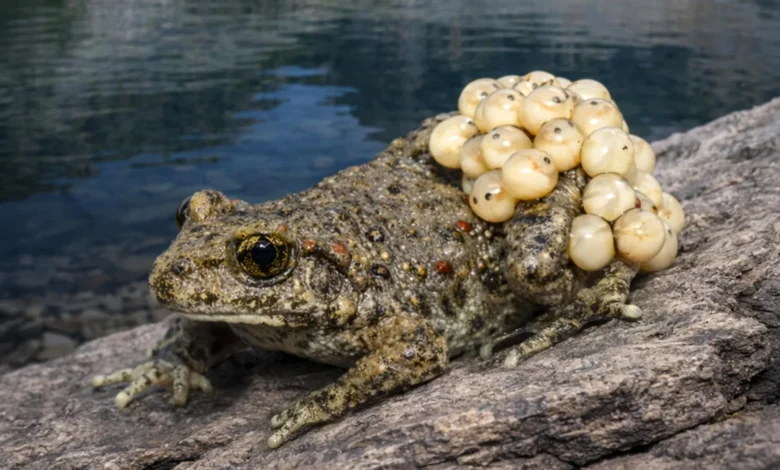
To unravel the enigma of population recovery in the face of persistent fungal presence, researchers focused their attention on the common midwife toad (Alytes obstetricans) in the Pyrenean region of France and Spain. This area, characterized by four distinct lakes, had all experienced severe Bd outbreaks. The study observed a stark divergence in the fate of the toad populations inhabiting these lakes. At one lake, the midwife toad population was in a precipitous decline, teetering on the brink of local extinction. In stark contrast, at the other three lakes, the populations had not only stabilized but were actively rebounding, despite the continued presence of the Bd fungus in their aquatic environments. This observable difference provided a unique natural laboratory for understanding the mechanisms of resilience.
The Critical Role of Early Immune Maturation
The scientific team hypothesized that differences in the amphibians’ innate immune systems might hold the key to their survival. Their investigation centered on antimicrobial peptides (AMPs), naturally occurring chemical compounds secreted from amphibian skin that form a crucial line of defense against a broad spectrum of pathogens, including fungi.
The research revealed a compelling correlation: toads from the recovering populations demonstrated an accelerated development of these vital protective peptides. Crucially, this enhanced immune preparedness began during their tadpole stage, well before they became vulnerable as adults. By the time they metamorphosed and their skin keratinized, their immune defenses were already robust and well-established, providing an immediate shield against Bd.
Conversely, toads from the struggling population exhibited a significantly lower production of these protective peptides during their tadpole phase. This delayed or insufficient immune maturation left them ill-equipped to combat the fungal infection once they reached adulthood, leading to continued population collapse.
Dr. Phillip Jervis, lead author of the study and affiliated with UCL Chemistry, ZSL Institute of Zoology, and Imperial College London, articulated the significance of these findings: "Our study shows species that have declined heavily from this disease can still recover. They have the tools to fight off infection – it just depends on timing. The disease kills toads and frogs as they turn from tadpoles to adults. Getting mature immunity at the tadpole stage helps these toads survive and the population to continue."
Investigating the Triggers: Genetics, Environment, and Predator-Prey Dynamics
Dr. Jervis further elaborated on the potential factors influencing this crucial early immune development, suggesting that the next steps in the research will explore what specific elements might hinder or promote the timely maturation of these immune systems. "This could be down to genetics or environmental factors such as temperature or the presence of trout – a major danger for tadpoles that could drive them to develop into adults faster so they can leave the water, meaning less time for their immune system to develop," he explained.
The implication of environmental factors, particularly the presence of predators like trout, is significant. Trout are known predators of tadpole stages. If tadpoles perceive a high threat of predation, they may prioritize rapid metamorphosis to escape the aquatic environment. This accelerated life cycle, while a survival strategy against predation, could inadvertently compromise their immune development by truncating the critical tadpole stage during which AMPs are produced. This highlights a complex interplay between different ecological pressures shaping amphibian resilience.
A Hidden Arsenal: Discovery of Over a Thousand Novel Immune Peptides
To comprehensively assess the chemical defenses of the midwife toads, the research team employed advanced mass spectrometry techniques. This powerful analytical tool allowed them to meticulously examine the complex mixture of peptides released from the toads’ skin. The results were astonishing: the analysis uncovered a vast and previously unrecognized repertoire of immune peptides. Of the 1,152 peptides identified, an overwhelming majority – 1,145 – were novel, with only seven having been previously documented in scientific literature.
This discovery of such a large and diverse collection of AMPs underscores the sophisticated evolutionary strategies employed by amphibians to combat microbial threats. The study further solidified the link between peptide diversity and survival: tadpoles that produced a broader spectrum of these defense molecules during their larval stage were significantly more likely to survive subsequent Bd outbreaks as adults. Conversely, populations with a more limited peptide profile during the tadpole stage continued to experience high mortality rates, reinforcing the critical role of early and diverse immune priming.
Potential for Human Health Innovations: Antimicrobial Peptides as Future Medicines
The implications of this research extend far beyond amphibian conservation. The discovery of these novel antimicrobial peptides opens exciting avenues for the development of new therapeutic agents for human health. Professor Alethea Tabor, senior author and head of the research at UCL Chemistry, emphasized this potential: "We discovered a far greater diversity of peptides than we expected. We now need to understand how they work to control pathogens and which ones are anti-microbial. A lot of medicines for humans were initially found in the natural world – penicillin came from fungi, for example. So these peptides are new leads that could be used to help human health, especially as we have our own problems as a species with the rise of antimicrobial resistance, which is requiring us to find new ways to treat infections."
The escalating global crisis of antimicrobial resistance (AMR) poses a significant threat to public health, rendering existing antibiotics increasingly ineffective. The natural world, a wellspring of biochemical innovation, has historically provided crucial breakthroughs in medicine. The AMPs identified in this study represent a new frontier in the search for novel antimicrobial agents that could combat drug-resistant bacteria, fungi, and other pathogens.
The researchers utilized sophisticated tandem mass spectrometry at UCL Chemistry. This technique involves breaking down peptides into smaller fragments, meticulously measuring the mass of these fragments, and then reconstructing the original peptide’s structure. This high-resolution analysis enabled the accurate identification and sequencing of hundreds of previously unknown molecules, a feat that was largely impossible with older analytical methods.
Dr. Kersti Karu, a co-author from UCL Chemistry, highlighted the technological advancements driving such discoveries: "The ability to analyze hundreds to thousands of molecules in parallel has only emerged over the past decade. This approach is more commonly applied in human health research, for example to distinguish cancer cells from normal tissue, but is increasingly being extended to other areas of biological investigation." The application of these cutting-edge analytical tools to ecological and evolutionary biology is unlocking unprecedented insights into natural systems.
Broader Implications for Conservation and Scientific Research
The findings of this study have profound implications for amphibian conservation strategies. Understanding the critical window for immune development in vulnerable species can inform targeted interventions. For instance, if specific environmental factors are identified as inhibitors of early immune maturation, efforts could be made to mitigate those factors in threatened populations. Furthermore, the identification of resilient populations can serve as valuable models for studying adaptation and recovery.
The research, generously funded by the UK’s Natural Environment Research Council (NERC) and the Leverhulme Trust, underscores the importance of interdisciplinary collaboration between ecologists, immunologists, chemists, and evolutionary biologists. The integration of advanced analytical techniques with ecological field studies has been pivotal in deciphering complex biological phenomena.
As the world grapples with the ongoing amphibian extinction crisis, this research offers a vital beacon of understanding. The delicate dance between pathogen and host, played out over evolutionary timescales, has revealed a critical factor in survival: the opportune timing of an immune system’s readiness. The lessons learned from these resilient toads in the Pyrenees not only illuminate the path to amphibian recovery but also hold the potential to safeguard human health in an era of emerging infectious diseases and dwindling antimicrobial arsenals. The natural world, in its intricate complexity, continues to offer invaluable solutions to some of humanity’s most pressing challenges.