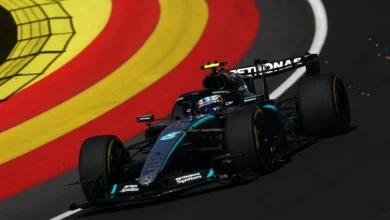
Andrea Kimi Antonelli’s stunning Italian Grand Prix victory from 19th on the grid cements his status as a generational Formula 1 talent.


The Italian Grand Prix at the Autodromo Nazionale Monza has long been considered the ultimate test of nerves, speed, and strategic acumen. In a performance that will be studied for years to come, Mercedes driver Andrea Kimi Antonelli secured a victory that not only ignited the home crowd but fundamentally altered the narrative of the current Formula 1 season. Starting from the 19th position on the grid, Antonelli’s masterclass in race craft saw him carve through the field to claim his seventh career win, marking the first time in 60 years that an Italian driver has stood atop the podium at their home race.
A Historic Achievement at the Temple of Speed
The significance of this win cannot be overstated. Monza, often referred to as the "Temple of Speed," is a venue steeped in history, where the margins for error are razor-thin. For a driver of Antonelli’s youth to navigate a congested mid-pack and emerge triumphant required a combination of high-speed bravery and calculated aggression.
Former Formula 1 driver and veteran analyst David Coulthard, speaking on the Up To Speed podcast, placed the performance in an elite category. "This is up there with the greats," Coulthard remarked. While cautious about drawing premature comparisons to multi-world champions like Lewis Hamilton, Max Verstappen, Ayrton Senna, or Michael Schumacher, Coulthard emphasized that the sheer mechanics of the drive—positioning the car, managing tire degradation, and executing overtakes under extreme pressure—mirrored the legendary drives of those icons.
Chronology of the Monza Masterclass
The weekend did not begin with the promise of a podium for the young Mercedes driver. Qualifying proved to be a significant stumbling block, leaving Antonelli languishing in 19th place. This deficit meant that, from the moment the lights went out on Sunday, his objective was pure recovery.
The race unfolded in several distinct phases:
- The Opening Laps: Antonelli immediately displayed a high level of situational awareness, avoiding the inevitable "first-lap incidents" that often plague the rear of the grid. By the end of lap five, he had already clawed his way into the top 15.
- The Middle Stint: Capitalizing on a perfectly timed pit strategy, the Mercedes garage opted for a long opening stint. This allowed Antonelli to exert pace when the tires of his competitors began to fall off. His ability to maintain consistent lap times during this phase was the pivot point of his race.
- The Charge: By the final third of the race, Antonelli was within striking distance of the podium contenders. His overtakes at the Variante del Rettifilo and the Curva Grande were clinical, demonstrating a maturity beyond his 20 years.
- The Final Sprint: Having moved into the lead, Antonelli managed a late-race safety car restart with the poise of a seasoned veteran, holding off the charging pack to secure the victory.
Statistical Context and Championship Implications
Antonelli’s performance at Monza has ripple effects across the entire 2024 Drivers’ Championship standings. With this victory, he has extended his lead to 66 points over his teammate, George Russell. This internal rivalry has been a focal point of the season, but the gap now suggests that the team’s development and focus may increasingly align with the championship leader.
Seven-time world champion Lewis Hamilton currently sits in third place in the standings, trailing Antonelli by 76 points. While the season remains long, the momentum is firmly with the young Italian. The following table summarizes the top-tier standings heading into the next round:
| Driver | Team | Points |
|---|---|---|
| Andrea Kimi Antonelli | Mercedes | [Leader] |
| George Russell | Mercedes | -66 |
| Lewis Hamilton | Mercedes | -76 |
The data underscores a clear shift in the team’s competitive dynamic. While Hamilton remains a formidable competitor, Antonelli’s ability to extract maximum performance from the car—even when starting from the back—indicates a shift in the team’s primary championship trajectory.

Expert Analysis and Reaction
The reaction from the paddock has been one of collective awe. Analysts have noted that while individual brilliance is often celebrated in Formula 1, it is rare to see a driver in their early career handle the psychological weight of a home race with such detachment.
"There has to be a first time for everything," Coulthard noted during his analysis. "That’s the high-water line for Kimi right now. We knew he was a winner. We now know he’s a racer and a winner."
The presence of Sebastian Vettel at the event, who was seen paying tribute to Michael Schumacher’s history at the circuit, added a layer of poignancy to the weekend. It served as a reminder of the lineage of great drivers who have conquered Monza, and the fact that Antonelli’s name is now being mentioned in the same breath as these figures is a testament to the magnitude of his achievement.
Broader Impact on the Sport
The implications of this win extend beyond the points tally. For the sport of Formula 1, the emergence of a young Italian star who can command the podium at Monza is a massive commercial and cultural win. Italy has been searching for a homegrown hero to capture the imagination of the Tifosi for decades, and Antonelli’s ascent fulfills that long-standing void.
From a technical perspective, the race also highlighted the Mercedes team’s ability to provide a car that, while perhaps not the most dominant in qualifying, is remarkably efficient in race conditions. The data collected from Antonelli’s car during his climb from 19th to first will be invaluable for the engineering team as they refine the W15 for the remaining tracks on the calendar.
Furthermore, the pressure on Antonelli will now escalate. With a significant championship lead and the eyes of the global motorsport community fixed upon him, the remainder of the season will serve as a test of his consistency. The ability to win under pressure is one thing; the ability to maintain that level of excellence as the hunted—rather than the hunter—is the final threshold he must cross.
Conclusion
Andrea Kimi Antonelli’s performance at the Italian Grand Prix was more than just a race win; it was a defining moment in his professional development. By overcoming a poor starting position, the immense pressure of a home crowd, and the technical challenges of the Monza circuit, he has demonstrated that he possesses the essential qualities of a future world champion.
As the F1 circus moves to the next destination, the paddock will continue to dissect the data and the imagery of the Monza race. However, the conclusion remains clear: the hierarchy of Formula 1 has been challenged, and in the heart of Italy, a new standard for excellence has been established. Whether this win serves as the catalyst for a championship title remains to be seen, but for the history books, the Italian Grand Prix of 2024 will forever be remembered as the day Andrea Kimi Antonelli arrived at the pinnacle of the sport.