Bridging the Great Divide How Harvard Researchers Are Proving Sports Fandom Is the Social Glue America Needs

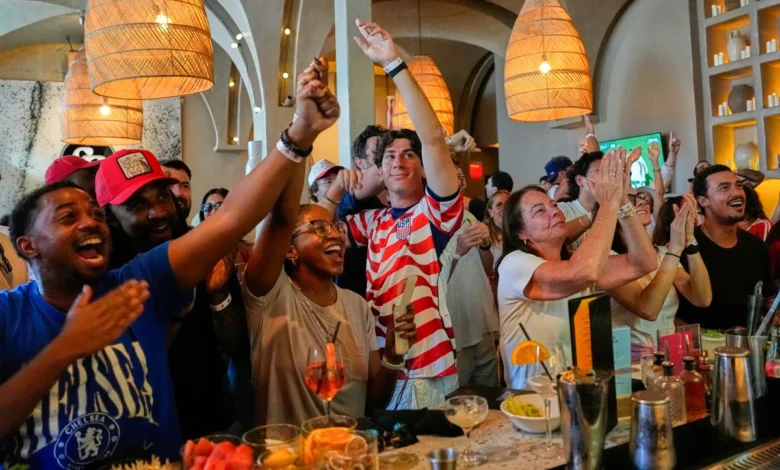
The American social fabric, characterized by its vast diversity and increasingly fractured by stark partisan divides, presents a challenge so daunting that many sociologists and policymakers struggle to find a starting point for reconciliation. However, at the Harvard Kennedy School (HKS), a new research initiative is proposing that the solution may not lie in political discourse or legislative reform, but rather in the bleachers of stadiums and the shared rituals of sports fandom. Led by Professor Todd Rogers and doctoral student Audrey Feldman, the Fandom and Social Connection Initiative is exploring the proposition that sports—a powerful and often underestimated social phenomenon—could be a primary driver in improving individual lives and strengthening the foundational ties of modern society.
While the business of sports is a multi-billion-dollar global industry, the social implications of fandom have remained remarkably underexplored in academic circles. The new project at HKS aims to fill this scholarly gap, with its first wave of empirical findings scheduled for publication in the coming months. The initiative posits that in an era where traditional social institutions are in decline, sports fandom remains one of the few remaining "wide, deep, and diverse" infrastructures capable of uniting people across racial, economic, and ideological lines.
The Scholarly Void and the "Homo Erectus" Perception
Despite the ubiquity of sports in daily life, Rogers and Feldman discovered a significant disparity in how the subject is treated by the academic community. A review of top journals across the social sciences revealed that only about one in every 800 articles concerned sports. This lack of attention suggests a blind spot in the study of human behavior and social organization. Rogers, the Weatherhead Professor of Public Policy at HKS, argues that sports fandom is not only understudied but often actively maligned by those outside the community.
To quantify this bias, the researchers conducted a survey asking non-fans to rank sports fans on the "Ascent of Man" scale—the famous illustration showing the evolution from early hominids to modern humans. The results were telling: most non-fans placed passionate sports fans near the level of Homo erectus, suggesting a perception of fandom as a primitive or less-evolved form of social engagement. Rogers contends that this is a "dangerously low appraisal" of a social structure that provides critical infrastructure for human connection in a world where few such institutions remain.
The Decline of Traditional Social Capital
The HKS research arrives at a time when American social capital is at a historic low. For decades, sociologists have tracked the "secular decline" of traditional social organizations, including social clubs, civic groups, political parties, and religious institutions. These were once the primary venues where individuals from different walks of life interacted. As these institutions have faded, the resulting vacuum has been filled by digital echo chambers and polarized political identities.
In this landscape, sports fandom stands out as a resilient exception. In the United States, nearly 75 percent of the population follows a professional sports team, and a majority of those individuals consider their fandom to be a core component of their identity. Globally, the numbers are even more staggering; approximately 51 percent of the world’s population identifies as a fan of soccer alone. Even in the U.S., where soccer has historically trailed behind other sports, 27 percent of Americans identify as fans, with 40 percent reporting plans to watch major international events like the World Cup.
Quantifying the "Fan Bonus" Through Game Theory
To move beyond anecdotal evidence, Rogers and Feldman applied rigorous modern tools, including game theory, to test the tangible effects of shared fandom. In a paper currently under review, the researchers detailed a computer-based survey where participants were presented with hypothetical "counter-partisans"—individuals who held political and cultural views diametrically opposed to their own. Participants were then asked to award a "bonus" to these individuals based on various shared characteristics.
The findings were striking. When a participant learned that a counter-partisan rooted for the same sports team, they awarded the bonus at rates that significantly outstripped other common markers of identity, such as shared race, ethnicity, education level, or home region. Only a shared religion came close to matching the influential power of a shared sports team. This suggests that the "fan bonus" is a potent de-polarizer, capable of overriding deep-seated political animosity through the recognition of a shared, non-political identity.
Sports as a Political De-Polarizer
The political implications of these findings are particularly relevant in the current American climate. The researchers analyzed the political makeup of various fanbases and compared them to the current state of the U.S. Congress. While 19 of the 50 current state delegations in Congress are comprised entirely of a single political party, professional sports fanbases remain remarkably diverse.
For example, the Tennessee Titans, identified as having the "reddest" (most Republican) fanbase in the NFL, still maintain a 2-to-1 ratio of Republicans to Democrats. Conversely, the Los Angeles Chargers, the "bluest" (most Democratic) fanbase, reflect roughly the inverse. This internal diversity means that a stadium or a sports bar is one of the few places in modern America where a person is likely to be surrounded by people who disagree with them politically but are united by a common, passionate goal.
Feldman, who earned her bachelor’s in economics from Notre Dame, notes that this shared interest creates a "mutual respect" that is often missing from other cross-partisan interactions. She cites the example of rivalries, such as Notre Dame versus Ohio State or Manchester United versus Liverpool. Even in cases of bitter rivalry, fans of opposing teams often find they have more in common with each other—through their shared knowledge and passion for the game—than they do with individuals who do not follow the sport at all.
The Ritual and Psychology of Synchrony
The HKS initiative also draws on the work of Daniel Wann, a professor at Kentucky’s Murray State University and a pioneer in the psychology of fandom. Wann describes shared fandom as a "shared photo album." To follow the same team is to share a history and a future; it is to know where another person was during a major championship years ago and where they will be when the next season kicks off.
This connection may even be physiological. Rogers points to psycho-physiological research suggesting that the brain activity (EEGs) of spectators can start to synchronize around the emotional highs and lows of a game. This "synchronization of hearts" provides a level of human connection that is difficult to replicate in other settings. Unlike the weather, which is a common but shallow topic of conversation, sports are engrossing, human, and nearly inexhaustible in their depth, yet they remain "safe" compared to the volatility of current events.
Real-World Interventions and Future Outlook
The Fandom and Social Connection Initiative is not confined to the laboratory. Backed by a gift from FOX Sports and seeking partnerships with professional leagues, Rogers and Feldman are actively testing social interventions. This summer, they are partnering with the Triple-A affiliate of the Boston Red Sox to study ways to nudge spectators into conversation with their neighbors in the stands, aiming to turn passive observation into active social connection.
In an op-ed published in TIME last fall, the researchers argued that NFL fandom could be viewed as a "simple and universally accessible medicine" for the modern epidemic of loneliness. Their experiments have already shown that they can induce 40 percent of participants to watch a game with others, resulting in a feeling of increased social connection that persists for weeks.
As the American social fabric continues to face the pressures of polarization and isolation, the work of the Harvard Kennedy School suggests that the path to mending these tears might be found in the most unlikely of places. By treating sports fandom as a serious subject of social science rather than a mere pastime, Rogers and Feldman are uncovering a powerful, existing infrastructure for unity. Their research indicates that while we may not agree on who should lead the country, we can still find common ground in the hope that our team finally wins it all next year. In a world of dwindling shared spaces, the stadium remains a vital sanctuary for the kind of collective experience that makes a society possible.