Faculty No-Confidence Vote at Michigan State University Signals Deepening Crisis in Governance and Leadership Stability

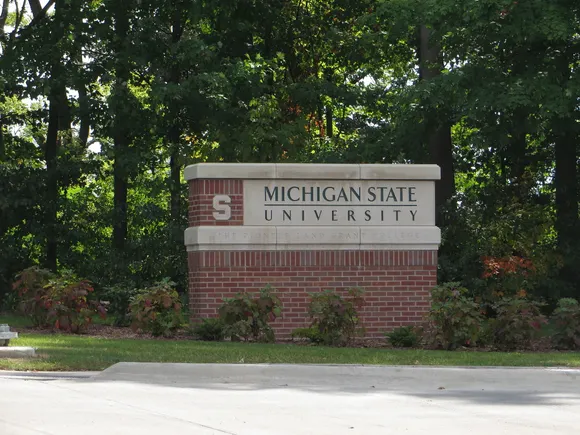
The Academic Congress of Michigan State University has delivered a staggering rebuke to the institution’s Board of Trustees, passing a resolution of no confidence by an overwhelming margin that underscores a profound rift between the faculty and the university’s governing body. In a vote that reflects nearly a decade of systemic instability and administrative friction, 1,199 faculty members voted in favor of the measure, while only 120 voted against it. The resolution, though symbolic in a legal sense, serves as a formal declaration that the educators and researchers at one of the nation’s premier land-grant institutions no longer trust their overseers to act in the best interest of the university.
The language of the resolution was pointed and brief, stating: “Be it Resolved, That the Academic Congress of Michigan State University lacks confidence and trust in the Board of Trustees to effectively oversee Michigan State University.” This collective action is the latest in a series of escalations following years of internal board squabbles, allegations of ethical misconduct, and a revolving door of executive leadership that has seen six different presidents take the helm since 2018.
A Legacy of Institutional Trauma
The roots of the current discord are inextricably linked to the 2016 revelations surrounding Larry Nassar, a former MSU sports medicine physician who sexually abused hundreds of athletes under the guise of medical treatment. The scandal, which remains one of the most significant crises in the history of American higher education, led to the resignation of then-President Lou Anna K. Simon and a $500 million settlement with survivors. In the years since, the Board of Trustees has been frequently accused of failing to implement the cultural and structural changes necessary to move the university forward.
Faculty leaders argue that the board has remained mired in a "crisis mode" mentality, prioritizing internal politics over institutional progress. This environment has contributed to a pattern of presidential turnover that has hindered long-term strategic planning. Following Simon’s departure, the university saw John Engler serve as interim president, followed by Satish Udpa in an acting capacity, and then Samuel Stanley Jr., who was hired in 2019 to provide a "steady hand."
However, the stability promised by Stanley’s appointment was short-lived. In 2022, Stanley resigned, citing a total loss of confidence in the Board of Trustees. He specifically pointed to what he described as the board’s inappropriate interference in administrative functions and its failure to adhere to established governance protocols. His departure triggered a previous no-confidence vote from the Faculty Senate, yet the board’s internal dynamics appeared to remain largely unchanged.
The Guskiewicz Resignation and Reversal
The immediate catalyst for the current no-confidence measure involves the turbulent tenure of Kevin Guskiewicz, who was brought in from the University of North Carolina at Chapel Hill to serve as MSU’s latest permanent president. The relationship between Guskiewicz and the board appeared strained from the outset, culminating in a dramatic series of events during the summer of 2024.
In a move that shocked the campus community, Guskiewicz initially announced his intention to depart MSU to take the top leadership role at Clemson University. In his farewell correspondence, Guskiewicz was unusually candid about the obstacles he faced at Michigan State, citing a "lack of shared commitment to collaboration" and a "toxic" environment created by the board. He specifically accused certain board members of abusing their access to privileged information to "misrepresent facts, manipulate situations and selectively use and leak that information to promote personal agendas."
In an attempt to retain Guskiewicz, the board held a special meeting in May to approve a significant pay raise and to amend its own ethics code—a move intended to "end some of the public squabbling" that had become a hallmark of board meetings. Despite these concessions, Guskiewicz initially moved forward with his plans to leave.
However, less than two months later, Guskiewicz reversed his decision and announced he would remain at MSU. This reversal came with a 55% pay raise, bringing his total compensation to a level that raised eyebrows among the faculty and the public alike. John Aerni-Flessner, an MSU history professor and faculty senate chair, noted that while the university was relieved to keep its president, the process was handled with a "five-week period of silence" that left the campus in a state of "leadership limbo."
Allegations of Misconduct and Internal Censures
The faculty’s lack of confidence is not merely based on leadership turnover, but also on the specific behavior of individual board members. In early 2024, the board took the extraordinary step of censuring two of its own members, Rema Vassar and Dennis Denno. The censures followed an external investigation by the law firm Miller & Chevalier, which found that the trustees had engaged in misconduct that included bullying, overstepping their authority, and interfering with university investigations.
Vassar, who previously served as board chair, was accused of attempting to influence the findings of an independent report regarding the 2023 campus shooting and of using her position to secure personal favors. Denno was similarly cited for conduct unbecoming of a trustee. While the board voted to censure them and requested that Governor Gretchen Whitmer consider their removal, both remain on the board, as the process for removing an elected trustee in Michigan is historically difficult and politically fraught.
Board Chair Brianna Scott, in a statement following the faculty’s no-confidence vote, defended the majority of the board. “I do not believe the hard work, dedication and reliable support of the majority of the Board is reflected in the results of the vote by the Academic Congress,” Scott said. However, the lopsided results of the vote—where nearly 91% of participating faculty expressed a lack of confidence—suggest that the campus community views the board as a monolithic entity responsible for the university’s reputational damage.
Governance Structure and the Difficulty of Reform
A unique aspect of Michigan’s public university system is that the trustees for the state’s three largest schools—Michigan State, the University of Michigan, and Wayne State University—are elected by voters in statewide partisan elections. Trustees serve staggered eight-year terms, a structure designed to ensure independence but which critics argue makes them more accountable to political parties than to the academic community.
Because they are constitutional officers, the faculty has no direct power to remove them. A recall effort would require a massive grassroots campaign; according to the Lansing State Journal, a petition for a recall would require roughly 1.1 million signatures from registered voters across the state. This high threshold effectively insulates trustees from the immediate consequences of campus-based dissatisfaction, leaving the governor’s office as the only other avenue for removal in cases of extreme misconduct.
Implications for Accreditation and Institutional Standing
The ongoing governance crisis at MSU has potential long-term consequences that extend beyond campus politics. Regional accreditors, such as the Higher Learning Commission (HLC), place significant weight on the stability and effectiveness of an institution’s governing board. Persistent infighting and "micromanagement" by trustees are frequently cited by accrediting bodies as grounds for putting an institution on probation.
Furthermore, the "mismanaged" perception described by Aerni-Flessner poses a threat to faculty recruitment and retention. Top-tier researchers are often hesitant to join an institution where the executive leadership is in constant flux and where the board is perceived as hostile to administrative autonomy. There are also concerns regarding donor relations; major philanthropists often tie their contributions to stable leadership and clear strategic visions, both of which have been clouded by the recent turmoil.
Analysis of the Road Ahead
The faculty’s vote of no confidence is a clarion call for structural reform, but the path forward remains unclear. While President Guskiewicz has stated that the board has "demonstrated a commitment to implementing a more robust governance structure," the faculty remains skeptical. The 55% raise granted to Guskiewicz has been interpreted by some as "hush money" or a desperate attempt by the board to buy stability, rather than a sign of genuine cultural change.
For Michigan State to move past this era of discord, observers suggest that the Board of Trustees must move beyond performative ethics code changes and commit to a philosophy of "shared governance." This involves respecting the boundaries between policy-making (the board’s role) and daily administration (the president’s role), as well as valuing the input of the Academic Congress.
As the university prepares for the upcoming academic year, the shadow of the no-confidence vote will likely loom large over every board meeting and administrative decision. Whether the board can regain the trust of its faculty—or whether this vote is merely a precursor to further state-level intervention—remains the central question facing Michigan State University. For now, the "blunt message" sent by the faculty serves as a reminder that while trustees may hold the legal power, the moral authority to lead the institution is currently in short supply.