Houston Mayor John Whitmire Directs Police Department to Sever Ties with ICE Following Historic Political Shift in Texas

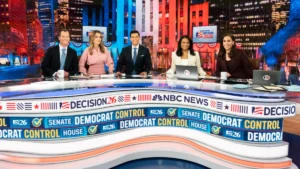
The political landscape of Texas underwent a profound transformation following the 2026 midterm elections, setting the stage for a direct confrontation between local municipal governance and federal immigration enforcement priorities. On Friday, Houston Mayor John Whitmire signed a sweeping executive action directing the Houston Police Department (HPD) to immediately halt all cooperative enforcement activities with U.S. Immigration and Customs Enforcement (ICE). This decisive executive measure effectively rolls out sanctuary-style protocols within the state’s largest city, signaling a sharp departure from the stringent enforcement posture mandated by state lawmakers in previous legislative sessions.
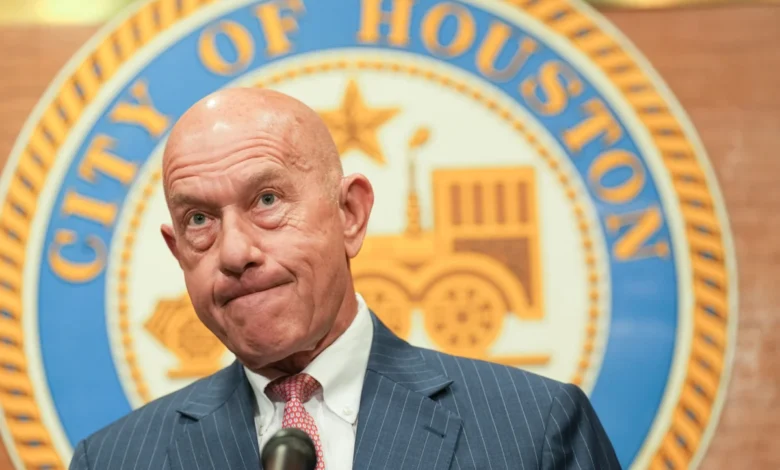
The policy shift comes in the wake of a generational political realignment that saw Democrats capture every statewide office in Texas as well as secure majorities within the statehouse. For years, local officials attempting to implement pro-immigrant or sanctuary policies faced severe legal repercussions, funding cuts, and removal from office under state statutes. However, with the balance of power shifted entirely at both the legislative and executive levels of state government, municipal leaders like Whitmire now operate under a newly emboldened political reality. During a Friday press conference detailing the executive action, Whitmire invoked a classic political maxim to explain the timing and rationale behind his directive, noting simply that elections have consequences.
Background and Legislative Context of Texas Senate Bill 4
The friction between Texas municipalities and federal immigration authorities intensified dramatically following the passage of Senate Bill 4 (SB 4). Championed by state Republicans, the controversial legislation granted local and state law enforcement agencies broad authority to arrest, detain, and transport individuals suspected of entering the country unlawfully. Furthermore, SB 4 explicitly banned cities, counties, and local law enforcement jurisdictions from enacting or enforcing any policies that limited cooperation with federal immigration agencies, effectively criminalizing sanctuary city practices across Texas.
When the bill was originally debated and passed on the state Senate floor, Whitmire—then serving as a state senator—voted against the legislation. At the time, opponents of the bill argued that granting local police the power to enforce federal immigration law would severely damage community relations, foster widespread fear among immigrant populations, and discourage victims and witnesses of crimes from coming forward to law enforcement.
During Friday’s announcement, Whitmire recalled his opposition to the 2026 law, emphasizing that his primary concern has always been the social and civic fallout of such policies. “I was on the Senate floor when SB 4 was approved. I voted against it,” Whitmire stated. “I voted no because we were concerned about the fear, the anxiety that it would create.”
Under the new mayoral directive, the operational relationship between local law enforcement and federal agents is fundamentally restructured. Whitmire outlined clear boundaries for municipal police officers, explicitly stating that local resources will no longer be marshaled to assist in federal immigration roundups or routine sweeps. Instead, the administration has established a strict threshold for any future interaction with federal authorities. “ICE will only be contacted if someone commits a jailable offense,” Whitmire explained, positioning the policy change as a necessary measure to rebuild institutional trust, reduce pervasive anxiety, and foster a safer environment across all Houston neighborhoods.
Chronology of Escalating Tensions and High-Profile Incidents
The decision to sever local cooperation with ICE did not occur in a vacuum. Over the course of the year leading up to the midterms, a series of high-profile, violent encounters involving federal immigration agents operating within Texas urban centers ignited intense public outrage, galvanized immigrant advocacy groups, and strained local municipal resources.
The unrest was exacerbated by a string of incidents that drew sharp criticism from civil rights organizations and local elected officials:
- The Houston SUV Incident: Earlier in the year, a federal immigration agent assigned to Houston operations was formally charged with aggravated assault. According to prosecutors, the agent allegedly ran over Miguel Parra Hernandez, a Mexican construction worker, while chasing him in an SUV during a localized ICE raid. The incident triggered widespread protests and renewed scrutiny over the tactical methods employed during enforcement operations.
- The Austin Traffic Stop Shooting: In September, federal agents opened fire during a routine traffic stop in Austin, shooting and severely wounding Wilber Rafael Garces Perez, a Venezuelan national. The shooting left Perez hospitalized and sparked continuous demonstrations throughout the capital city, amplifying calls for greater accountability and oversight of federal immigration enforcement personnel.
- Detention Facility Crises: Conditions inside migrant detention facilities across Texas have faced mounting criticism from human rights observers, legal advocates, and medical professionals. Facilities within the state have frequently been described in federal reports and journalistic investigations as hotbeds for severe overcrowding, medical neglect, and civil rights violations. Data from advocacy groups and public health trackers indicate that at least six migrants died while held inside Texas-based ICE detention facilities during the early months of the year alone, drawing intense national scrutiny.
These compounding controversies played a significant role in shifting public sentiment across the state. Political analysts noted a profound realignment among Hispanic voters in Texas during the 2026 midterms, a demographic block that historically showed diverse voting patterns but largely broke away from Republican candidates this cycle in response to aggressive immigration enforcement tactics and high-profile abuses.
Official Responses and Stakeholder Reactions
The immediate aftermath of Mayor Whitmire’s executive order has elicited sharply divided reactions from political leaders, law enforcement representatives, and civil rights organizations across the state and nation.
Supporters of the executive action, including civil rights advocates, immigrant rights coalitions, and progressive lawmakers, praised the decision as a vital and humane step toward restoring constitutional protections and community policing principles. Proponents argue that embedding local police forces in federal immigration enforcement undermines public safety by creating an atmosphere of terror within immigrant communities, where residents become reluctant to report domestic abuse, violent crimes, or property offenses out of fear of deportation.
Conversely, conservative lawmakers and federal enforcement associations have criticized the directive, arguing that local non-cooperation policies undermine national security and complicate the enforcement of federal immigration laws. Critics from the political opposition contend that sanctuary policies create jurisdictional loopholes that allow undocumented individuals who have committed minor infractions or civil immigration violations to evade federal custody.
Implication Analysis: The Future of Immigration Enforcement in Texas
Mayor Whitmire’s executive action represents a crucial test case for the newly established political equilibrium in Texas. As the newly elected Democratic state government consolidates power, municipal leaders are increasingly finding the political space and institutional support necessary to challenge or roll back legacy conservative mandates enacted in previous legislative sessions.
From a policy perspective, the disengagement of the Houston Police Department from ICE operations significantly curtails federal enforcement capacity within the state’s most populous metropolitan area. Local police departments control vast geographic territory and maintain daily contact with communities in a way that federal agencies simply cannot replicate without local assistance. By removing local police from the enforcement equation, federal agents must rely entirely on their own personnel and resources to locate, detain, and process undocumented individuals within Houston city limits.
Furthermore, the policy shift is expected to serve as a bellwether for other major Texas urban centers, including Dallas, San Antonio, and Austin, which have historically favored limited cooperation with federal immigration authorities. Legal experts anticipate that while the executive order provides immediate relief to local immigrant communities, it may also trigger legal challenges from state-level actors or conservative advocacy groups seeking to test the limits of municipal authority under remaining state statutes.
As the new political era unfolds in Texas, the implementation of Whitmire’s directive will be closely monitored by sociologists, criminologists, and political scientists alike. The ultimate success of the policy will be measured by its ability to balance federal immigration statutes with local public safety mandates, while striving to heal the deep community divisions exposed by years of contentious enforcement practices.