
Virginia Withdraws from Landmark Federal School Choice Tax Credit Program as Political Tensions Surge Nationwide

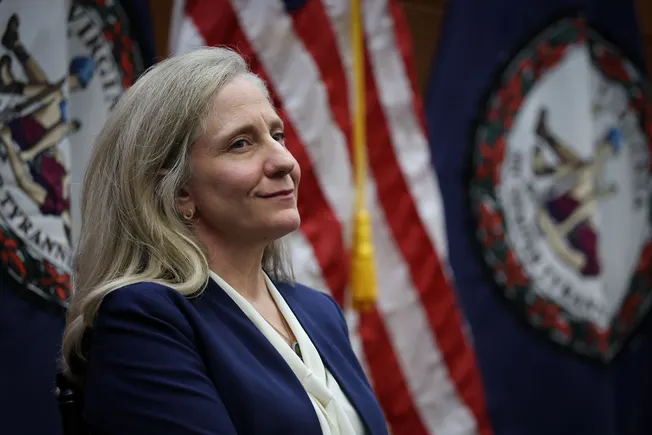
The landscape of American education policy is undergoing a profound transformation following a recent wave of high-profile political developments, culminating in Virginia’s decision to formally withdraw from the nation’s first federal school choice tax credit program. Governor Abigail Spanberger’s administration announced on Monday that the Commonwealth would pivot away from participating in the federal initiative, asserting that the program fundamentally fails to serve the best interests of students enrolled in Virginia’s public school system.
The policy reversal places Virginia at the center of an escalating national debate over the allocation of public resources, the expansion of school choice, and the future of public education funding. While proponents of the federal initiative argue that the program offers vital educational flexibility and financial relief to families, critics and public education advocates maintain that such mechanisms siphon critical funding away from under-resourced public school districts. As state legislatures and executive offices grapple with shifting political dynamics, the fallout from Virginia’s decision signals potential turbulence ahead for federal-state cooperation on educational funding.
Background and Legislative Origins of the Education Freedom Tax Credit
The federal school choice initiative at the center of the controversy is the Education Freedom Tax Credit program, a cornerstone policy enacted during the legislative push led by a Republican-controlled Congress. The framework was officially established and signed into law by President Donald Trump in July 2025 as a prominent component of the sweeping legislative package known as the One Big Beautiful Bill Act.
Designed to operate nationwide, the program incentivizes philanthropic contributions by offering tax credits to individuals and corporations that donate to approved Scholarship Granting Organizations (SGOs). These organizations, in turn, distribute the funds as scholarships to families. Under the statutory guidelines of the federal legislation, the generated scholarships are broad in scope, authorized to cover private school tuition as well as supplemental public school expenses. These qualifying public school costs include specialized tutoring, educational technology, after-school care programs, and targeted services for students with disabilities.
Supporters of the legislation have long championed the framework as a historic leap forward for educational equity and parental choice. Proponents argue that by breaking down financial barriers, lower- and middle-income families gain the ability to tailor their children’s education to specific learning needs, regardless of geographic location or household income. However, the legislation has faced fierce opposition from public education advocates, teacher unions, and lawmakers who view the tax credit model as a federalized voucher system that undermines traditional public schools.
Timeline and Shifting State Participation
The rollout of the Education Freedom Tax Credit program has been marked by rapid policy shifts, administrative hurdles, and shifting political landscapes across the United States.
According to data compiled by the Internal Revenue Service (IRS), 31 states had initially signaled their intent to participate in the nationwide federal tax credit program as of November 13. This roster of participating states included Virginia. However, the national map of participating jurisdictions has remained fluid due to administrative reconsiderations and recent electoral shifts. Notably, anomalies persist on the federal registry; for instance, the state of New York remained absent from the official IRS participation list despite Governor Kathy Hochul publicly announcing in October that the state intended to opt into the program.
The volatility surrounding state participation is further amplified by the shifting political topography resulting from the midterm elections earlier in November. Those elections saw executive leadership in six key states—Alaska, Georgia, Iowa, Nevada, Ohio, and Texas—flip from Republican to Democratic control. All six of these states had previously opted into the Education Freedom Tax Credit program under prior administrations. Political analysts suggest that Virginia’s sudden pivot may serve as a precursor to similar last-minute administrative reviews or withdrawals in other states newly governed by Democrats over the coming months.
Official Rationales and Competing Stakeholder Responses
The decision by Governor Spanberger’s administration to withdraw from the program was driven by a firm stance on public funding stewardship. In a statement released Monday, a spokesperson for the governor’s office articulated the administration’s core philosophy: "Public money should go to public education." The spokesperson elaborated that the administration evaluated the federal tax credit program and concluded that its structural mechanisms would not deliver tangible benefits to the students populating Virginia’s public school classrooms.
This rationale was immediately met with vehement praise from statewide labor organizations. The Virginia Education Association (VEA), representing teachers and educational support professionals across the Commonwealth, issued a glowing endorsement of Governor Spanberger’s decision. VEA leadership underscored potential financial losses that had loomed over the state had it remained in the program.
"Ample evidence tells us that voucher programs are damaging to public schools and students, draining resources from already underfunded school systems," declared VEA President Carol Bauer in a Monday statement. "VEA members applaud Governor Spanberger’s wisdom in opting the Commonwealth out of the federal voucher program, the future of which is in limbo anyway as a new Congress takes over early next year."
VEA internal estimates had projected that Virginia public schools could have faced an annual revenue drain of up to $1 billion had the state fully integrated into the federal tax credit structure, diverting resources away from facilities, teacher compensation, and essential classroom programs.
Conversely, the administration’s reversal drew sharp, immediate condemnation from educational choice advocates and religious school associations who argue that the withdrawal disenfranchises Virginia families.
Steven Cheeseman, president and CEO of the National Catholic Educational Association, expressed profound dismay over the Commonwealth’s policy shift in a statement released Saturday. Cheeseman stated that he was "deeply disappointed" and "frankly shocked" by the decision, urging Governor Spanberger to reverse course and allow the opt-in process to reach completion.
"This is a stunning step backward for Virginia families," Cheeseman asserted. "Walking away from this program puts politics ahead of the more than one million students in Virginia public schools who will miss out on support for tutoring, school supplies, educational technology, and after-school care."
Legal challenges may also loom on the horizon. Aaron Baer, founder of the Christian Education Network, characterized Governor Spanberger’s decision to opt out of the federally authorized program as "potentially illegal." Baer announced that the legal teams representing both the Christian Education Network and the Virginia Christian Education Network were actively reviewing the governor’s executive actions to determine potential avenues for legal recourse.
"Families should have the freedom to choose the education that best meets their children’s needs, regardless of their income or ZIP code," Baer said in a statement. "Denying them access to these scholarships is a direct attack on that freedom."
Broader Implications for Federalism and School Choice
Virginia’s withdrawal highlights the complex interplay between federal policy initiatives and state-level implementation autonomy. While the federal government possesses the authority to enact nationwide tax incentive programs, the operational success and integration of such frameworks frequently depend heavily on state administrative cooperation. When state executives decline to facilitate the processing of tax-credit-funded scholarships or establish the necessary state-level infrastructure for SGOs, federal programs can face severe roadblocks in localized execution.
Furthermore, the ideological battle lines drawn over the Education Freedom Tax Credit reflect a broader, enduring philosophical conflict within American governance. Proponents view school choice policies as essential instruments of civil rights and economic mobility, breaking monolithic public monopolies and empowering parents to customize their children’s educational pathways. Critics, on the other hand, argue that public education functions as a foundational pillar of democratic society that requires collective, undivided financial investment to ensure equitable access for all children, regardless of ability or background.
As the political fallout from the midterm elections settles and the new Congress prepares to take office, the viability of the Education Freedom Tax Credit program faces a defining test. Whether other states will follow Virginia’s lead in stepping back from the federal initiative, or whether legal challenges will force executive administrations to reconsider their participation, remains one of the most critical storylines in contemporary American education policy.