Historic Weather Disruptions Force Macy’s Thanksgiving Day Parade to Postpone for the First Time Due to Severe Storms

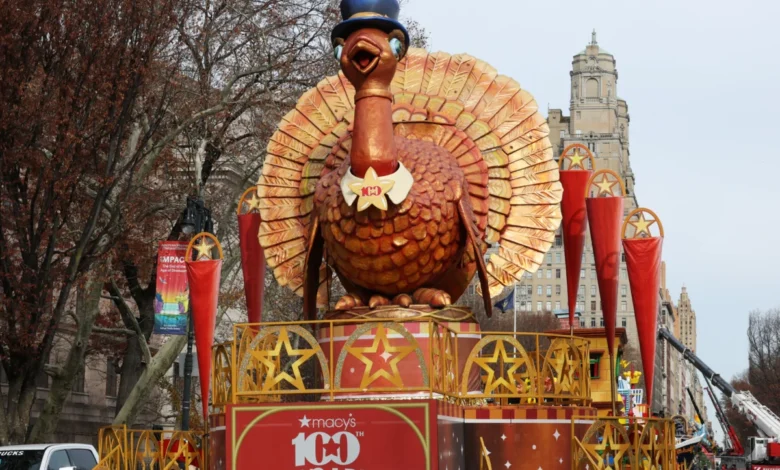
The 100th-anniversary celebration of the iconic Macy’s Thanksgiving Day Parade has hit an unprecedented historical roadblock. In an announcement that has stunned holiday travelers, local spectators, and millions of television viewers worldwide, event organizers confirmed that the festivities
would be postponed due to a rapidly intensifying coastal storm system. Instead of stepping off on Thursday morning as originally scheduled, the parade will now take place on Saturday, November 28.
The decision marks a monumental shift for a holiday institution that has weathered economic depressions, global conflicts, and minor meteorological challenges for a century. With heavy rains, widespread flood warnings, and dangerous wind gusts threatening the New York City metropolitan area, organizers prioritized public safety over tradition, prompting a logistical scramble to reschedule one of the world’s most watched annual productions.
Meteorological Threat Assessment and Safety Protocols
The decision to delay the parade was not made lightly and came following intensive emergency consultations between Macy’s executives, municipal authorities, the New York City Police Department, and meteorological agencies. Forecasters tracking the massive low-pressure system moving up the East Coast warned of sustained winds ranging from 25 to 35 miles per hour, with potentially higher gusts coursing through the urban canyons of Manhattan.
For the Macy’s Thanksgiving Day Parade, high winds represent a uniquely dangerous hazard. The towering helium-filled character balloons—some standing as tall as a four-story building—act effectively as giant sails. When caught in unpredictable wind tunnels created by Manhattan skyscrapers, these balloons become notoriously difficult to control, posing severe risks to the handlers on the ground, the millions of spectators lining the 2.5-mile route, and the surrounding city infrastructure.
In a formal statement released by the corporation, organizers underscored that participant and spectator safety remains the absolute paramount concern. The statement expressed profound gratitude to the thousands of dedicated volunteers, logistical partners, and high-profile entertainers who spend months preparing for the holiday spectacle, reassuring the public that the magic of the centennial celebration would simply be pushed back rather than canceled.
A Century of Resilience: Historical Context and Past Disruptions
While the parade has faced cancellations in the past, this week’s postponement is entirely unprecedented in the event’s modern history. The Macy’s Thanksgiving Day Parade was previously canceled only during the height of World War II, specifically in 1942, 1943, and 1944. During those turbulent years, the United States military required all available supplies of rubber and helium to support the war effort, forcing the temporary suspension of the holiday tradition.
Aside from those wartime cancellations, the parade has marched through sleet, snow, freezing temperatures, and moderate rain. However, severe wind events have historically plagued the event, serving as a cautionary tale for modern organizers.
The most notorious incident occurred during the 1971 parade, when extreme winds forced organizers to ground the giant balloons entirely for the first time. Decades later, the 1997 parade became a watershed moment for safety regulations when high winds tore a hole in the Barney the Dinosaur balloon and violently drove a Cat in the Hat balloon into a lamppost, injuring a bystander who required hospitalization.
Subsequent years saw continued struggles with high-altitude gusts. In 1998, a newly introduced "Where The Wild Things Are" balloon struck a lamppost during its inaugural run and had to be hastily deflated and removed. More recently, in 2006 and 2019, city officials enforced strict altitude restrictions, ordering handlers to fly the massive characters significantly lower to the ground to prevent catastrophic wind-induced collisions. The accumulation of these historical scares undoubtedly informed the aggressive, preemptive posture taken by organizers ahead of this week’s storm.
Logistical Impact and the Star-Studded Lineup
The sudden calendar shift has triggered a massive logistical challenge for the City of New York, tourism boards, and the hundreds of out-of-town participants. The parade route—traditionally stretching from 72nd Street and Central Park West down to Macy’s flagship store at Herald Square—requires months of meticulous street closures, transit rerouting, and security deployments. Shifting the event from a federal holiday to a Saturday morning forces city agencies to rapidly adjust municipal staffing, traffic control, and public transit schedules.
Despite the date change, organizers have confirmed that the core artistic programming and talent lineup will remain intact for Saturday’s procession. More than 3 million spectators were originally projected to pack the sidewalks along the 2.5-mile route, with an additional 50 million viewers tuning in via national television broadcasts.
The centennial lineup boasts an impressive roster of musical acts and cultural icons. Grammy-nominated British singer Raye is slated to open the parade with a special holiday performance alongside her sisters, Amma and Absolutely. They will be followed by a diverse array of musical performances and elaborate floats featuring legendary reggae artist Wyclef Jean, alternative rock band Smash Mouth, pop sensations Natasha Bedingfield and Icona Pop, singer JoJo, Hunger Games actress and rising star McKenna Grace, and entertainment icon Queen Latifah. As of press time, representatives have confirmed that no adjustments to the performance roster or float order have been necessary as a result of the two-day delay.
Economic and Tourism Implications for New York City
The postponement of the 100th Macy’s Thanksgiving Day Parade carries significant economic ramifications for New York City’s hospitality, retail, and tourism sectors. Thanksgiving week represents one of the most lucrative tourism windows of the entire year for the metropolitan area, drawing hundreds of thousands of visitors who book hotel rooms, dine at local restaurants, and participate in holiday shopping traditions centered around Black Friday.
Hotels along the parade route, particularly those overlooking Central Park West and Columbus Circle, command premium rates months in advance based on their prime viewing locations. While a Saturday parade allows out-of-town visitors already in the city an opportunity to still witness the historic centennial event, the schedule change may disrupt travel itineraries for tourists who planned to depart immediately following Thanksgiving Day. Conversely, local residents who typically avoid the crowds on Thanksgiving Thursday may find Saturday morning a more accessible window to experience the parade firsthand.
Retail analysts note that while the shift alters consumer traffic patterns for Thanksgiving Day itself, the retail impact on Black Friday and the broader holiday shopping weekend should remain largely stable. Macy’s flagship Herald Square location—the permanent terminus of the parade route—will proceed with its standard holiday shopping operations, though crowd control measures will necessarily pivot to accommodate the Saturday influx.
Looking Ahead to Saturday’s Centennial Celebration
As meteorologists continue to track the storm system’s trajectory, attention now turns to Saturday morning, November 28, when New York City will finally mark a century of a beloved American tradition. Organizers are urging all ticket holders, volunteer groups, and spectators to monitor official city and corporate channels for any real-time updates regarding transit advisories and security checkpoints.
Though weather has temporarily altered the timeline, the core mission of the Macy’s Thanksgiving Day Parade remains unchanged: to bring joy, wonder, and a sense of shared community to millions of Americans. As the giant balloons are inflated and final preparations are made for Saturday, the 100th edition of the parade is poised to make history not just for its longevity, but for its remarkable adaptability in the face of nature’s most formidable challenges.
Related posts: