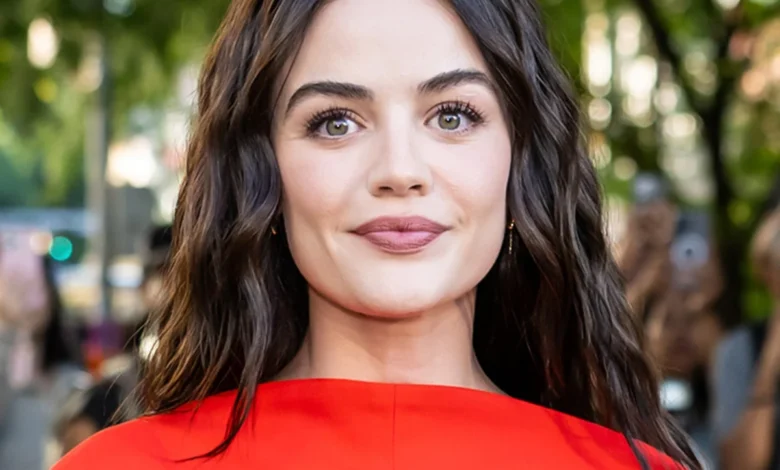
The landscape of television has shifted dramatically over the past two decades, bringing modern cultural sensitivities to elements of storytelling that were once commonplace in prime-time dramas. Few series have embodied this cultural evolution quite like the hit teen mystery-drama Pretty Little Liars, which aired from 2010 to 2017. Recently, the legacy of the show’s central narrative choices has returned to the forefront of public discourse, prompted by a social media post from series lead Lucy Hale and her former co-star Ian Harding. The ensuing public conversation highlights the growing tension between nostalgic appreciation for long-running television hits and contemporary ethical standards regarding on-screen power dynamics.
The controversy began when Hale and Harding shared a video on social media recreating an infamous romantic moment from their time on the teen drama. The post was intended to generate excitement and commemorate their upcoming collaborative film project, 12 Dates of Christmas. However, the nostalgic reunion quickly drew sharp criticism from viewers who pointed out the problematic nature of the fictional relationship between Hale’s character, high school student Aria Montgomery, and Harding’s character, 22-year-old English teacher Ezra Fitz.
The backlash reflects a broader contemporary reckoning within the entertainment industry regarding the romanticization of age-gap dynamics and predatory grooming tropes in millennial-era television. Recognizing the gravity of the public response, Hale took to social media to clarify her intentions and address the criticism head-on, acknowledging that societal standards regarding storytelling have evolved significantly since the series first premiered.
Unpacking the Controversy and Hale’s Clarification
In her official statement posted to Instagram Stories, Hale sought to separate her personal appreciation for a decades-long friendship from the critical assessment of the fictional romance that defined much of her early career. She emphasized that two opposing realities can exist simultaneously: genuine affection for a former colleague and a clear-eyed recognition of how certain television plots have aged poorly.
Hale noted that both she and Harding were teenagers when they were cast in the series and that they quickly established a strong rapport that has endured for nearly twenty years. The commemorative video, according to the actress, was meant to celebrate the longevity of their real-life bond rather than endorse or glamorize the narrative dynamic between Aria and Ezra.
Furthermore, Hale expanded on these thoughts during a September appearance on the podcast On Purpose With Jay Shetty. She contextualized the decision to include the controversial romance in the television adaptation by pointing to its origin in the original young adult novel series by Sara Shepard. Because the source material featured the teacher-student relationship, creators incorporated it into the 2010 television adaptation as a faithful translation of the books, aligning with the dramatic norms of network television during that era.
The Evolution of Teen Drama Tropes and Industry Standards
The discourse surrounding Pretty Little Liars is part of a larger, industry-wide re-evaluation of how relationships involving authority figures and minors are depicted in popular media. Throughout the 2000s and 2010s, forbidden romances were a staple of teen dramas, frequently framed by writers as romantic sacrifices or star-crossed passions rather than ethical violations or abusive dynamics. Shows such as Gossip Girl, Dawson’s Creek, and The O.C. regularly utilized similar narrative devices to drive dramatic tension and viewer engagement.
However, the cultural shifts catalyzed by movements emphasizing consent, power imbalances, and psychological safety have altered audience expectations. Modern viewers increasingly scrutinize media content through a lens that prioritizes healthy boundaries and the real-world implications of normalizing grooming behaviors.
Hale acknowledged this paradigm shift, noting that if the original ensemble cast—which includes Ashley Benson, Shay Mitchell, and Troian Bellisario—were ever to reunite for a continuation or reboot of the series, addressing the implications of the Aria and Ezra storyline would be an unavoidable narrative priority. She observed that while audiences historically embraced the relationship due to the inherent excitement of forbidden romance, contemporary society possesses a heightened awareness of psychological power dynamics that fundamentally changes how such plots are received.
Nostalgia and the Culture of Cast Reunions
Beyond the specific debates surrounding Pretty Little Liars, the entertainment landscape continues to experience a wave of nostalgia-driven media engagement and cast reunions. Networks and streaming platforms frequently leverage fan affection for classic television shows, driving interest through actor get-togethers, public appearances, and collaborative projects.
Over recent years, numerous landmark television casts have reunited in various capacities to celebrate historical milestones, support charitable causes, or participate in promotional events. Notable examples include retrospective gatherings and public appearances by the casts of beloved series such as The Nanny, Glee, Full House, Gilmore Girls, Boy Meets World, Dawson’s Creek, and Game of Thrones. These events demonstrate the enduring emotional connection viewers maintain with long-running programs, even as cultural perspectives on the content within those shows continue to evolve.
The phenomenon of the cast reunion serves a dual purpose in the modern media ecosystem. For fans, it offers a comforting bridge to the past, evoking memories of formative viewing experiences. For performers, these gatherings provide an opportunity to reconnect with peers who navigated unique, high-pressure environments during their formative years in the public eye.
Broader Implications for Future Television Production
The public dialogue sparked by Hale and Harding’s social media post carries important implications for how television creators approach character dynamics in contemporary productions. Writers and producers are increasingly tasked with balancing compelling dramatic conflict with ethical responsibility, ensuring that fictional depictions of power imbalances are framed with appropriate narrative context and critical distance.
As media literacy continues to advance among audiences, creators face higher expectations to construct storylines that reflect contemporary understandings of healthy interpersonal relationships. The willingness of actors like Hale to engage constructively with criticism regarding past work indicates a shifting industry culture—one where performers and creators are increasingly open to acknowledging the shortcomings of older media while maintaining pride in their collaborative achievements.
Ultimately, the ongoing conversation surrounding Pretty Little Liars illustrates the complex interplay between art, nostalgia, and social progress. By openly addressing the problematic elements of a defining career milestone, Hale has demonstrated a reflective approach to artistic growth, bridging the gap between the television standards of the past and the ethical expectations of the future.