France Bolsters Global Health Security with €24 Million Contribution Agreement to the World Health Organization

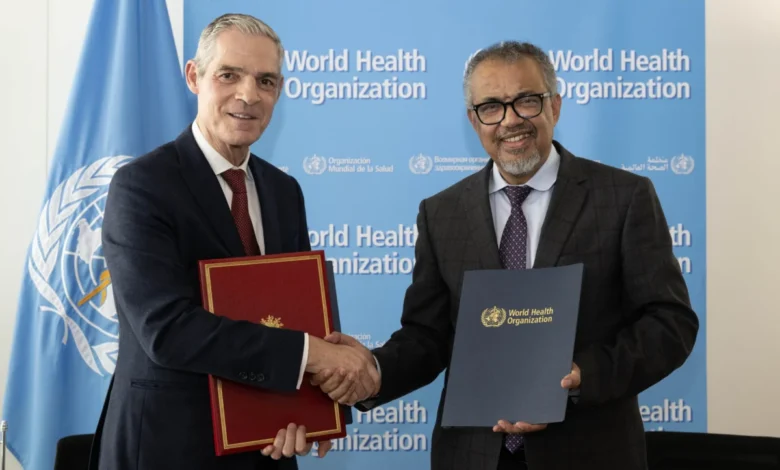
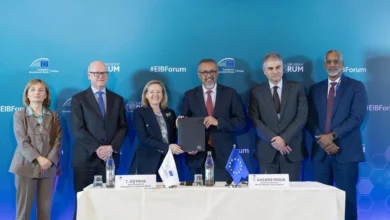
GENEVA — In a significant bolstering of multilateral health diplomacy, the French Government and the World Health Organization (WHO) formalized a sweeping financial package on October 17, 2024. Meeting at the global health agency’s headquarters in Geneva, His Excellency Mr. Jérôme Bonnafont, Permanent Representative of France to the United Nations in Geneva, and WHO Director-General Dr. Tedros Adhanom Ghebreyesus put pen to paper on seven distinct contribution agreements. The pact directs €24 million in new funding toward critical global health priorities, emergency interventions, and institutional resilience.
The funding deployment, channeled through the French Ministry of Europe and Foreign Affairs, operates within the parameters of the broader France–WHO Framework Agreement spanning 2020 to 2025. This overarching bilateral pact serves a dual purpose: it strategically aligns French foreign aid priorities with the WHO’s core global health agenda, while furnishing the precise legal, administrative, and financial architecture required to operationalize complex health projects worldwide.
Main Facts and Financial Breakdown
The €24 million allocation is strategically partitioned to address both long-term structural health challenges and acute humanitarian crises. Among the most notable provisions within the seven agreements is a €4.5 million allocation directed to the Core Voluntary Contributions Account (CVCA). Unlike tightly earmarked funds, these fully flexible voluntary contributions are invaluable to the WHO, granting the organization the discretionary agility needed to respond to unforeseen health emergencies, fill critical funding gaps, and maintain institutional continuity without administrative bottlenecks.
Beyond the CVCA, the remainder of the French financial package is designated for several of the most pressing health and humanitarian fronts managed by the WHO:
- Non-Communicable Diseases (NCDs): Supporting preventative and therapeutic frameworks to curb the rising global burden of cardiovascular diseases, cancers, diabetes, and chronic respiratory ailments.
- Urban Health Laboratories: Fostering innovative, localized public health solutions tailored to densely populated metropolitan environments.
- One Health Approach: Advancing collaborative, multisectoral frameworks that recognize the interconnectedness of human health, animal health, and environmental ecosystems in preventing zoonotic spillover and antimicrobial resistance.
- WHO Contingency Fund for Emergencies (CFE): Providing immediate liquidity to deploy health workers, medical supplies, and logistical support within hours of a disease outbreak or disaster declaration.
- Targeted Humanitarian Emergencies: Funding acute operational responses, including emergency healthcare delivery in Gaza, containment operations for ongoing cholera outbreaks, and specialized mental health and psychosocial support initiatives in Ukraine.
- The WHO Lyon Office: Sustaining the specialized emergency preparedness and response hub in France, which plays a pivotal role in global epidemic intelligence, workforce training, and laboratory readiness.
Historical Context and Chronological Evolution of France-WHO Collaboration
The signing ceremony in Geneva represents the latest milestone in a decades-long strategic partnership between the French Republic and the United Nations specialized agency for health. France has historically maintained a robust profile as a top-tier state donor, championing initiatives that reinforce global health security architecture.
The current cooperation is anchored by the 2020–2025 Framework Agreement, which streamlined how Paris and Geneva coordinate on public health emergencies. This framework proved critical during the height of the COVID-19 pandemic, facilitating joint responses, supply chain management, and vaccine equity advocacy through the Access to COVID-19 Tools Accelerator (ACT-A) initiative.

Over the subsequent years, the partnership evolved to address compounding global crises—ranging from climate-induced health emergencies to protracted conflicts disrupting fragile health systems in Eastern Europe and the Middle East. The establishment and continuous backing of the WHO Academy and the Lyon-based emergency hub further underscore France’s institutional footprint in global health workforce development and emergency logistics.
Official Statements and Multilateral Reactions
During the signing ceremony, Ambassador Jérôme Bonnafont emphasized the philosophical and strategic underpinnings of France’s foreign policy regarding global health.
"France remains deeply committed to supporting the World Health Organization in its efforts to tackle critical global health challenges," Ambassador Bonnafont stated. "These agreements reflect our shared priorities of promoting health equity, responding to emergencies, and strengthening healthcare systems worldwide. In an era of interconnected crises, robust multilateral institutions are not optional; they are our primary line of defense."
WHO Director-General Dr. Tedros Adhanom Ghebreyesus echoed these sentiments, expressing deep gratitude for Paris’s steadfast backing and diplomatic leadership.
"We are immensely grateful to the French Government for its steadfast support to WHO, continued partnership, and leadership in global health," Dr. Tedros remarked. "This contribution will enable us to address key health threats, from non-communicable diseases to emergency response, helping to save lives and protect the most vulnerable populations. The flexibility embedded in these funds, particularly the contributions to the CVCA, allows us to act decisively where the need is greatest."
Broader Impact, Financing Shifts, and the Investment Round
The October 2024 agreements arrive at a pivotal juncture for the WHO as the organization transitions toward a more sustainable, predictable financing model. For years, the agency relied heavily on tightly earmarked voluntary contributions, which restricted its operational agility and left core programs vulnerable to donor fatigue or shifting geopolitical priorities.
Recognizing these structural vulnerabilities, France has emerged as one of the most vocal advocates for a fully and flexibly financed WHO. Paris has actively championed increasing assessed contributions—mandatory dues paid by member states—while simultaneously pioneering innovative financing mechanisms.

Significantly, France serves as a co-host of the WHO’s inaugural Investment Round. Designed to mobilize predictable, flexible resources for the Fourteenth General Programme of Work (GPW 14) covering the 2025–2028 period—which was formally approved by the World Health Assembly earlier in 2024—the Investment Round seeks to secure the financial foundation necessary to implement the organization’s strategic goals over the latter half of the decade.
Analysis of Implications for Global Public Health
The injection of €24 million carries several practical and symbolic implications for the international health community.
First, the inclusion of fully flexible funding via the CVCA allows the WHO to mitigate funding deficits in underreported or neglected crises. While media attention frequently gravitates toward high-profile emergencies, chronic health threats and localized outbreaks often suffer from severe resource shortfalls. Flexible funds act as an equalizer, ensuring continuous surveillance and intervention.
Second, by committing resources to the One Health framework and the Lyon emergency center, France is investing in structural prevention rather than purely reactive measures. As climate change accelerates the geographic spread of vector-borne diseases and human-animal interactions increase the risk of novel pathogen emergence, preparedness infrastructure based in strategic European and regional hubs remains indispensable.
Finally, the timing of the agreement reinforces the normative power of multilateralism at a time when global geopolitical fragmentation threatens coordinated responses to transnational health threats. By aligning its national development assistance with WHO priorities, France signals that global health security is an indispensable pillar of international stability, national security, and universal human rights.
As the implementation of the seven agreements commences, the joint commitment of France and the WHO sets a benchmark for how state actors can effectively partner with international organizations to build a healthier, more resilient global populace.
Related posts: