NASA Launches Overlap Zoo Citizen Science Project to Map Interstellar Dust Through Rare Cosmic Alignments

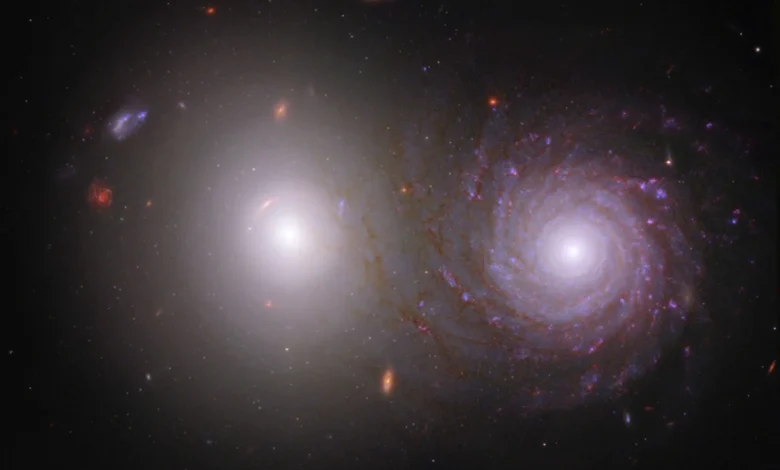
The National Aeronautics and Space Administration has officially launched Overlap Zoo, a pioneering citizen science initiative designed to harness the power of public volunteers to identify and classify rare overlapping galaxy pairs. Announced by the NASA Science Editorial Team on September 30, 2026, the project addresses one of observational astronomy’s most persistent challenges: mapping the elusive distribution of interstellar dust within distant cosmic structures. By capitalizing on accidental alignments where one galaxy passes directly behind another from the perspective of Earth-bound or space-based telescopes, researchers hope to utilize background starlight as a natural backlight to illuminate foreground opacity. This unprecedented undertaking relies on the collective processing power of human intuition and pattern recognition, which continue to outperform algorithmic automation in complex visual classification tasks.
The mechanics of this astronomical phenomenon are deceptively simple yet exceedingly difficult to observe under normal circumstances. Galaxies are vast, sprawling systems composed of billions of stars, massive reservoirs of gas, and microscopic particles of dust, all bound together by the relentless pull of gravity. Ordinarily, measuring the internal dust of a galaxy is a formidable task because the medium is viewed edge-on or face-on against the ambient glow of its own stellar populations. However, when a background galaxy aligns perfectly behind a foreground galaxy, it acts as a celestial flashlight. The light emitted by the more distant system streams directly through the outer reaches and structural disks of the nearer galaxy. As this light passes through, the internal dust absorbs and scatters specific wavelengths, casting distinct dark silhouettes and shadows across the cosmic screen. By meticulously analyzing these shadowed regions, astrophysicists can determine how dust blocks, scatters, and dims starlight over vast interstellar distances. Furthermore, precise measurements of dust attenuation provide crucial calibration markers that help scientists refine the cosmic distance ladder, leading to more accurate calculations of distances to faraway astronomical objects.
Despite the immense scientific value of these overlapping configurations, finding them within the petabytes of imaging data generated by modern sky surveys is akin to searching for a needle in an infinitely expanding cosmic haystack. The genesis of Overlap Zoo is deeply rooted in the evolutionary timeline of modern astronomical surveys and public science participation. Over the past two decades, technological advancements in ground-based observatories and space telescopes have revolutionized astronomy, resulting in an exponential explosion of high-resolution imaging data. Projects such as the Galaxy Zoo initiative—a highly successful precursor to the current endeavor—demonstrated that professional astronomers alone could no longer manually classify the millions of galaxies captured by automated sky sweeps. Galaxy Zoo initially launched years ago to crowdsource galaxy morphology, teaching hundreds of thousands of volunteers how to distinguish between elliptical and spiral galaxies. Within that massive sorting process, sharp-eyed participants frequently flagged unusual anomalies where two distinct galaxies appeared to intersect or overlap in the visual field.
Recognizing the immense potential of these specific anomalies, project organizers laid the groundwork for a specialized spin-off. Over a multi-year development and testing phase leading up to the September 2026 launch, the Overlap Zoo team curated candidate datasets culled from classifications originally generated by Galaxy Zoo volunteers. This evolutionary pipeline ensures that participants in the new project are not starting from scratch; rather, they are diving into a pre-filtered pool of high-probability imagery. Trevor Butrum, an astrophysics graduate student and the project lead for Overlap Zoo, emphasized the sheer scale of the observational backlog during the launch announcement. "As new and better observations of galaxies continue to multiply, it is becoming incredibly difficult for astronomers to classify every candidate galaxy pair," Butrum stated, highlighting the operational bottleneck facing modern research institutions. "Your help is invaluable to creating the biggest and cleanest catalog of overlapping galaxy pairs for further analysis."
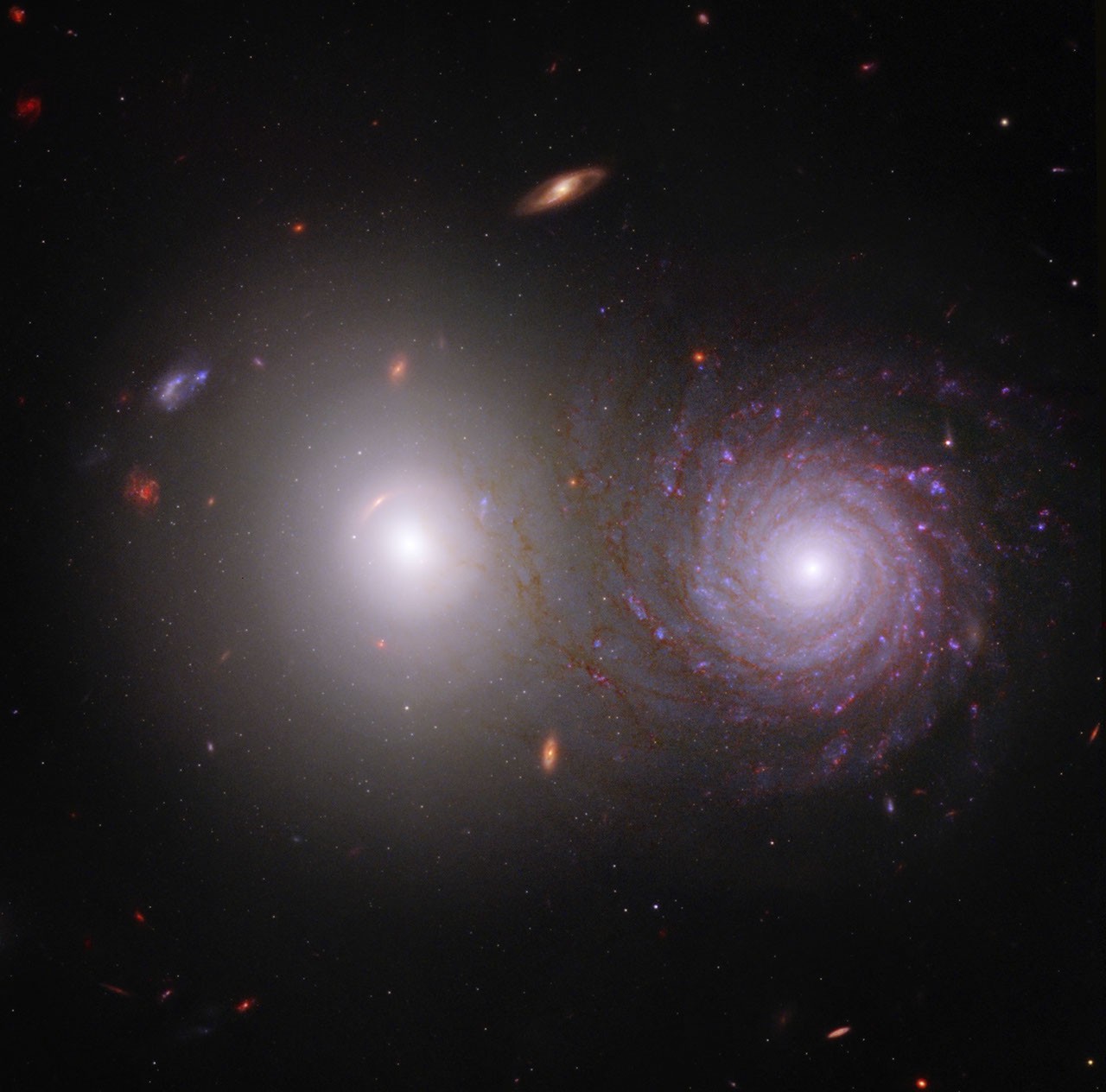
The operational framework of Overlap Zoo has been meticulously designed to be accessible to anyone with an internet-connected computer or mobile device, requiring no prior background in astrophysics, mathematics, or computer science. When a volunteer logs into the platform, they are presented with curated images containing potential overlapping galaxy pairs flagged during earlier citizen science efforts. The interface provides a comprehensive, interactive tutorial that trains the user on how to rigorously verify the presence of an actual physical pair rather than a mere line-of-sight illusion caused by foreground stars or instrumental artifacts. Participants are guided through the process of classifying key structural features of each interacting system, noting parameters such as spiral arm orientation, nuclear separation, and morphological type. Crucially, volunteers are tasked with manually outlining the boundaries of the galaxies and their obscuring dust lanes. This gamified, learn-by-doing approach allows participants to contribute meaningful scientific data at their own pace, classifying as few or as many images as their schedule permits.
The implications of building the first large-scale, verified catalog of overlapping galaxy pairs extend far beyond the immediate study of interstellar dust. Interstellar dust plays a foundational, albeit often underappreciated, role in the lifecycle of the universe. Composed primarily of carbon, silicon, iron, and various complex organic molecules, dust acts as the cosmic nursery where new stars and planetary systems are born. It shields molecular clouds from harsh ultraviolet radiation, allowing gas to cool and condense into stellar embryos. At the same time, dust heavily obscures optical observations, making it notoriously difficult for astronomers to pierce the dense hearts of star-forming regions and observe stellar evolution in real time. By understanding the precise physical properties, grain size distributions, and scattering laws of dust through backlit overlapping systems, researchers can construct more accurate correction algorithms for observations across the entire electromagnetic spectrum. This newfound accuracy directly impacts our understanding of galactic chemical enrichment, star formation rates, and the lifecycle of baryonic matter throughout cosmic time.
Moreover, refining dust attenuation models has a profound ripple effect on cosmological distance measurements. Determining the expansion rate of the universe and mapping the large-scale structure of the cosmos relies heavily on "standard candles"—objects of known intrinsic luminosity, such as Type Ia supernovae. If intervening dust dims the light of these standard candles in ways that are misunderstood or miscalculated, astronomers could systematically misjudge their distances, skewing models of dark energy and cosmic acceleration. By leveraging the empirical data gathered by Overlap Zoo volunteers, professional astrophysicists will gain a powerful empirical baseline to constrain these uncertainties. The project thus bridges the gap between micro-scale particle physics—the interaction of photons with microscopic dust grains—and macro-scale cosmology, which seeks to map the geometry and fate of the entire universe.
The launch of Overlap Zoo also underscores a broader, highly successful paradigm shift in modern scientific research: the democratization of discovery through citizen science. In an era where institutional budgets are constrained and data pipelines outpace the human resources of university departments, crowdsourcing has transformed from a novel outreach gimmick into an indispensable pillar of professional research. Platforms hosted by NASA and partner institutions have repeatedly proven that non-specialists possess the cognitive flexibility and pattern-matching acumen to spot rare anomalies that algorithms frequently overlook or misclassify. Machine learning models, while exceptionally fast, are often limited by their training data and tend to fail when confronted with bizarre, highly asymmetrical, or unprecedented cosmic alignments. Human intuition, sharpened by interactive tutorials and sustained engagement, excels precisely at recognizing these edge cases.
As Overlap Zoo opens its digital doors to the global public, the scientific community anticipates a rapid influx of classifications that will feed directly into upcoming archival studies and telescope observation proposals. Individuals interested in contributing to this astrophysical milestone need only visit the official Overlap Zoo portal to begin examining real astronomical data captured by some of the world’s most advanced observatories. With no specialized software required and a barrier to entry limited solely to human curiosity and a few spare moments, the project invites a worldwide audience to participate directly in expanding the boundaries of human knowledge. The work done by everyday volunteers over the coming months and years will not only map the shadowy dust lanes of distant galaxies but will also cement a new era of collaborative, borderless science where anyone, anywhere, can help decode the mysteries of the cosmos.
Related posts: