Navigating the Human Element of School Mergers and Closures Strategies for Leadership Transition and Staff Unity

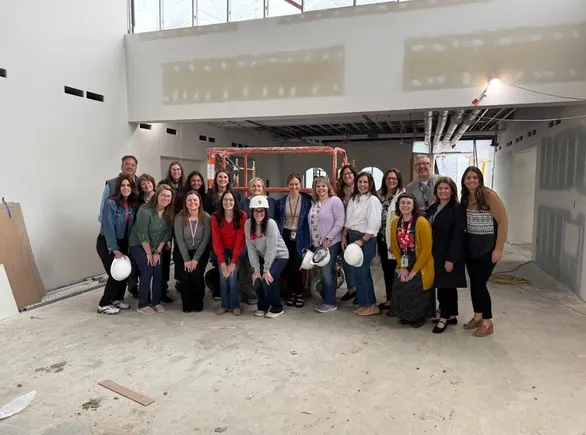
The landscape of American public education is currently undergoing a significant transformation, driven by shifting demographics, fluctuating birth rates, and the subsequent consolidation of school districts. While the logistical aspects of school closures—such as facility management, budget reallocation, and district rezoning—often dominate the headlines, the psychological and emotional impact on the educators and staff involved is frequently overlooked. At the National Association of Elementary School Principals’ (NAESP) National School Leaders Conference in Orlando, Florida, experts and practitioners gathered to address this critical "human piece" of organizational change, emphasizing that the success of a school merger depends less on the physical move and more on the transition of the people within the buildings.
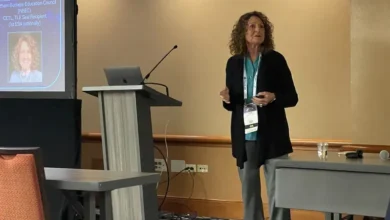
Vicki Wilson, a seasoned school leadership consultant and former principal, joined Nicole Garza, the principal of Grosse Ile Elementary School in Michigan, to present a comprehensive framework for navigating these turbulent waters. Their session highlighted a fundamental truth in educational leadership: while change can be implemented with the stroke of a pen or a school board vote, the transition—the internal psychological process people go through to come to terms with a new situation—requires time, empathy, and strategic intervention.
The Psychological Framework of Transition
To provide a theoretical foundation for their practical experiences, Wilson referenced the transition model developed by William Bridges in his seminal work, "Managing Transitions." According to this model, transition is distinct from change. Change is situational, such as a new site, a new boss, or a new team. Transition is the three-phase psychological process that people go through as they internalize and come to terms with the details of the new situation.
The first phase is "The Ending." Wilson noted that the hardest part of organizational change is not what is beginning, but what is ending. For many educators, a school is more than a workplace; it is a community with a unique history and identity. When a school closes, staff members experience a genuine sense of grief. Wilson argued that leaders must acknowledge this loss rather than rushing toward the "new beginning." Honoring the past is a prerequisite for moving into the future.
The second phase is "The Neutral Zone." This is often the most uncomfortable period for staff. It is the bridge between the old way of doing things and the new reality. In this phase, people may feel lost, confused, and uncertain of their roles. However, Wilson and Garza posited that the neutral zone is also a fertile ground for creativity and the birth of a new culture if managed with clear communication.
The final phase is "The New Beginning." This occurs when staff members develop a new identity, experience a renewal of energy, and begin to feel a sense of ownership over the merged institution. Reaching this phase requires leaders to have successfully navigated the previous two stages with transparency and emotional intelligence.
Case Study: The Grosse Ile Elementary Merger
The presentation centered on the real-world application of these theories at Grosse Ile Schools in Michigan. The district faced a common challenge: the need to consolidate its K-2 and 3-5 buildings into a single K-5 elementary school. This move was not merely a relocation of students but a complete restructuring of the professional environment for dozens of teachers and support staff.
The chronology of the Grosse Ile merger provides a blueprint for long-term transition planning. The district did not implement the change overnight. Instead, it allowed for a multi-year transition period. This timeline began with the initial announcement and culminated in the official opening of the newly named Grosse Ile Elementary.
Nicole Garza found herself at the helm of this transition during a particularly sensitive period. As the district prepared for the merger, one of the two building principals stepped down, leaving Garza responsible for leading both the K-2 and 3-5 buildings for an entire academic year before the physical merger took place. This "pre-merger" year was critical. Garza noted that initially, the staff from the two buildings were resistant to collaboration. There was a palpable "us versus them" mentality, and the prospect of a unified culture seemed remote.
Honoring the Grieving Process
Recognizing the necessity of addressing "The Ending," Garza and Wilson implemented a strategy to allow staff to process their loss. In August 2024, Garza dedicated an entire professional development day specifically to the grieving process. In a move that emphasized trust and psychological safety, school administrators stepped away from the discussions.
This allowed teachers and staff to speak candidly about their fears, frustrations, and the specific elements of their old school identities they were afraid of losing. Wilson observed that by verbalizing these feelings without the presence of supervisors, the staff felt a sense of relief. This structured "venting" session served as a formal acknowledgment of the end of an era, which paradoxically allowed the staff to start looking forward.
Bridging the Neutral Zone through the Leaving Your Mark Olympics
To navigate the "Neutral Zone," Garza introduced a creative initiative designed to foster collaboration and break down silos: the "Leaving Your Mark Olympics." This year-long program was launched during back-to-school professional development and served as the primary vehicle for culture-building.
The initiative involved splitting 44 staff members into six cross-functional teams. These teams were intentionally composed of teachers from different grade levels and different original buildings. Before the competitive games began, Garza tasked each team with creating "collective resumes." These resumes compiled the total years of experience, degrees earned, and professional certifications held by the group. This exercise was instrumental in building mutual respect, as veteran teachers from the 3-5 building realized the immense expertise held by their K-2 colleagues, and vice versa.
The "Olympics" featured lighthearted activities such as "trashketball," balance beam walks, and a high-jump competition using sticky notes. While seemingly simple, these games provided the first opportunity for the two disparate staffs to laugh and play together. To maintain momentum, Garza implemented a point system throughout the school year. Teams could earn points for "culture-building" behaviors, such as:
- Sending notes of encouragement to colleagues in the other building.
- Sharing pedagogical resources across grade levels.
- Offering peer support in classrooms.
By the time the physical merger occurred, the primary challenges were related to construction delays rather than interpersonal conflict. The staff had already formed the bonds necessary to operate as a single unit.
The Broader Context: National Trends in School Consolidation
The Grosse Ile experience reflects a growing national trend. According to data from the National Center for Education Statistics (NCES), public school enrollment in the United States is projected to fluctuate and, in many regions, decline over the next decade. The "enrollment cliff"—a result of lower birth rates following the 2008 financial crisis—is now reaching the K-12 system.
In states like Michigan, Illinois, and Pennsylvania, many districts are finding that maintaining multiple half-empty buildings is no longer fiscally responsible. However, the data suggests that poorly managed closures can lead to teacher burnout and increased turnover. A study by the University of Chicago Consortium on School Research found that when schools close, the displacement of staff can lead to a loss of institutional knowledge and a decrease in morale that takes years to recover.
The success of the Grosse Ile model suggests that proactive leadership and a focus on "transition" rather than just "change" can mitigate these negative outcomes. By investing in the social capital of the staff, districts can ensure that the new, merged school is stronger than the sum of its parts.
Implications for Educational Leadership
The presentation by Wilson and Garza offers several key takeaways for school leaders facing similar transitions:
- Clarity and Communication: In the absence of information, staff will often fill the void with rumors and anxiety. Constant, transparent communication is essential during the neutral zone.
- Empowerment: Allowing staff to lead their own culture-building activities and have a voice in the transition process fosters a sense of agency.
- Gamification and Joy: While the reasons for school closures are often somber (budget cuts or declining enrollment), the process of building a new community does not have to be. Incorporating elements of play can break down barriers more effectively than formal meetings.
- Defining Success: Wilson concluded that the ultimate indicator of a successful merger is the shift in language. When staff members stop referring to "my old school" and start collectively saying "this is our school," the transition is complete.
As school districts across the country continue to navigate the complexities of modern demographics, the lessons from Orlando serve as a reminder that the heart of any school is its people. Facilities may be merged and names may be changed, but the culture of an institution is built through the intentional management of human transition. For leaders like Nicole Garza, the goal is not just to survive a merger, but to use it as a catalyst for a stronger, more unified educational community.