New Wallabies boss Les Kiss faces his sternest test yet as the mighty Springboks come to Perth

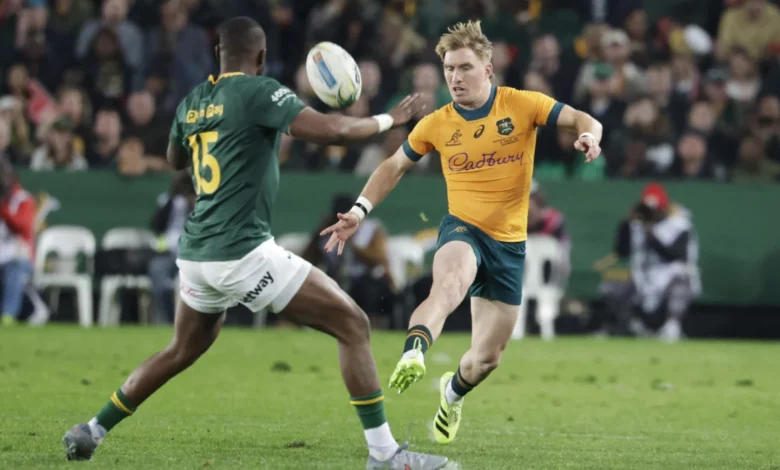
The international rugby calendar for 2026 brings together two of the southern hemisphere’s most storied rivals as the Australian Wallabies prepare to host the world-conquering South African Springboks at Perth’s Optus Stadium. For newly appointed Wallabies head coach Les Kiss, this fixture represents the ultimate benchmark for a side striving to recapture its historical dominance on the global stage. While the traditional Rugby Championship backdrop is absent for this particular encounter, the stakes remain exceptionally high. Both rugby union powerhouses are looking to validate their respective trajectories during a demanding international window, making Sunday’s clash a crucial litmus test for squad depth, tactical execution, and mental resilience.
The fixture arrives at a critical juncture in the global rugby landscape, heavily influenced by the newly established Nations Championship. This ambitious bi-annual global competition has restructured the international calendar, creating structured pathways and heightened competitive intensity outside of the traditional mid-year and end-of-year tours. For Australia, the 2026 season has been a narrative of recovery and adaptation under Kiss’s fresh leadership framework. South Africa, meanwhile, enters the contest riding the momentum of a brutal and triumphant 3-1 series victory in their celebrated "Greatest Rivalry" tour against the All Blacks, confirming their status as the gold standard in world rugby.
Wallabies’ Campaign Under Les Kiss: A Season of Resilience
The tenure of Les Kiss as Wallabies head coach has experienced a distinct tale of two halves thus far in 2026. The opening salvos of the international season proved baptismal by fire for the Australian side, who stumbled out of the gate with consecutive defeats against northern hemisphere heavyweights Ireland and France in the nascent Nations Championship. These losses exposed structural vulnerabilities and underscored the immense challenge facing a coaching staff tasked with restoring the Wallabies to elite competitive parity.
However, the response from the squad has demonstrated character and tactical evolution. Shrugging off the early-season disappointments, the Wallabies engineered an encouraging turnaround. They secured a pair of clinical victories against Italy and Japan, before embarking on a notoriously difficult trip to South America. In Argentina, Australia claimed a gritty victory followed by a hard-fought draw on the road, showcasing an away-from-home resilience that has been conspicuously absent from Wallabies sides in recent cycles.
Despite this positive momentum, Kiss has been transparent about the magnitude of the challenge awaiting his charges in Western Australia. The Springboks represent a quantum leap in quality, physicality, and tactical sophistication compared to Australia’s recent opponents. For Kiss, this match is less about the immediate scoreboard and more about measuring how closely his developing squad can match the physical intensity and clinical execution demanded by the world champions.
South Africa’s Road to Perth: The Mighty Springboks
The Springboks arrive in Perth fresh from one of the most physically demanding and mentally draining assignments in the sport: a four-Test series against New Zealand dubbed the "Greatest Rivalry." South Africa’s campaign in that tour was a masterclass in adaptability. After dropping a fiercely contested opening Test to the All Blacks, the Springboks systematically dismantled New Zealand’s tactical approach, rattling off three consecutive victories to secure a definitive 3-1 series triumph.
That triumph reinforced the hallmark traits of modern South African rugby: an suffocating defensive structure, a scrummaging unit capable of dismantling any pack in the world, and a bench—frequently referred to as the "Bomb Squad"—that maintains or even elevates the intensity of the team in the final quarter of matches. Head coach Rassie Erasmus and his management team have cultivated a depth of talent that is arguably unmatched in the history of the sport, allowing them to rotate players without a discernible drop in performance quality.
For the Springboks, the trip to Perth is an opportunity to extend their psychological dominance over their southern hemisphere neighbors while fine-tuning combinations ahead of the remainder of the international calendar. Even when missing a handful of frontline players due to strategic rest protocols, the South African matchday twenty-three boasts a terrifying combination of seasoned World Cup winners and explosive, emerging talent.
Match Schedule and Global Broadcast Information
Rugby enthusiasts across the globe have multiple avenues to tune into this high-stakes encounter, whether through traditional broadcasting networks or digital streaming platforms.
The match is officially scheduled for Sunday, 27 September 2026. Kick-off times vary widely across international time zones to accommodate global audiences:
- United Kingdom: 10:45 AM BST
- South Africa: 11:45 AM SAST
- Central Europe: 11:45 AM CET
- Australia (Eastern Standard Time): 7:45 PM AEST
- Australia (Western Standard Time – Local): 5:45 PM AWST
- New Zealand: 10:45 PM NZDT
- United States (Eastern Daylight Time): 5:45 AM EDT
- United States (Pacific Daylight Time): 2:45 AM PDT
For fans residing in Australia, free-to-air coverage is available via Channel 9, alongside live streaming access through the network’s digital platform, 9Now. The local evening kick-off at Optus Stadium makes it prime-time viewing for Australian supporters.
Viewers in the United States can access free live streams of the match via World Rugby’s official platform, RugbyPass TV. While the service is free to use, viewers are required to complete a brief registration process prior to streaming. Early risers on the US East and West coasts will need to tune in during the early hours of Sunday morning.
For international travellers or fans located outside of their home broadcast regions, geo-blocking restrictions can often prevent access to standard streaming services. In such cases, many viewers utilize virtual private networks (VPNs) to securely connect to their domestic servers, allowing them to view official regional broadcasts as if they were physically at home. Technical experts consistently rate services like NordVPN as reliable options for bypassing geographical restrictions while maintaining secure, high-speed connections suitable for live sports streaming.
Tactical Outlook and Bledisloe Cup Implications
Beyond the immediate prestige of defeating the world champions, this fixture carries significant strategic weight for the Wallabies. Australia is currently in a vital staging phase ahead of their annual Bledisloe Cup clashes against arch-rivals New Zealand. The matches against the All Blacks remain the ultimate measuring stick for Australian rugby union, and Les Kiss is acutely aware that surviving the Springbok onslaught is the best possible preparation for the trials ahead.
Tactically, the battle will be won and lost at the gain line and the breakdown. South Africa’s defensive line speed is legendary, designed to suffocate opposition playmakers and force handling errors under extreme pressure. Kiss has spent the week focusing on quick ruck ball and intelligent kicking strategies to prevent the Springboks from dictating the territorial battle. If the Wallabies can secure parity in the set-pieces—historically a challenging endeavor against South Africa’s monstrous pack—they possess the outside backs capable of exploiting space if the ball is moved quickly to the edges.
Conversely, the Springboks will look to impose their physical dominance early, utilizing high-pressure box kicks from their scrum-halves to force errors in the Australian backfield. South Africa’s efficiency in converting opposition turnovers into points has been the cornerstone of their success under Erasmus, and the Wallabies’ defensive discipline will be tested to its absolute limits across the eighty minutes.
As the referee prepares to blow the opening whistle at Optus Stadium, the spotlight falls squarely on Les Kiss and his evolving Wallabies. A competitive performance—or an upset victory—would provide an immeasurable psychological boost for Australian rugby. However, a clinical dismantling by the Springboks would starkly illustrate the ground the Wallabies must still cover to rejoin the absolute elite of the global game.