Princess Anne Honors King Harald of Norway at Oslo Cathedral Funeral with Historic Diamond Ribbon Brooch and Traditional Pearls

The solemn granite and soaring Gothic arches of Oslo Cathedral provided a dignified backdrop on Wednesday, September 9, as royals from across the globe gathered to bid a final farewell to King Harald of Norway. Among the high-profile mourners was Princess Anne, who attended the state funeral alongside Prince William. While the Prince of Wales was present to officially represent his father, King Charles III, the Princess Royal’s attendance carried a profound personal weight. For Princess Anne, the service was not merely an international diplomatic obligation, but a deeply personal farewell to a fellow sovereign and a monarch she had known intimately for decades, having served as a godmother to the newly ascended King Haakon since his christening in 1973.
True to centuries of royal protocol, female mourners at the service largely adhered to traditional mourning attire, most notably incorporating classic pearl jewelry to signify grief and solemnity. However, it was Princess Anne’s careful selection of accessories—balancing historic pearl drop earrings with a deeply sentimental diamond-studded gold ribbon brooch—that captured the attention of royal watchers, jewelry historians, and experts alike.
The Language of Royal Mourning: Pearls Through the Ages
The tradition of wearing pearls during periods of royal bereavement is deeply embedded in European court history. According to Eddie Le Vian, CEO of the historic jewelry house Le Vian, pearls have served as the silent language of royal mourning for generations.
"Since Queen Victoria famously mourned Prince Albert wearing exclusively black and pearls, these lustrous gems have come to evoke tears, remembrance, and quiet dignity," Le Vian explains. The tradition traces its roots back to Queen Victoria’s decades-long period of public mourning following the death of her beloved husband in 1861. Victoria famously eschewed traditional colorful gemstones and bright metals, establishing a strict monochromatic palette offset only by pearls, which she felt visually represented the shedding of tears.
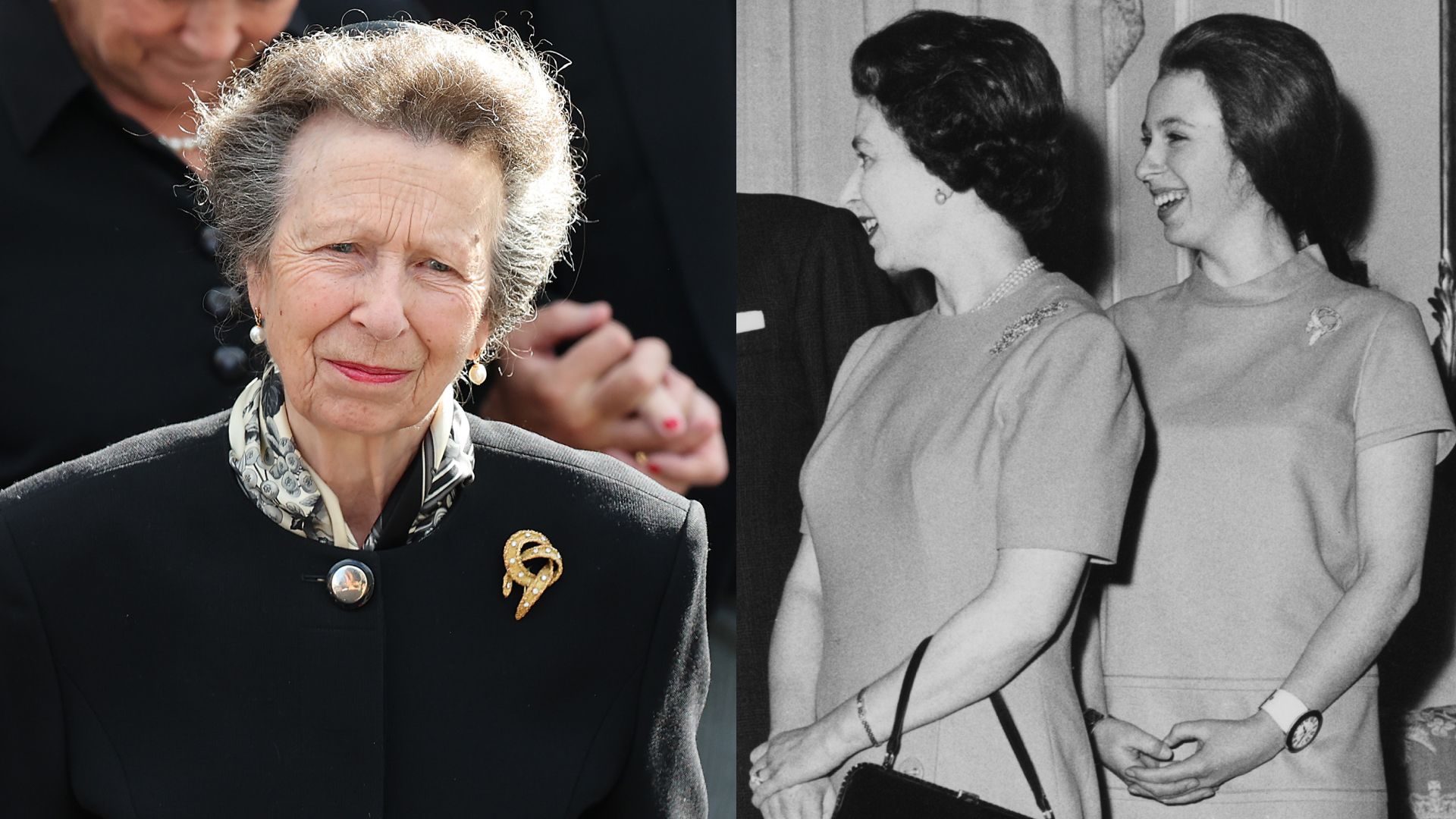
At King Harald’s funeral, this historical protocol was widely observed by international royalty, including members of the Norwegian royal family and visiting European monarchs. Princess Anne honored this centuries-old custom by wearing a classic pair of pearl drop earrings. However, true to her characteristic style—which often favors understated practicality and deep personal sentiment over mere ostentation—she departed from convention by omitting a traditional pearl necklace. Instead, she chose a dark silk scarf paired with a remarkable piece of jewelry from her personal vault: a mid-20th-century gold and diamond ribbon brooch with a history spanning nearly six decades.
A Brooch Worn Across Six Decades: History and Provenance
Jewelry expert Nilesh Rakholia, founder of Abelini, noted that the choice of the gold ribbon brooch was far from incidental. Given the vast array of historic pieces housed within the British royal collection, the decision to repeatedly select a specific, moderately sized brooch speaks volumes about its wearer.
"The princess has dozens of high-value options in her collection, so reaching for a brooch she has worn consistently for over fifty years tells you this wasn’t a casual choice," Rakholia observes.
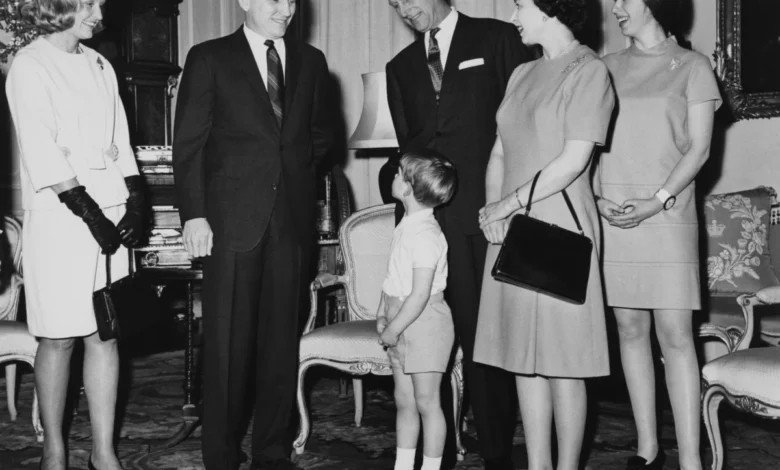
The brooch itself dates to the mid-20th century and is crafted as a loosely knotted bow, pavé-set with approximately a dozen sparkling diamonds. Its public debut occurred in 1969, when an 18-year-old Princess Anne wore the piece to Buckingham Palace during a royal reception for American astronaut Colonel Frank Borman, commander of the historic Apollo 8 mission. In archival photographs from that year, a young Anne can be seen alongside her parents, Queen Elizabeth II and Prince Philip, welcoming the space pioneer.
Over the subsequent 57 years, the ribbon brooch has quietly found a permanent home in the Princess Royal’s rotating wardrobe. It has made appearances at high-society fixtures such as Royal Ascot and featured prominently in official portraits released to mark her 70th birthday. Yet, a clear pattern emerges when examining its usage: the brooch is rarely worn for celebratory galas or lighthearted public engagements. Instead, Princess Anne overwhelmingly reserves the piece for solemn ceremonies of remembrance and historical reflection.
Chronology of Remembrance: When the Brooch Appears
A review of the Princess Royal’s public engagements reveals a deliberate pattern in how she deploys her jewelry as a form of non-verbal communication. While royal jewels are frequently chosen to match the color palette of an ensemble, Princess Anne’s recurring use of the diamond ribbon brooch aligns almost exclusively with memorial events and military commemorations.
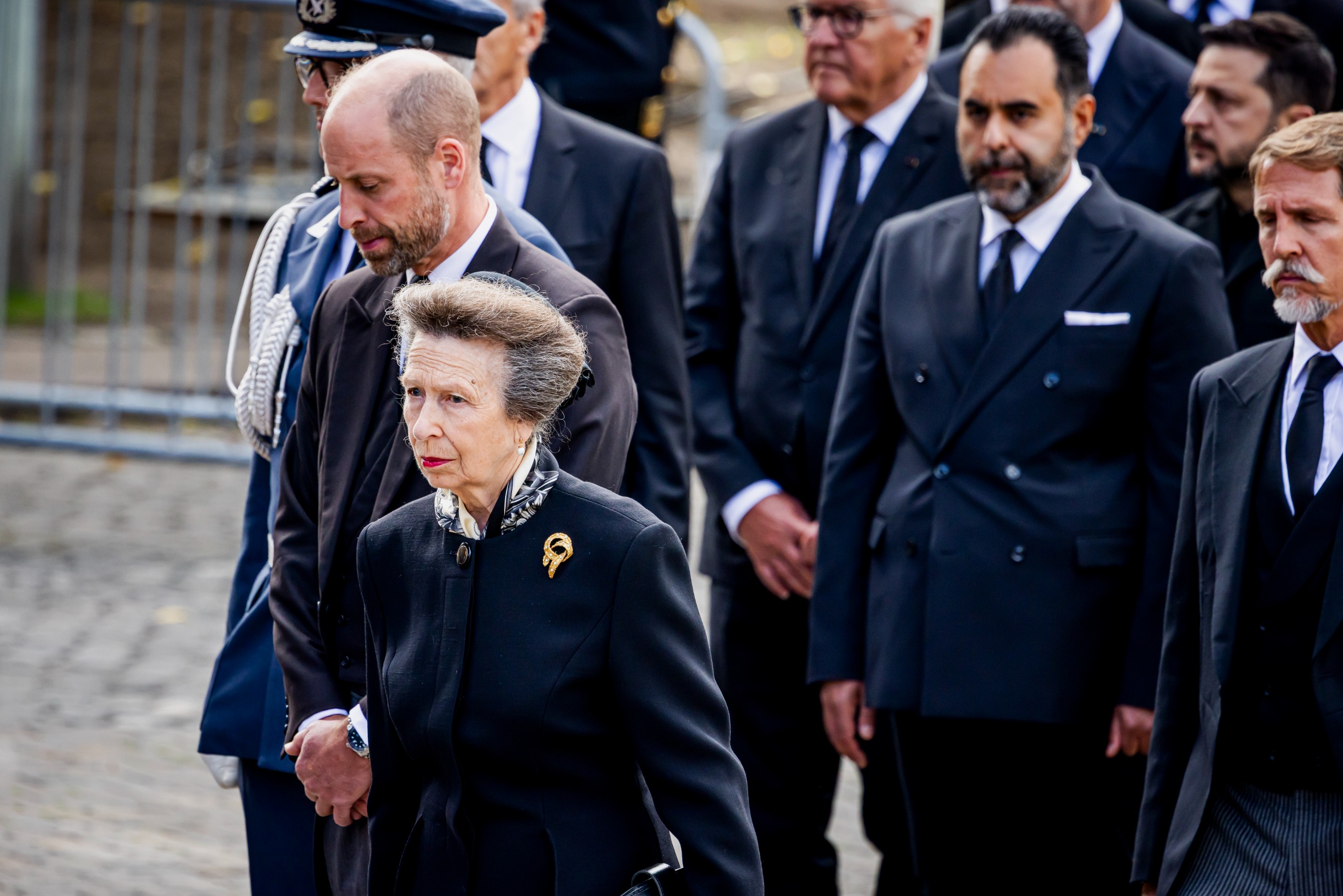
In recent years, the brooch has been spotted at significant historical and memorial services, including:
- Anzac Day Services: Worn alongside the Princess of Wales in London to honor fallen Australian and New Zealand service members.
- The Battle of Crete Anniversary: Utilized during commemorative events marking the 85th anniversary of the fierce World War II battle.
- State Funerals and Memorials: Positioned respectfully against dark mourning coats during moments of national and international grief.
"That’s the pattern that stands out to me," Rakholia notes. "This isn’t a brooch she reaches for on lighter occasions. Time and again, it appears at moments of remembrance and loss specifically, whether that’s a wreath-laying for fallen soldiers in the spring or, now, the funeral of a head of state she has a personal connection to."
Furthermore, industry experts point out the technical suitability of the piece for mourning attire. The delicate diamond setting provides a soft, subdued reflection rather than an overt, flashy sparkle. When pinned against a heavy, dark wool coat—the standard uniform for state funerals—the gold ribbon creates a subtle contrast that reads as deeply respectful rather than purely decorative.
Diplomatic Representation and Personal Bonds in Oslo
The presence of Princess Anne and Prince William at Oslo Cathedral underscored the close, interwoven dynastic ties between the British and Norwegian royal houses. King Harald, who passed away earlier in the month, shared deep familial bonds with the British Windsor family. As descendants of Queen Victoria, European royal houses have traditionally maintained close relationships, attending each other’s landmark life events, christenings, weddings, and state funerals.
While Prince William attended in an official capacity to represent the reigning British monarch, King Charles III, Princess Anne’s presence bridged the gap between official state duty and intimate personal grief. Having watched the Norwegian royal family navigate decades of triumphs and trials, and having held a spiritual and familial role as godmother to King Haakon since 1973, Anne’s grief was visibly shared by the Norwegian court.
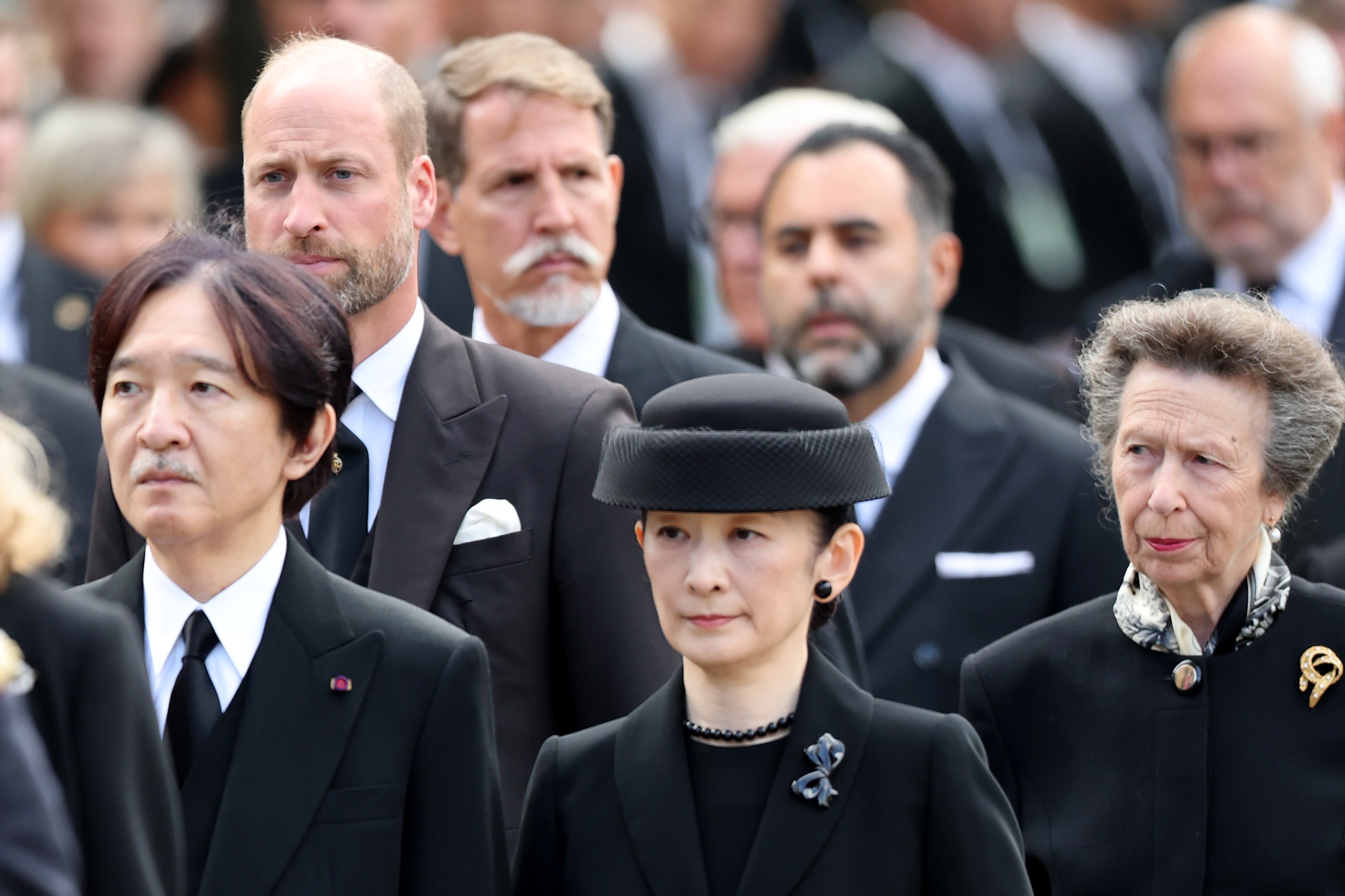
The funeral procession in Oslo saw foreign royals, including Crown Prince Akishino and Crown Princess Kiko of Japan, alongside European monarchs, march in solemn solidarity behind the royal casket. The atmosphere inside the cathedral balanced national mourning with quiet, personal reflection among peers who understand the unique burdens and longevity of constitutional monarchies.
Broader Implications: The Silent Communication of Royal Dress Codes
In the modern media era, every element of a royal appearance is intensely scrutinized by stylists, historians, and the public. Unlike politicians, who must rely on speeches and press releases to communicate their stance, working royals frequently utilize fashion, heraldry, and heirloom jewelry as a subtle visual lexicon.
By selecting the diamond ribbon brooch—a piece she has worn since her youth—Princess Anne effectively wove her own personal history into the broader tapestry of European royal mourning. The juxtaposition of a jewel worn first at the dawn of the space age in 1969 with a state funeral in 2024 serves as a visual reminder of the continuity, endurance, and deep-seated personal histories that define senior members of royal families.
As the international delegations departed Oslo Cathedral and the Norwegian monarchy entered a new era under King Haakon, the enduring image left by the Princess Royal was one of steadfast loyalty. Through her deliberate curation of historic pearls and a half-century-old diamond ribbon brooch, Princess Anne demonstrated that within the rigid framework of royal protocol, personal memory and lifelong affection can still find a quiet, elegant voice.