Mastering Home Organization: Professional Strategies for Efficient and Aesthetic Blanket Storage

The seasonal transition of home textiles often presents a persistent spatial challenge for homeowners, as bulky comforters, weighted blankets, and delicate wool throws quickly accumulate beyond the capacity of standard closets. As residential square footage commands a higher premium and minimalist interior design trends prioritize clutter-free living, the demand for sophisticated, functional, and aesthetically pleasing storage solutions has grown exponentially. Industry professionals emphasize that proper blanket storage transcends mere tidiness; it is a vital practice for preserving the integrity, hygiene, and longevity of household linens.
The Evolution of Residential Storage Challenges
Over the past decade, shifting architectural trends toward open-concept living and smaller footprint urban dwellings have significantly reduced dedicated storage space, such as traditional linen closets. Concurrently, consumer spending on home comfort goods—including specialized weighted blankets, artisanal wool throws, and premium down comforters—has risen sharply. According to recent home organization industry reports, the average household owns nearly twice as many decorative and functional blankets today as it did fifteen years ago.
This accumulation creates a distinct dilemma: how to house items that are simultaneously functional necessities, seasonal comforts, and prominent decorative elements. When left unmanaged, blankets can overwhelm closets, collect dust, and suffer fabric degradation from improper handling. To address this, professional organizers and interior designers have developed a comprehensive framework for categorizing, protecting, and displaying blankets based on material composition and available spatial geometry.
Material-Specific Preservation Protocols
Different textile fibers require distinct environmental conditions to prevent damage from moisture, pests, and compression. Industry experts stress that a one-size-fits-all approach to blanket storage is fundamentally flawed.
Wool blankets, prized for their natural warmth and durability, demand careful attention to airflow and pest deterrence. Marty Basher, a home organization expert with Modular Closets, notes that collectors frequently run out of creative methods as their inventories grow. Complementing this, Maegan Bucur, former editor-in-chief of Rhythm of the Home, describes wool as a particularly demanding textile.
"Wool blankets are a little more pretentious than other synthetic blankets," Bucur explains, emphasizing that absolute dryness is mandatory prior to long-term storage to prevent mold and mildew proliferation. Bucur recommends utilizing well-aired wicker baskets or secure, resealable plastic containers that shield the fibers from moths while maintaining adequate environmental stability.
Down blankets and heavy winter comforters present a different set of challenges, primarily related to volume and dust accumulation. Interior designer Lisa Galano highlights the necessity of structural protection for these substantial items.
"These bulkier items can take up space and can also collect dust," Galano states. "I find it’s very important to protect your heavier blankets and down comforters when not in heavy rotation by first laundering them appropriately, then storing them in an airtight, recyclable container or bag with a zipper or a tight seal."
To counteract the staleness often associated with airtight storage, Galano suggests a simple olfactory enhancement: "I also like to throw in a Meyer’s dryer sheet or two when storing linens."
Spatial Optimization in Compact Environments
For urban dwellers and occupants of smaller homes, maximizing vertical real estate is often the only viable strategy for managing textile overflow. Stefan Bucur, founder of Rhythm of the Home and an experienced interior designer, advocates for looking upward when floor and closet space are exhausted.
"The secret to storing blankets when low on space is utilizing dead spaces next to the ceiling," Bucur advises. By installing floating shelves equipped with integrated hanging hardware along the upper perimeters of a room, homeowners can dramatically increase their storage capacity without encroaching on daily living areas. This architectural approach draws inspiration from historical pantry designs, repurposing neglected zones into functional, accessible archives for seasonal bedding.
Dual-Purpose Decor and Accessibility
Storage does not necessitate concealment. Interior designer Beth Diana Smith advocates for storage systems that function actively within a room’s aesthetic framework, merging utility with interior design.
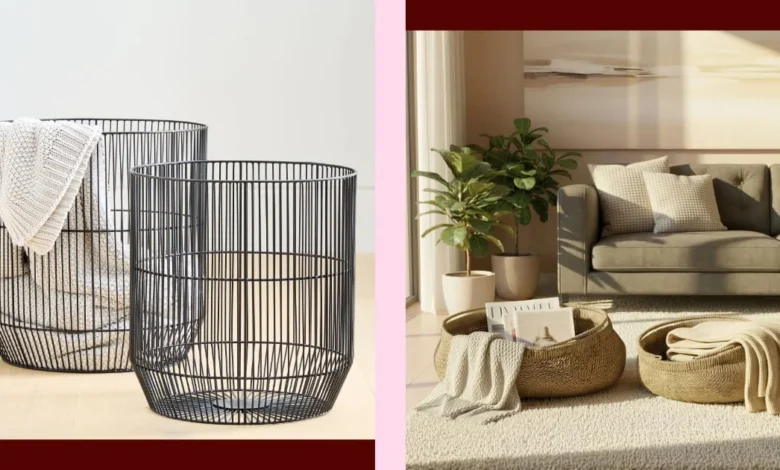
"I like to store blankets in places that are easy to access, have a dual purpose, or act as hidden storage," Smith explains. "I love using trunks and oversize lidded wicker or seagrass baskets. Baskets are great for hidden storage and can be beautiful decor pieces."
This philosophy aligns with current interior design movements that favor tactile, organic materials like woven seagrass and weathered wood. By transforming functional containers into focal points—such as placing a large lidded trunk at the foot of a bed or positioning a woven basket beside a living room sofa—homeowners maintain immediate access to their throws while enhancing the room’s visual texture.
Broader Implications and Economic Impact
The rising emphasis on specialized home storage reflects a broader cultural shift toward intentional consumption and asset preservation. As sustainable living practices gain traction, consumers are increasingly motivated to protect existing investments rather than replace prematurely degraded items. Proper textile storage prevents fiber breakdown, deters mite infestations, and extends the operational lifespan of high-end bedding materials by several years.
Furthermore, the integration of decorative storage solutions has spurred innovation within the home goods retail sector, driving demand for multi-functional furniture pieces such as storage benches, hollow coffee tables, and modular shelving units. As interior designers continue to innovate around the constraints of modern architecture, the intersection of organization, preservation, and aesthetic design will remain a cornerstone of functional residential management.