Revolutionary Microfluidic Axialtrode Brain Implant Promises New Frontiers in Neurological Treatment and Neural Mapping

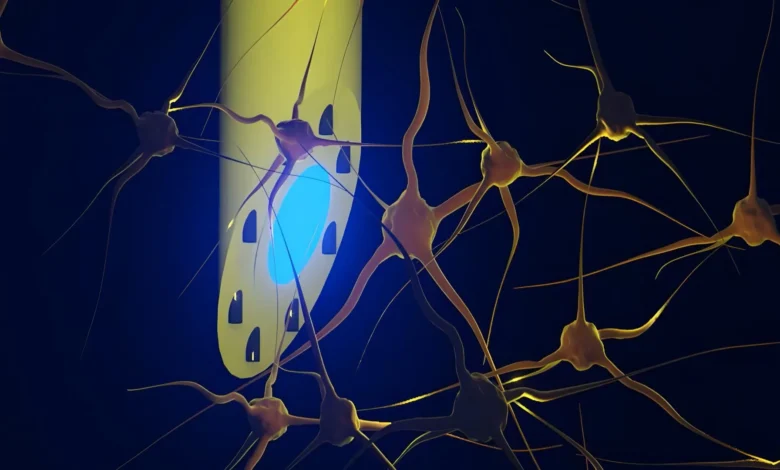
A groundbreaking development in neurotechnology has emerged from a collaborative international effort involving the Technical University of Denmark (DTU), the University of Copenhagen, and University College London (UCL). Researchers have unveiled the microfluidic Axialtrode (mAxialtrode), a needle-thin, multifunctional brain implant designed to transcend the limitations of current neuro-interface technologies. By integrating fluid delivery, electrical recording, and optical stimulation into a single, flexible fiber, the mAxialtrode offers a sophisticated platform for investigating complex brain functions and potentially treating refractory neurological disorders such as epilepsy. The findings, recently detailed in the journal Advanced Science, represent a significant shift toward less invasive, more versatile tools for deep-brain intervention.
The Core Innovation: Integrating Multifunctionality
For decades, neuroscientists have relied on a suite of disparate tools to study the brain. Typically, researchers must deploy multiple probes—some for sensing electrical activity, others for delivering pharmacological agents, and fiber optics for light-based optogenetic stimulation. This multi-probe approach often leads to significant tissue trauma, inflammation, and "glial scarring," where the brain’s immune cells wall off the foreign object, eventually degrading the quality of recorded signals.
The mAxialtrode addresses these issues through its unique architecture. Developed by Postdoc Kunyang Sui and Associate Professor Christos Markos, the device is manufactured through a thermal drawing process. Starting with a larger polymer rod, the material is heated and drawn into an extremely fine, needle-like strand. The resulting fiber, measuring less than half a millimeter in diameter, contains a central light-conducting core surrounded by eight microscopic channels. These channels serve a dual purpose: they can transport therapeutic liquids to specific brain regions or house ultrathin metal wires designed to capture electrophysiological data.
The flexibility of the polymer-based design is a critical advancement. Unlike traditional silicon-based probes, which are rigid and prone to causing mechanical stress on soft brain tissue, the mAxialtrode’s plastic-like composition allows it to move in tandem with the brain’s natural oscillations. This mechanical compatibility is expected to significantly reduce the inflammatory response, potentially extending the lifespan and reliability of long-term neural implants.
Chronology of Development and Validation
The genesis of the mAxialtrode project dates back several years, beginning with a conceptual framework aimed at miniaturizing multi-modal probes. The development phase focused on precision engineering, specifically the ability to create microscopic channels within a fiber of such small diameter. Once the prototype was stabilized, the team transitioned to rigorous testing phases.
Initial laboratory benchmarks confirmed that the device could successfully transmit light for optogenetic activation while simultaneously recording neural signals. Following these technical validations, the team engaged in "in vivo" trials in collaboration with Associate Professor Rune W. Berg and Associate Professor Rob C. Wykes. These trials, conducted in living mouse models, were pivotal in demonstrating the device’s efficacy.
During the experiments, the mAxialtrode was implanted into the cerebral cortex and the hippocampus—regions of the brain deeply involved in memory and the propagation of epileptic seizures. The research team successfully stimulated nerve cells using red and blue light, while recording electrical activity from multiple depths simultaneously. Notably, the device enabled the targeted injection of substances at separate depths, with delivery points spaced up to three millimeters apart. The mice exhibited no signs of behavioral distress or physical discomfort, suggesting that the implant’s profile is well-tolerated even during complex, multi-modal neural interactions.
The Context of Optogenetics and Neural Mapping
To understand the significance of the mAxialtrode, one must examine the limitations of current "flat-ended" optical fibers. Conventional fibers are effective at delivering light to a single target point at their distal tip. While this has been the gold standard for optogenetics—the process of using light to trigger or silence neurons—it is inherently limited by a "one-point-at-a-time" constraint.
Brain functions, however, are rarely localized to a single point. Neural circuits operate through complex, multi-layered communication channels. By limiting stimulation to a single depth, researchers often miss the broader contextual activity of the circuit. The mAxialtrode overcomes this by providing functional points along the entire length of the implant. This "axial" capability allows for the monitoring of neural traffic across different cortical layers, providing a more holistic view of brain architecture in motion.
Implications for Clinical Neurology
While the current iteration of the mAxialtrode is classified as a research tool, its potential for clinical application is a primary driver of the research. Epilepsy, which affects approximately 50 million people worldwide, is a prime candidate for this technology. In many cases, epilepsy is treated with anti-seizure medication that affects the entire body, leading to systemic side effects. Alternatively, patients with drug-resistant epilepsy may undergo surgical resection of brain tissue.
The mAxialtrode offers a middle path: focal, localized therapy. By delivering medication directly to the precise site of seizure initiation, the device could minimize side effects while maximizing efficacy. Furthermore, the ability to combine drug delivery with electrical or light stimulation creates a "closed-loop" potential. In such a system, the implant could theoretically detect the onset of a seizure via electrical monitoring and immediately trigger a therapeutic intervention—either a chemical dose or a pulse of light—to abort the seizure before it manifests clinically.
Technical Challenges and Regulatory Pathways
Despite the promising results, the research team, including Kunyang Sui and his colleagues, remains cautious about the timeline for human implementation. A significant hurdle lies in the transition from animal models to human clinical trials. The brain’s environment is highly corrosive, and ensuring that a polymer-based device maintains its integrity over months or years in a human subject is a major engineering challenge.
Regulatory approval processes, such as those overseen by the FDA in the United States or the EMA in Europe, require extensive biocompatibility testing and long-term stability data. The team is currently working to patent the technology, which is a necessary step before attracting the industrial partnerships required for large-scale clinical validation. Furthermore, the miniaturization of the external pumps and light sources required to operate the implant will be necessary to develop a wearable or fully implantable system that a patient could use outside of a laboratory environment.
Broader Scientific Impact
The introduction of the mAxialtrode aligns with a global trend in "neural engineering," where the focus is moving toward devices that are as invisible to the brain as possible. By reducing the size and stiffness of the implants, scientists hope to move closer to a "brain-machine interface" that can exist indefinitely without triggering the body’s rejection mechanisms.
The collaboration between DTU, the University of Copenhagen, and UCL highlights the interdisciplinary nature of modern neuroscience. It requires a synergy between materials science, micro-fluidics, electrical engineering, and clinical neurology. As researchers continue to refine the mAxialtrode, the goal is to standardize its production, making it accessible to laboratories worldwide. Such a tool could accelerate the discovery of treatments for neurodegenerative diseases beyond epilepsy, including Parkinson’s disease and chronic pain management, where precise, targeted modulation of brain activity is essential.
Conclusion
The mAxialtrode represents a significant leap forward in our ability to probe the complexities of the human brain. By integrating three critical functions—optical, electrical, and chemical—into a single, flexible, and minimally invasive device, the research team has created a versatile platform that addresses the core limitations of existing neural interfaces. While the path to clinical use is paved with the necessary complexities of regulatory approval and long-term safety testing, the fundamental architecture of the mAxialtrode sets a new benchmark for neurotechnology. As the scientific community continues to explore the device’s potential, it stands as a testament to the power of interdisciplinary innovation in addressing some of the most challenging conditions in human health. The transition from the laboratory to the clinic will be the next great challenge, but the foundation laid by the mAxialtrode provides a promising framework for the future of precision neurology.