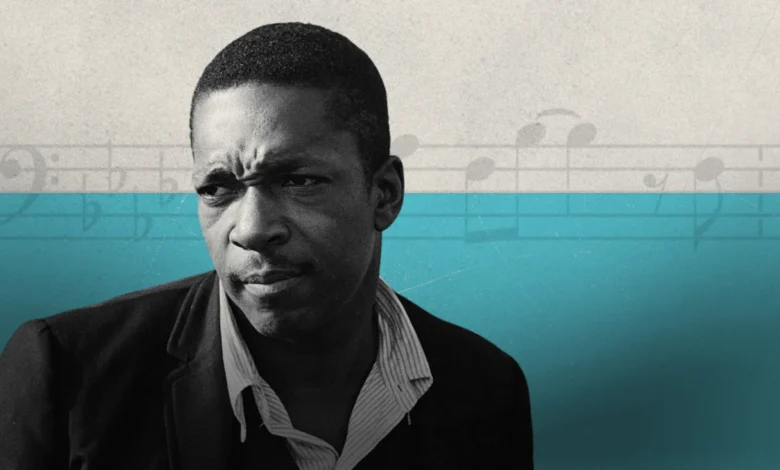
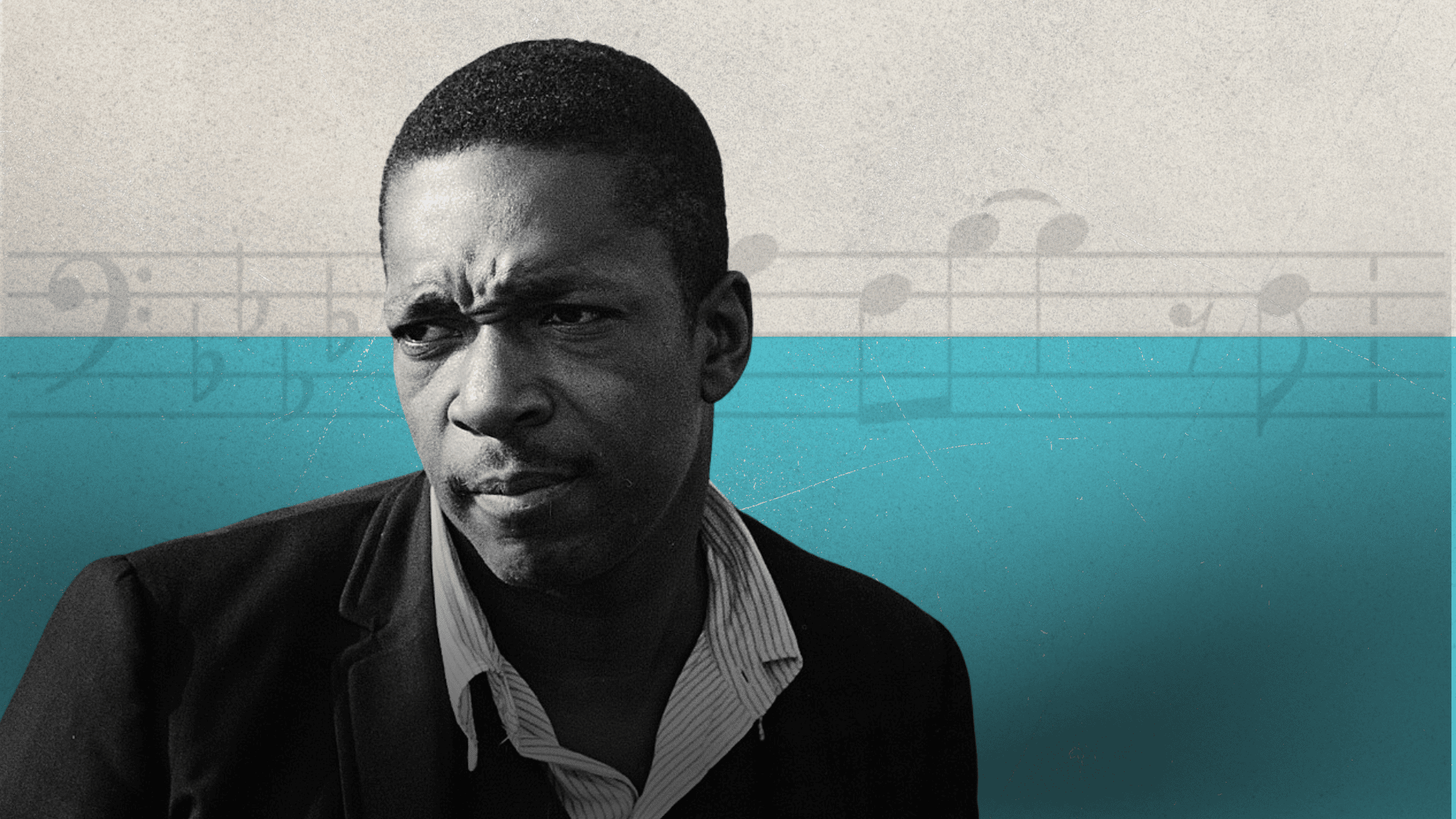
Nearly six decades after his untimely passing in 1967 at the age of 40, the influence of jazz saxophonist John Coltrane continues to permeate the global musical landscape. As the world prepares to commemorate what would have been his 100th birthday on September 23, 2026, scholars, critics, and fellow musicians are reflecting on a legacy that transcends genre, defined by relentless technical innovation, profound spiritual inquiry, and an uncompromising commitment to artistic integrity.
Coltrane, who was posthumously awarded a Pulitzer Prize special citation in 2007, did more than just play the saxophone; he fundamentally altered the harmonic and structural foundations of jazz. From his formative years in the post-war bebop scene to his role as a pioneering force in the avant-garde "free jazz" movement, his trajectory remains one of the most studied and revered arcs in 20th-century American art.
A Chronology of Musical Evolution
John William Coltrane was born on September 23, 1926, in Hamlet, North Carolina. His early professional life was marked by both promise and struggle. After serving in the U.S. Navy during the final years of World War II, he returned to Philadelphia to refine his craft. However, it was not until he joined the Miles Davis Quintet in 1955 that he achieved national prominence.
The timeline of his ascent is a study in rapid transformation:
- 1955–1957: The "Miles Davis Era." Coltrane gained notoriety for his "sheets of sound"—a dense, rapid-fire approach to improvisation. His time with Davis was interrupted by personal challenges, leading to his dismissal in 1957 due to substance abuse issues.
- 1957–1959: The Period of Redemption. Following a period of sobriety, Coltrane experienced a spiritual awakening. He rejoined Davis for the 1959 recording of Kind of Blue, an album frequently cited as the greatest jazz record ever made.
- 1960–1964: The Classic Quartet. Forming his own band with pianist McCoy Tyner, drummer Elvin Jones, and bassist Jimmy Garrison, Coltrane shifted from traditional chord changes to modal improvisation. This era yielded the complex architecture of Giant Steps (1960) and the spiritual depth of A Love Supreme (1964).
- 1965–1967: The Avant-Garde Departure. In his final years, Coltrane pushed into the outer limits of jazz, embracing "free jazz" and exploring non-Western tonal systems before his death from liver cancer on July 17, 1967.
Technical Mastery and the Pursuit of the Divine
For many musicologists, Coltrane’s significance lies in his refusal to view technique as an end in itself. Ingrid Monson, the Quincy Jones Professor of African American Music at Harvard, emphasizes that Coltrane’s practice regimen—often spanning eight hours a day—was driven by a desire for "communion with the divine."
"There has never been a jazz artist more profound than John Coltrane," Monson notes. "He used music as a vehicle for personal spiritual beliefs, and for him, the pursuit of excellence was synonymous with humility in the face of the sacred."
This dedication resulted in a sound that was instantly recognizable—a dark, emotive, and lyrical tone that could shift from delicate tenderness on a ballad to aggressive, high-energy turbulence in a matter of measures. Whether he was playing a standard or a complex original composition, Coltrane approached the instrument as a voice for deep, humanistic expression.
Redefining the Performance Paradigm
Beyond his recordings, Coltrane fundamentally changed the economic and social structure of the jazz performance circuit. Jazz historian and critic Bob Blumenthal, a two-time Grammy Award winner for his liner notes on Coltrane retrospectives, highlights a often-overlooked contribution: the length of live sets.
In the 1950s, the "club circuit" dictated that sets be brief—typically 30 to 40 minutes—to maximize beverage sales. Coltrane, as a bandleader, challenged this industry standard. "Coltrane was the first to say, ‘No, I’m playing as long as I need to play,’" Blumenthal explains. This shift in performance philosophy allowed musicians the space to explore themes at length, moving jazz from a form of entertainment toward a form of long-form, transcendental experience.
Socio-Political Resonance
Coltrane’s music was never detached from the social reality of his time. As Vijay Iyer, the Franklin D. and Florence Rosenblatt Professor of the Arts at Harvard, observes, the "hard-won quality" of Coltrane’s sound resonates with listeners because it carries a narrative of overcoming hardship.
This was explicitly manifest in his compositions during the height of the Civil Rights Movement. His 1963 piece "Alabama," written in response to the bombing of the 16th Street Baptist Church, serves as a mournful prayer for the four young girls killed in the attack. Similarly, the final movement of A Love Supreme incorporates a recitation of a sermon by Dr. Martin Luther King Jr., cementing the link between his spiritual journey and the broader struggle for racial justice in America.
Global Consciousness and Legacy
Coltrane’s interests extended far beyond the Western canon. In his later years, he became deeply influenced by the music of the Global South, including South Asian raga and African percussion. His fascination with the "Third World consciousness" was an attempt to understand the global post-war experience and the interconnectedness of marginalized peoples.
This intellectual curiosity helped pave the way for modern world-jazz fusion. Today, his influence is found not only in jazz, but in rock, hip-hop, and contemporary classical music. Musicians across all disciplines cite him as the standard-bearer for the "breakthrough" artist—someone who constantly seeks to dismantle his own previous work to find a newer, more honest expression.
The Continuing Essential Discography
As the centennial approaches, the challenge for new listeners is where to begin. Experts suggest that the path into Coltrane’s work does not require a chronological study but rather an emotional one.
For those drawn to lyricism, the album Ballads (1963) and his collaboration with vocalist Johnny Hartman are frequently recommended. For those interested in his harmonic breakthroughs, Giant Steps (1960) remains the gold standard. His foray into modal jazz is perfectly captured in his rendition of "My Favorite Things" (1961), while his more experimental, high-energy work is encapsulated in the live recording Live in Seattle (1965).
The Enduring Impact
The academic and critical consensus is clear: John Coltrane’s status as a musical icon is not merely a product of nostalgia. It is sustained by the sheer density and quality of his output. In an era of disposable media, the longevity of A Love Supreme or the technical challenge of "Giant Steps" provides a benchmark for what is possible within the human creative spirit.
As we look toward the September 2026 centennial, the question is no longer why Coltrane remains relevant, but how he managed to create a body of work that continues to sound "modern" decades after its creation. His legacy serves as a testament to the idea that art, when pursued with absolute integrity, can serve as a bridge between the local struggles of the individual and the universal aspirations of the collective. Whether through his exploration of complex mathematical patterns or his deeply personal prayers, Coltrane remains, as he was in his lifetime, a restless searcher, inviting the world to listen to the sounds of the infinite.