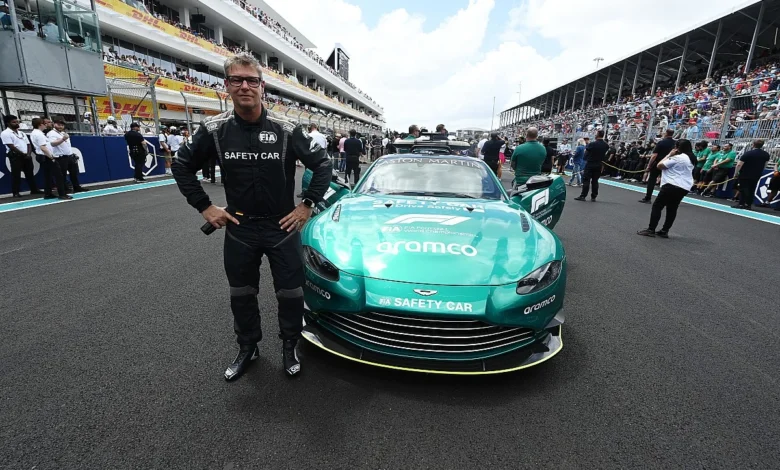
The indelible mark left by the tragic events of the 1994 San Marino Grand Prix has profoundly reshaped Formula 1’s approach to safety, with long-serving safety car driver Bernd Maylander highlighting how this dark chapter served as a crucial catalyst for significant improvements in the championship’s safety car system. Speaking on the F1 Beyond The Grid podcast, Maylander reflected on the stark contrast between the safety protocols of the past and the highly standardized, professionalized system in place today, a transformation directly attributable to the lessons learned from the Imola weekend nearly three decades ago.
The Shadow of Imola 1994: A Turning Point
The 1994 San Marino Grand Prix weekend remains a somber milestone in Formula 1 history. On Friday, May 1st, Austrian driver Roland Ratzenberger tragically lost his life during qualifying. The following day, on Sunday, May 3rd, three-time world champion Ayrton Senna, a legend of the sport, succumbed to injuries sustained in a high-speed crash during the race itself. These were the first fatalities in the sport since Riccardo Paletti in 1982, sending shockwaves through the motorsport community and beyond.
Maylander emphasized the pivotal role of Professor Sid Watkins, Formula 1’s long-time Medical Delegate, in the evolving safety landscape. "I think the medical car was always a part of it, or let’s say ambulances," Maylander stated, acknowledging the presence of medical support even before the widespread standardization. "I don’t know before the ’90s what happened exactly, but Sid [Professor Sid Watkins] was already there. I think since 1994 we all know who Sid Watkins is in racing, of what he has done. And then these things getting more and more important from ’93 onwards, when we had big accidents."
The gravity of the 1994 losses undeniably accelerated the imperative for a more robust and unified safety infrastructure. "Absolutely," Maylander confirmed when asked if the events of Imola 1994 spurred the need for a more standardized safety car. Prior to this period, the concept of a dedicated safety car was present in the regulations, but its implementation was inconsistent. "At that time, the safety car was implemented in the rules, but it was different cars, different drivers from racetrack to racetrack." This piecemeal approach meant that the effectiveness and consistency of safety interventions could vary significantly from one Grand Prix to another, posing an inherent risk.
The Birth of a Standardized Safety Car System
The immediate aftermath of the 1994 tragedies saw a concerted effort by the FIA (Fédération Internationale de l’Automobile) and all stakeholders within Formula 1 to overhaul and enhance safety measures. Maylander’s account details the subsequent evolution of the safety car system, marking a decisive shift towards professionalism and standardization.
"It must be ’96 onwards, it was a permanent driver," Maylander explained, pinpointing the year when a crucial structural change was implemented. "At that time it was Oliver Gavin. Oliver Gavin is a former race driver, a very, very good GT driver, and he did this from ’96 to ’99." This introduction of a permanent, professional driver was a significant step. It ensured that the individual tasked with piloting the safety car possessed not only driving skill but also a deep understanding of racing dynamics and the specific demands of the role.
Maylander himself became part of this evolving system when he took over the safety car driver role from Oliver Gavin. "I took his job over because he left. He went to America for the American Le Mans series. So that was my lucky moment." This transition marked the beginning of Maylander’s extraordinary tenure as the permanent FIA Safety Car Driver, a role he has held since 2000, becoming an iconic figure in modern F1 safety.
The establishment of a permanent driver was complemented by the standardization of the vehicles themselves. "That was the first step, that you have a permanent driver to be absolutely professional in his job, and then also to have a permanent brand and the same safety and medical cars at each track, because then you had standard equipment." This ensured that regardless of the venue, the safety car and its accompanying medical vehicles would be of a consistent make and model, equipped with identical, high-specification safety and medical apparatus. This uniformity was critical for predictability and effectiveness in high-pressure situations.

The Broader Safety Revolution
Beyond the safety car, the period following 1994 witnessed a broader and more comprehensive revolution in Formula 1 safety. Maylander alluded to this wider initiative, stating, "Sid’s job and also the safety and medical stuff that they have implemented in Formula 1, that was really, really important and we learned a lot. That’s why we created a safety department and a medical department to have more power to develop quicker, to develop better together with everyone who’s involved in Formula 1."
The establishment of dedicated safety and medical departments within the FIA provided a structured framework for continuous improvement. These departments, empowered with greater resources and authority, could more effectively research, develop, and implement new safety technologies and protocols. This collaborative approach, as Maylander highlighted, extended beyond the FIA itself. "It’s not only the FIA. So we get support from the teams. We’re working together and I think that’s a very important big step that we’re working together. I think it was quite different 30 or 40 years ago."
This inter-team cooperation was a significant departure from the more insular practices of earlier eras. The shared understanding that the safety of all participants was paramount fostered an environment where teams actively contributed to safety advancements, sharing data and expertise to collectively enhance the sport’s safety record. This has led to substantial improvements in areas such as chassis design, driver equipment (helmets, HANS device, fireproof suits), circuit safety features (run-off areas, barrier technology), and the medical response infrastructure.
Data and Analysis: The Impact of Enhanced Safety
The statistical impact of these safety advancements is undeniable. Following the tragic events of 1994, Formula 1 embarked on a sustained period of significant safety improvements. While isolated incidents and injuries have occurred, fatalities at Grand Prix events have been extremely rare. The introduction of the HANS (Head and Neck Support) device, mandatory from 2003, is credited with saving numerous drivers from severe head and neck injuries. Advances in carbon fiber technology for car construction have made chassis significantly stronger, better able to absorb impact energy.
The safety car itself plays a critical role in mitigating risks during races. By neutralizing the racing speed and bunching up the field, it provides a crucial window for marshals and medical teams to attend to incidents safely, remove debris, and ensure the track is clear for racing to resume. The speed at which the safety car can effectively control the field is a carefully calibrated aspect of its deployment, balancing the need for caution with the desire to maintain competitive dynamics. Maylander’s expertise in this regard is paramount, as he navigates the complexities of managing racing speeds while ensuring maximum safety.
The evolution from disparate, track-dependent safety car operations to a unified, professionalized system with dedicated personnel and standardized equipment represents a fundamental shift in Formula 1’s priorities. It underscores a commitment to learning from past tragedies and proactively building a safer future for the sport.
Reactions and Broader Implications
While direct quotes from team principals or drivers specifically referencing Maylander’s Beyond The Grid interview are not available in the provided text, the sentiment he expresses is widely echoed throughout the motorsport world. The legacy of Ayrton Senna and Roland Ratzenberger serves as a constant reminder of the inherent dangers of motorsport and the ongoing necessity of vigilance in safety matters.
The development of Formula 1’s safety infrastructure is a continuous process. Innovations in driver protection, circuit design, and incident response are constantly being explored and implemented. The collaborative spirit Maylander described, involving the FIA, teams, drivers, and medical professionals, is essential for this ongoing progress. This shared responsibility ensures that the lessons learned from Imola 1994, and indeed from all incidents throughout the sport’s history, are translated into tangible improvements that protect the lives and well-being of those who compete and work within Formula 1. The enduring presence of Bernd Maylander at the wheel of the safety car is a visible testament to this commitment, a constant guardian ensuring that the pursuit of speed and competition never overshadows the paramount importance of safety.