Ke Huy Quan Recalls Receiving a Life-Changing $100,000 Residual Check for Indiana Jones and the Temple of Doom at Age 12

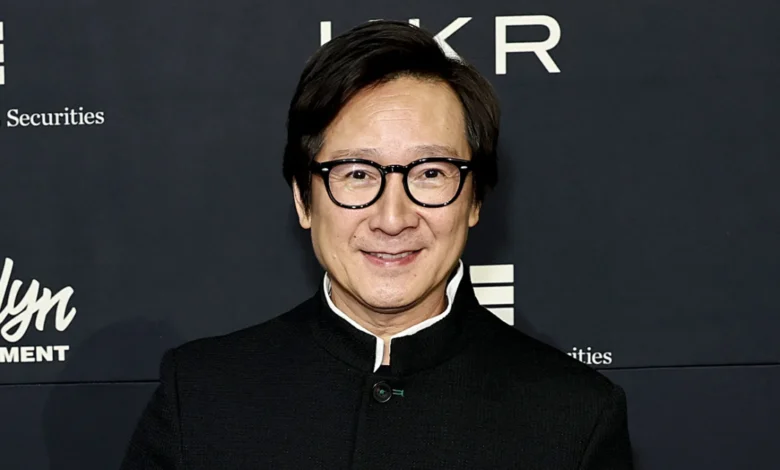
Oscar-winning actor Ke Huy Quan has reflected on a pivotal financial and professional turning point from his childhood in his recently published memoir, Never Say Die, which officially hit bookstore shelves on Tuesday. Among the many recollections detailing his extraordinary journey from a young refugee to a celebrated Hollywood fixture, Quan vividly recounted the moment he discovered his very first residual check for the 1984 blockbuster Indiana Jones and the Temple of Doom amounted to a staggering $100,000.
At just 12 years old, Quan had stepped onto a major motion picture set for the first time, securing the iconic role of Short Round alongside Harrison Ford in the Steven Spielberg-directed sequel. While his initial base salary for the film provided financial relief to his immigrant family, neither the young actor nor his parents understood the complex mechanics of Hollywood backend compensation. The realization that money could continue to materialize long after filming wrapped would leave an indelible mark on the young performer and alter his family’s financial reality forever.
The Discovery in the Kitchen
In an excerpt from Never Say Die, Quan paints a vivid picture of the afternoon he walked into his family home and found his parents standing together in quiet disbelief at the kitchen table. His mother was holding an official envelope bearing his name, while his father examined the legal documentation and paperwork extracted from inside.
"They were both smiling, the kind of smile that comes from surprise and disbelief mixed together," Quan wrote. Upon handing the contents to the bewildered 12-year-old, he realized the document was an official financial disbursement from Lucasfilm. The attached check was written out for nearly $100,000—a sum of money that defied all comprehension for a child who had only recently arrived in the United States.
Quan admitted that he fundamentally could not understand how additional funds could suddenly appear after he had already been compensated for completing his work on the sequel to 1981’s Raiders of the Lost Ark. As he matured and gained a deeper understanding of the entertainment industry, the actor recognized that the unexpected windfall was not merely an administrative error or standard payroll procedure, but rather a deliberate, quiet gesture orchestrated by director Steven Spielberg and producer George Lucas.
Breaking Industry Precedents
To fully comprehend the magnitude of the $100,000 residual check, industry analysts note that standard talent contracts for child actors in the 1980s rarely included profit-sharing or robust residual clauses, particularly for newcomers making their feature film debuts.
"Back then, almost no actors got a piece of a movie’s profits," Quan explained in his memoir. "Even today, only the biggest stars do. That a kid like me, making his first film, would be included in something like that was unheard of."
Temple of Doom was far from an independent or low-budget production destined for limited box-office returns. As the highly anticipated sequel to one of the most successful adventure films in cinematic history, the movie carried immense commercial expectations. Recognizing that a child actor from a working-class background was granted a financial stake in such a massive enterprise highlighted an extraordinary level of mentorship and institutional care from filmmakers at the peak of their creative influence. For Quan’s family, who had navigated the immense struggles of fleeing Vietnam and rebuilding their lives in America, the funds served as a vital safety net.
From Child Stardom to Industry Hiatus
Quan’s introduction to the film industry remains one of the most unique trajectories in Hollywood history. Shortly after wrapping Temple of Doom, he was cast as Data in Richard Donner’s 1985 cult classic The Goonies, further cementing his status as one of the most recognizable child actors of the decade.
However, as the 1980s drew to a close, the landscape for Asian actors in Hollywood underwent a noticeable contraction. Roles dried up, and opportunities for young Asian men to transition into adult dramatic or action-oriented parts were exceedingly rare. Facing a severe lack of viable casting calls, Quan made the difficult decision to step away from acting entirely.
Behind the scenes, he transitioned to working behind the camera. He studied film at the University of Southern California (USC) School of Cinematic Arts and subsequently built a successful career as a stunt choreographer, assistant director, and coordinator, working alongside legendary martial arts directors like Corey Yuen on major productions such as X-Men and The One. For decades, the public assumed Quan’s time in front of the camera was a closed chapter.
A Triumphant Return to the Spotlight
Despite stepping away from acting for more than two0 years, Quan never lost his passion for the craft, nor did he forget the foundational figures who helped launch his career. His perspective shifted dramatically when he watched the 2018 romantic comedy Crazy Rich Asians, which demonstrated a surging appetite for authentic Asian representation on the global cinematic stage. Encouraged by the industry’s changing tides, Quan decided to return to auditioning.
That leap of faith culminated in his casting as Waymond Wang in Daniels’ 2022 multiverse sci-fi-comedy Everything Everywhere All at Once. The role allowed Quan to showcase his formidable comedic timing, dramatic depth, and lifelong martial arts training in a single performance. The film became a runaway critical and commercial phenomenon, propelling Quan back into the upper echelon of the global entertainment industry.
During the subsequent awards season, Quan swept virtually every major accolade, ultimately capturing the Academy Award for Best Supporting Actor, alongside a Golden Globe, a Critics’ Choice Movie Award, and a Screen Actors Guild Award.
A Lasting Bond with Steven Spielberg
Throughout his triumphant awards season run, Quan made it a point to publicly express his deep gratitude to the mentors who believed in him during his youth. His emotional acceptance speeches frequently circled back to Steven Spielberg, who had plucked him from an open casting call decades prior.
At the 2023 Golden Globes, an emotional Quan looked directly into the audience where Spielberg was sitting and acknowledged the filmmaker’s lifelong impact on his trajectory. The viral moment highlighted a decades-long bond built on mutual respect and professional stewardship.
Reflecting on his childhood success, Quan noted in his memoir that the fear of never living up to his early accomplishments haunted him for years. "As I grew older, I started to wonder if that was it, if that was just luck," he shared. "For so many years, I was afraid I had nothing more to offer. No matter what I did, I would never surpass what I achieved as a kid."
Broader Implications and Legacy
The publication of Never Say Die provides broader insights into the inner workings of Hollywood during the blockbusters boom of the 1980s, offering a rare window into the financial realities faced by young performers. While the industry has evolved significantly regarding labor protections, compensation transparency, and the treatment of minor actors, the anecdotes shared by Quan underscore the profound, long-lasting influence that supportive studio leadership can have on an artist’s life.
By shedding light on the unexpected financial support he received during his earliest days on set, Quan’s memoir reinforces a narrative of resilience, gratitude, and improbable redemption. As he continues to select high-profile projects—including roles in Disney’s Loki and the upcoming fantasy adventure The Electric State—Quan’s journey from a 12-year-old holding a Lucasfilm envelope to an Academy Award-winning veteran remains an enduring testament to the unpredictable nature of Hollywood destiny.