WHO Director-General visits Jordan to recognize strong collaboration on health system delivery, emergency relief and advancing mental health

World Health Organization (WHO) Director-General Dr. Tedros Adhanom Ghebreyesus successfully wrapped up the first day of his high-profile, two-day state visit to the Hashemite Kingdom of Jordan today, marking a significant milestone in the ongoing partnership between the global health agency and the Jordanian government. The visit, designed to spotlight Jordan’s exemplary role in advancing universal health coverage (UHC), strengthening mental health frameworks, and leading humanitarian health action in the Middle East, featured a series of high-level diplomatic meetings, hospital inspections with international philanthropists, and strategic planning sessions with global stakeholders.
The cornerstone of the day’s itinerary was an official audience with His Majesty King Abdullah II. The high-level dialogue underscored Jordan’s unwavering national and international leadership in prioritizing public health, particularly under the immense pressures of regional instability. Discussions centered heavily on fortifying national health systems, expanding equitable access to clinical care, and securing sustainable financial mechanisms for emergency medical responses across the region. Special emphasis was placed on Jordan’s ongoing, tireless efforts to host and care for vulnerable populations, including millions of refugees from Syria and displaced Palestinian populations, alongside critically ill patients evacuated directly from Gaza for specialized medical treatment.
Expressing his profound admiration for the nation’s steadfast humanitarian posture, Dr. Tedros lauded the Jordanian monarch. "I wish to express my appreciation to His Majesty King Abdullah II for his commitment to advancing universal health coverage," Dr. Tedros stated. "I also extend my thanks to His Majesty and the people of Jordan for their solidarity and generosity in providing health services to more than three million refugees, primarily from Gaza and Syria, who are living in the country."
Dr. Tedros further emphasized the kingdom’s pivotal role in regional crisis management through unique logistical and diplomatic channels. "We are grateful for Jordan’s broader humanitarian leadership, including His Majesty’s Medical Corridor initiative, which delivers critical care to ill and injured children from Gaza. Jordan continues to show the world what it truly means to put health and humanity first," he added.
On the Ground: Witnessing the Impact of the Gaza Medical Evacuation Corridor
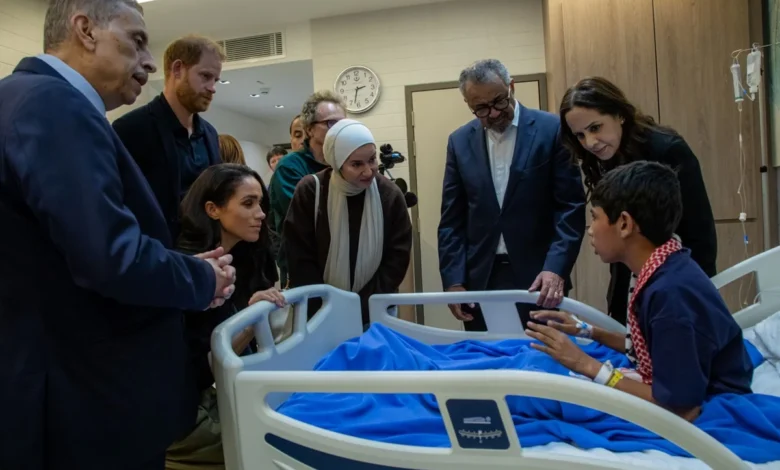
Following his diplomatic engagements at the royal palace, Dr. Tedros transitioned from macro-level policy discussions to direct, frontline observation. Accompanied by high-profile health advocates, the WHO chief visited a specialized, WHO-supported hospital facility dedicated to treating pediatric patients evacuated from the ongoing conflict zones in Gaza.
During the hospital tour, Dr. Tedros walked the wards to meet young patients, their families, and the resilient frontline healthcare workers who are laboring under extraordinarily difficult circumstances. These medical professionals provide life-saving interventions for severe physical trauma, pediatric cancers, and other complex, life-threatening medical conditions that cannot be managed locally in the besieged enclave.
The visit served to draw international attention to the indispensable lifeline provided by the Jordan-facilitated medical evacuation corridor. Public health analysts and humanitarian officials have repeatedly stressed that without this specialized pathway, hundreds of vulnerable patients—particularly children suffering from advanced malignancies and severe blast injuries—would face insurmountable barriers to survival. The WHO leadership used the site visit to issue a renewed call to the international community for sustained, predictable financial and logistical support to keep these evacuation channels open and fully resourced.
High-Level Partnership and Donor Roundtable on Health Resilience
In addition to clinical site visits, Dr. Tedros convened a strategic, high-level roundtable meeting bringing together key health development partners, donor country representatives, United Nations agencies, and leading international philanthropic organizations.
The primary objective of the convening was to address critical financing gaps and establish long-term funding priorities aimed at reinforcing Jordan’s domestic health architecture. Participants evaluated the ongoing requirements of humanitarian health operations, specifically focusing on scaling up comprehensive mental health services and alleviating the fiscal and operational strains placed on host-country institutions supporting massive refugee populations.
International donors and partner agencies expressed strong alignment with the WHO’s strategic vision for the region, welcoming the opportunity to coordinate investments that bolster health security not only within Jordan’s borders but across the wider Eastern Mediterranean region. Stakeholders underscored that robust financing of primary healthcare is the most cost-effective and resilient defense against future regional shocks and displacement crises.
Strengthening Primary Healthcare and Mental Health Integration
Earlier in the day, the WHO Director-General held comprehensive bilateral consultations with Jordan’s Minister of Health. The discussions focused on structural reforms designed to deepen primary healthcare integration as the primary vehicle for achieving universal health coverage.
Jordan has increasingly emerged as a global benchmark for embedding mental health services directly into routine primary care settings. Rather than isolating psychological care in specialized, stigmatized institutions, the Jordanian health system has worked systematically to decentralize mental healthcare, training general practitioners to screen and treat common mental health conditions. This progressive integration is actively supported by the WHO Director-General’s Special Initiative for Mental Health, reflecting a shared commitment to addressing the psychological tolls of protracted conflict, displacement, and economic hardship.
Public health experts note that integrating mental health into routine care is vital in the Middle East, where decades of conflict have left staggering rates of post-traumatic stress disorder (PTSD), anxiety, and depression among both host communities and displaced populations. Jordan’s model is increasingly studied by neighboring states seeking cost-effective ways to manage chronic psychological burdens with limited resources.
High-Profile Advocacy: Prince Harry and Meghan Join WHO Delegation
Adding significant global visibility to the state visit, Dr. Tedros was accompanied throughout several key engagements by Prince Harry, Duke of Sussex, and Meghan, Duchess of Sussex, in their capacities as co-founders of Archewell Philanthropies. The couple has maintained a long-standing, active partnership with the World Health Organization, championing equitable access to medical countermeasures, emergency health responses, and global mental health reform.
Archewell Philanthropies has previously provided vital backing to a range of WHO-led initiatives, spanning from equitable COVID-19 vaccine distribution campaigns to targeted medical evacuation and psychosocial support programs. During the Jordan visit, Prince Harry participated actively as a vocal advocate for WHO’s mental health agenda, engaging with local practitioners and international experts to emphasize the urgent need to destigmatize psychological care, particularly among high-risk groups such as men, adolescents, and children living through emergency situations.
Reflecting on the collaborative mission, Dr. Tedros remarked, "I want to thank our partners, including Prince Harry, Duke of Sussex and Meghan, Duchess of Sussex, whose commitment to mental health and humanitarian action has helped bring visibility, resources and hope to some of the world’s most vulnerable communities. Their collaboration is helping to advance WHO’s mission to ensure health for all."
Prince Harry shared his reflections on the ground realities observed during the visit, stating, "It is an honour to join the Director-General of the World Health Organization in Jordan, a country that is leading by example in compassion, resilience and innovation. Through our work with Archewell Philanthropies, my wife and I have seen first-firsthand the impact of WHO’s efforts to support mental health and deliver life-saving care in emergencies."
The Duke of Sussex further emphasized the indispensable nature of psychological well-being in recovery and state-building. "We remain deeply committed to advancing awareness, reducing stigma and expanding access to mental health support for all those affected by conflict and crisis. Mental health is fundamental to recovery, dignity and long-term peace, and we are proud to stand with WHO and partners around the world to make it a global priority."
Chronology and Agenda for the Second Day
The two-day state visit is scheduled to continue with a robust itinerary focused on specialized clinical care, community resilience, and social development programs.
On the second day, Dr. Tedros is slated to visit the National Center for Rehabilitation of Addicts in Jordan. The facility, which receives technical and operational support from WHO, provides integrated, evidence-based medical, psychological, and social rehabilitation services for individuals struggling with substance use disorders, utilizing a compassionate, health-centered approach rather than punitive models.
Following this engagement, the Director-General will meet with influential community leaders and prominent women’s rights and development organizations, including representatives from the Jordanian Hashemite Fund for Human Development (JOHUD). These discussions will explore grassroots approaches to health education, women’s empowerment, and community-led resilience in underserved areas.
The afternoon will feature a high-level site visit to the renowned King Hussein Cancer Center (KHCC). Discussions at KHCC will center on cutting-edge advancements in oncology, regional clinical collaboration, and the provision of advanced cancer diagnostics and therapeutics for patients from across the Middle East who lack access to specialized oncological care in their home countries.
The official state visit will draw to a close following additional consultative sessions with international humanitarian partners and local health administrators. These final wrap-up meetings are intended to consolidate actionable recommendations, reinforce strategic funding commitments, and solidify Jordan’s enduring position as an irreplaceable regional nexus for medical evacuations, emergency preparedness, and long-term health system resilience.
Broader Implications and Analytical Context
Public health analysts and geopolitical observers view Dr. Tedros’s visit to Jordan as a timely and strategic affirmation of the kingdom’s disproportionate yet vital contribution to regional stability. Hosting over three million registered and unregistered refugees—representing a massive demographic and economic footprint relative to its native population—Jordan has consistently demonstrated that humanitarian obligations transcend immediate national borders.
However, international financial institutions and UN bodies have repeatedly warned that host nations like Jordan are operating near maximum capacity, straining under the compounding pressures of global inflation, climate-induced resource scarcity, and protracted regional conflicts. The WHO Director-General’s active engagement with global donors, philanthropies like Archewell, and high-level policymakers is a calculated effort to mobilize burden-sharing mechanisms that prevent the deterioration of critical health infrastructure in frontline host countries.
Furthermore, Jordan’s success in weaving mental health services into its primary healthcare network serves as a scalable template for low- and middle-income countries globally. By integrating psychological first aid and routine psychiatric care into local clinics, Jordan demonstrates that universal health coverage is not merely an abstract policy goal, but a practical, life-saving reality that can be achieved even amidst economic constraints and humanitarian emergencies.
As the international community continues to grapple with overlapping geopolitical crises and mass displacement events, the WHO-Jordan partnership stands out as a vital anchor for regional health security. The outcomes of this state visit are expected to yield renewed donor commitments, enhanced clinical coordination for Gaza medical evacuations, and accelerated investments in mental health systems across the Eastern Mediterranean region.