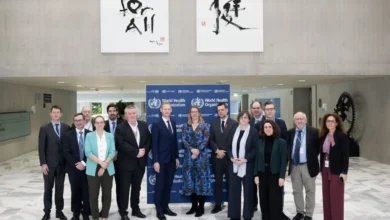
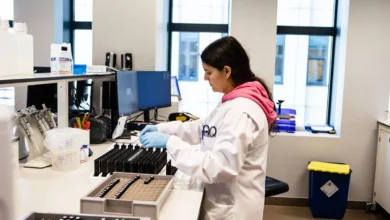
WHO Director-General visits Jordan to recognize strong collaboration on health system delivery, emergency relief and advancing mental health

The landscape of international public health and humanitarian aid faces unprecedented pressures, driven by intersecting conflicts, mass displacement, and the strain on fragile health infrastructures. Against this complex geopolitical backdrop, the Director-General of the World Health Organization (WHO), Dr. Tedros Adhanom Ghebreyesus, embarked on a pivotal two-day State visit to the Hashemite Kingdom of Jordan. Designed to reinforce the strategic partnership between the WHO and the Jordanian government, the visit spotlighted the nation’s enduring role as a regional pillar of stability, healthcare innovation, and compassionate refugee hosting.
The first day of the mission was defined by high-level diplomatic engagements, field visits to specialized medical facilities treating evacuees from Gaza, and strategic consultations with international donors, United Nations agencies, and philanthropic leaders. Notably, Dr. Tedros was accompanied throughout several key engagements by Prince Harry, Duke of Sussex, and Meghan, Duchess of Sussex, in their capacities as founders of Archewell Philanthropies. Their presence underscored the critical intersection of global health advocacy, mental health support in crisis zones, and public-private philanthropic partnerships. As the international community grapples with escalating humanitarian emergencies across the Middle East, the Jordan visit served as both an acknowledgment of past achievements and a blueprint for sustained multilateral cooperation.
High-Level Bilateral Talks and Royal Audience
The cornerstone of the visit’s opening day was an audience with His Majesty King Abdullah II of Jordan. The meeting provided an invaluable platform for leaders to discuss the multifaceted challenges facing health systems in the Middle East, with a primary focus on expanding universal health coverage (UHC), strengthening primary healthcare frameworks, and sustaining emergency health responses for vulnerable populations.
During the discussions, Dr. Tedros commended King Abdullah II for his unwavering commitment to advancing health as both a national and global priority. The WHO Director-General specifically lauded Jordan’s exceptional generosity in hosting more than three million registered refugees—predominantly from neighboring Syria and the ongoing conflict in Gaza—integrating them into national public health systems despite severe economic constraints.
A central element of the royal dialogue centered on Jordan’s broader humanitarian leadership, most notably the King’s Medical Corridor initiative. This critical operational artery has facilitated the evacuation and medical treatment of critically ill and injured children, as well as other severe trauma patients, from Gaza into Jordanian hospitals. By providing specialized care for conditions ranging from conflict-related blast injuries to advanced pediatric oncology, Jordan has repeatedly demonstrated a steadfast adherence to humanitarian principles in the face of immense regional volatility.
Medical Field Missions and Patient Encounters
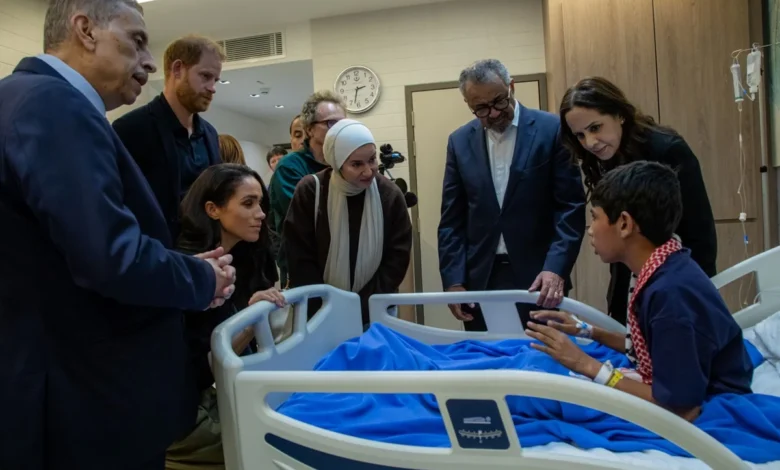
Moving from high-level diplomacy to frontline humanitarian realities, Dr. Tedros visited a specialized, WHO-supported hospital facility dedicated to managing the complex medical needs of children evacuated from Gaza. The visit offered the WHO chief an unvarnished look at the human cost of the ongoing conflict and the heroic efforts of local healthcare workers operating under extraordinary pressure.
Dr. Tedros toured pediatric wards and met directly with young patients, their families, and medical professionals who are delivering life-saving interventions for severe physical trauma, cancer, and other life-threatening pathologies. These interactions underscored the indispensable nature of the medical evacuation corridor traversing Jordan. Public health experts note that without such logistical lifelines, thousands of patients with specialized medical needs would face catastrophic outcomes due to the near-total collapse of healthcare infrastructure in conflict-affected areas.
The field visit also served to amplify urgent appeals from the WHO and its partners for sustained international financial support and logistical cooperation. Ensuring the uninterrupted flow of medical supplies, specialized personnel, and patient transfers remains a logistical nightmare that requires guaranteed humanitarian corridors and robust donor backing. Without predictable international funding, the capacity of transit and host countries like Jordan to absorb and treat these specialized medical cases risks severe compromise.
Multilateral Partnerships and Financing Priorities
In addition to his royal audience and hospital visits, Dr. Tedros convened a high-level strategic roundtable with key health partners, donor governments, United Nations agencies, and philanthropic organizations. The closed-door session focused heavily on resource mobilization and the alignment of financing priorities aimed at bolstering health system resilience in Jordan and across the wider Eastern Mediterranean region.
Discussions at the roundtable emphasized two critical pillars: scaling up mental health and psychosocial support services, and securing predictable funding streams for countries hosting disproportionately large refugee populations. Dr. Tedros praised the participating organizations for their continued willingness to invest in Jordan’s health sector, noting that long-term resilience cannot be achieved through short-term emergency responses alone. Instead, international donors must commit to structural development that strengthens national health systems, enabling them to withstand systemic shocks, whether from pandemics, economic crises, or protracted regional conflicts.
The integration of mental health into primary care systems was highlighted as a transformative achievement in Jordan. Through the collaborative efforts of the Jordanian Ministry of Health and the WHO—bolstered by the Director-General’s Special Initiative for Mental Health—Jordan has made significant strides in destigmatizing psychological care and embedding mental health services directly into routine community health clinics. This model is increasingly viewed by public health specialists as a best-practice framework for middle-income countries facing high burdens of trauma-induced psychological distress.
The Role of Philanthropy and Mental Health Advocacy
A distinctive dimension of the State visit was the active participation of Prince Harry, Duke of Sussex, and Meghan, Duchess of Sussex, representing Archewell Philanthropies. The Duke and Duchess have maintained a long-standing collaborative relationship with the WHO, championing initiatives ranging from equitable global vaccine distribution during the COVID-19 pandemic to comprehensive mental health advocacy in crisis-affected environments.
Throughout the day’s engagements, Prince Harry participated as a vocal ally of the WHO’s mental health agenda. In various discussions, he emphasized the imperative of investing in psychological resilience across communities and emergency settings, drawing specific attention to the often-overlooked mental health needs of men, adolescents, and children living through conflict.
Reflecting on the mission, Dr. Tedros expressed profound gratitude to the Duke and Duchess of Sussex. “I want to thank our partners, including Prince Harry, Duke of Sussex, and Meghan, Duchess of Sussex, whose commitment to mental health and humanitarian action has helped bring visibility, resources, and hope to some of the world’s most vulnerable communities. Their collaboration is helping to advance WHO’s mission to ensure health for all,” Dr. Tedros stated.
Echoing these sentiments, Prince Harry released a statement highlighting the remarkable spirit of the Jordanian nation. “It is an honour to join the Director-General of the World Health Organization in Jordan, a country that is leading by example in compassion, resilience, and innovation,” Prince Harry remarked. “Through our work with Archewell Philanthropies, my wife and I have seen first-hand the impact of WHO’s efforts to support mental health and deliver life-saving care in emergencies. We remain deeply committed to advancing awareness, reducing stigma, and expanding access to mental health support for all those affected by conflict and crisis. Mental health is fundamental to recovery, dignity, and long-term peace, and we are proud to stand with WHO and partners around the world to make it a global priority.”
Looking Ahead: Day Two Itinerary and Strategic Implications
As the two-day State visit transitions into its final phase, Dr. Tedros’s itinerary focuses on expanding institutional partnerships and reviewing specialized care facilities within the Kingdom.
On the second day, the WHO Director-General is scheduled to visit Jordan’s National Center for Rehabilitation of Addicts. Supported technically and operationally by the WHO, the Center represents a holistic model of care that integrates medical treatments, psychological counselling, and social support services to address substance use disorders—an emerging public health challenge exacerbated by regional instability and socioeconomic stressors.
Additionally, Dr. Tedros is slated to meet with prominent community leaders and grassroots women’s advocacy organizations, including representatives from the Jordanian Hashemite Fund for Human Development (JOHUD). These grassroots engagements are intended to highlight the vital role of community-led networks in driving health literacy, maternal and child health, and local resilience.
The itinerary also features a high-profile visit to the renowned King Hussein Cancer Center (KHCC). As a premier regional hub for oncology care, the KHCC exemplifies Jordan’s advanced medical capabilities, treating patients not only from domestic populations but also from across the Middle East. Discussions at the center will focus on expanding advanced cancer therapies, fostering regional clinical research networks, and strengthening public-private partnerships in specialized oncology care.
Broader Analytical Implications for Global Health
The timing and substance of Dr. Tedros’s visit to Jordan carry profound implications for contemporary global health diplomacy. First and foremost, the mission underscores the unsustainable burden placed on host nations situated on the front lines of geopolitical conflicts. While Jordan has demonstrated extraordinary moral and operational leadership, international analysts emphasize that burden-sharing cannot remain asymmetric. The ongoing influx of refugees and specialized medical evacuees necessitates robust, predictable, and long-term multilateral financing to prevent the gradual erosion of Jordan’s domestic health infrastructure.
Second, the integration of mental health into primary healthcare, as successfully modeled by Jordan, offers a vital lesson for international health policy. Historically neglected in humanitarian responses, psychological trauma is increasingly recognized as a foundational barrier to human recovery and long-term societal stability. By mainstreaming mental health services into routine care, Jordan and the WHO are establishing a scalable template for post-conflict and crisis recovery that can be adapted globally.
Finally, the visit highlights the growing importance of multi-sectoral coalitions—bridging international organizations, sovereign governments, and philanthropic foundations like Archewell Philanthropies. As traditional state-donor funding faces fiscal constraints globally, leveraging philanthropic visibility and targeted private investment is becoming an essential mechanism for mobilizing resources, reducing social stigma, and driving political will toward neglected health crises.
As Dr. Tedros concludes his mission in Amman, the overarching takeaway is clear: while the Middle East remains fraught with acute humanitarian emergencies, the resilience demonstrated by Jordan, combined with the strategic technical guidance of the WHO and the advocacy of global partners, provides an enduring beacon of hope. Sustaining these collaborative efforts will be paramount to safeguarding regional health security and upholding the fundamental human right to health for the most vulnerable populations on earth.