WHO Chief Dr Tedros Praises Jordan’s Humanitarian Leadership During High-Level State Visit Focused on Universal Health Coverage and Crisis Response

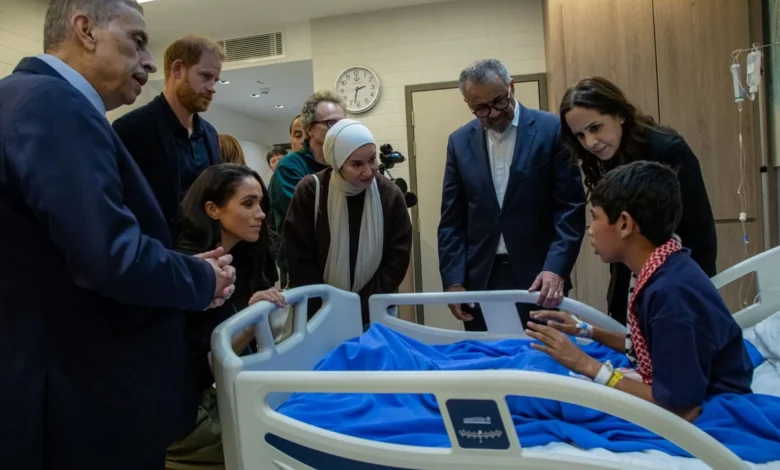
The Director-General of the World Health Organization (WHO), Dr Tedros Adhanom Ghebreyesus, has officially concluded the first day of a significant two-day State visit to the Hashemite Kingdom of Jordan. The diplomatic and humanitarian mission is designed to highlight and fortify the enduring, robust partnership between the global health body and the Jordanian government across several critical pillars: universal health coverage (UHC), comprehensive mental health frameworks, and urgent humanitarian health action in a volatile geopolitical region.
The high-profile visit comes at a crucial juncture for the Middle East, where healthcare infrastructures face unprecedented pressures from protracted conflicts, massive refugee influxes, and severe regional medical supply constraints. By spotlighting Jordan’s proactive containment, treatment, and humanitarian reception strategies, the WHO aims to draw international attention to the models of resilience required to sustain public health under duress.
High-Level Engagements and Royal Audience
The cornerstone of the first day’s itinerary was an official high-level meeting between Dr Tedros and His Majesty King Abdullah II in the capital city of Amman. The audience underscored the strategic importance of the visit, validating Jordan’s continuous regional leadership in elevating health as both a domestic national priority and an indispensable component of international security.
Conversations between the WHO Director-General and the Jordanian monarch centered on structural strategies for reinforcing national health systems, expanding equitable access to primary care, and securing sustainable, long-term funding streams for emergency responses across the Middle East. Particular attention was dedicated to the plight of the Palestinian population, the logistical complexities surrounding patients medically evacuated from the Gaza Strip into Jordanian hospitals, and the broader socioeconomic and healthcare burdens shouldered by Jordan as a primary host nation for millions of displaced persons.
"I wish to express my appreciation to His Majesty King Abdullah II for his commitment to advancing universal health coverage," Dr Tedros stated following the audience. "I also extend my thanks to His Majesty and the people of Jordan for their solidarity and generosity in providing health services to more than three million refugees, primarily from Gaza and Syria, who are living in the country."
Dr Tedros further commended Jordan’s institutionalized humanitarian commitments, explicitly recognizing His Majesty’s pioneering Medical Corridor initiative. This critical logistical pathway has proven instrumental in facilitating the transfer and treatment of critically ill and injured children from the besieged Gaza Strip, enabling them to receive specialized medical interventions that would otherwise be entirely inaccessible. "Jordan continues to show the world what it truly means to put health and humanity first," Dr Tedros added.
On-the-Ground Inspections: Pediatric Care and Medical Evacuations
Moving beyond diplomatic chambers, Dr Tedros transitioned his itinerary to the field, visiting a specialized, WHO-supported medical facility actively providing advanced pediatric care to children evacuated directly from Gaza. During the hospital tour, the WHO chief engaged directly with young patients, their families, and the frontline medical staff. These healthcare professionals work under immense pressure, delivering life-saving treatments for severe trauma injuries, pediatric oncology, and various other critical health conditions.
The site visit served to visually and practically underscore the undeniable necessity of maintaining open medical evacuation corridors through Jordan. It simultaneously served as a stark reminder to the international community that sustained, predictable financial and logistical support remains imperative to ensure that vulnerable children and other critical care patients can cross borders to access essential medical interventions.
Financial Mobilization and Partner Coordination
Recognizing that frontline service delivery requires robust economic backing, Dr Tedros subsequently convened a high-level strategic meeting with key international health partners, donor countries, specialized United Nations agencies, and philanthropic organizations.
The primary objective of this multilateral roundtable was to deliberate on and align financing priorities concerning the structural strengthening of Jordan’s domestic health system. Discussions also targeted the continuous funding of regional humanitarian health operations—specifically focusing on the programmatic scaling up of mental health services and the provision of continuous aid to host nations burdened by massive, protracted refugee demographics. Dr Tedros welcomed the active participation and pledged commitments of international partners, emphasizing that strategic investments in Jordan yield ripple effects that stabilize health security across the entire Eastern Mediterranean region.
Bilateral Negotiations on Universal Health Coverage and Mental Health Integration
In addition to multilateral forums, Dr Tedros held dedicated bilateral discussions with Jordan’s Minister of Health. These talks honed in on national policy reforms designed to accelerate the institutionalization of universal health coverage.
Jordan has consistently demonstrated global leadership by anchoring its healthcare model in a robust primary health care (PHC) approach. Notably, the nation has successfully integrated mental health services directly into routine primary care facilities, ensuring that psychological support is treated as an inseparable component of physical well-being. The WHO continues to actively back these progressive policy initiatives through the Director-General’s Special Initiative for Mental Health, providing technical assistance and advocacy to ensure psychological resilience is prioritized in public health frameworks.
High-Profile Advocacy: The Role of Archewell Philanthropies
Adding a distinct dimension to the diplomatic mission, Dr Tedros was accompanied throughout several key engagements by Prince Harry, the Duke of Sussex, and Meghan, the Duchess of Sussex, acting in their capacities as the founders of Archewell Philanthropies. The Duke and Duchess are long-standing strategic supporters of the World Health Organization’s global health initiatives.
Historically, Archewell Philanthropies has partnered with the WHO on critical campaigns ranging from advocating for equitable global access to COVID-19 vaccines to supporting targeted medical evacuation operations and community-level mental health programs. During the visit to Jordan, Prince Harry participated actively as a leading advocate for the WHO’s mental health agenda. He emphasized the urgent imperative of investing in psychological infrastructure across diverse communities, with a specialized focus on vulnerable demographics, including men, adolescents, and children navigating acute emergency settings.
Expressing gratitude for their sustained advocacy, Dr Tedros remarked, "I want to thank our partners, including Prince Harry, Duke of Sussex and Meghan, Duchess of Sussex, whose commitment to mental health and humanitarian action has helped bring visibility, resources and hope to some of the world’s most vulnerable communities. Their collaboration is helping to advance WHO’s mission to ensure health for all."
Echoing these sentiments, Prince Harry detailed the motivations behind their ongoing partnership with the global health agency: "It is an honour to join the Director-General of the World Health Organization in Jordan, a country that is leading by example in compassion, resilience and innovation. Through our work with Archewell Philanthropies, my wife and I have seen first-hand the impact of WHO’s efforts to support mental health and deliver life-saving care in emergencies. We remain deeply committed to advancing awareness, reducing stigma and expanding access to mental health support for all those affected by conflict and crisis. Mental health is fundamental to recovery, dignity and long-term peace, and we are proud to stand with WHO and partners around the world to make it a global priority."
Chronology and Forward-Looking Itinerary
The comprehensive two-day itinerary is strategically structured to cover the multifaceted dimensions of Jordan’s healthcare ecosystem, moving from acute emergency medical responses to chronic care and social development initiatives.
- Day One: Focused on high-level state diplomacy with King Abdullah II, bilateral health ministry negotiations, pediatric hospital inspections of evacuees from Gaza, and a multi-agency donor roundtable on health financing and mental health service scaling.
- Day Two (Scheduled): The agenda includes a scheduled visit to Jordan’s National Center for Rehabilitation of Addicts—a specialized WHO-backed facility offering integrated medical, psychological, and social treatment services. Dr Tedros is also slated to meet with grassroots community leaders and women’s advocacy organizations, including the Jordanian Hashemite Fund for Human Development (JOHUD). Additionally, the delegation will tour the renowned King Hussein Cancer Center to evaluate state-of-the-art oncology care advancements and explore avenues for enhanced regional collaboration.
The state visit is set to formally conclude with closing discussions involving key operational partners supporting humanitarian logistics, ultimately reinforcing Jordan’s irreplaceable standing as a regional hub for medical evacuations, disaster response, and health system resilience.
Broader Implications and Analytical Context
Public health analysts observing the visit note that Jordan occupies a uniquely delicate and demanding position within the global health landscape. Despite experiencing severe economic constraints, water scarcity, and geopolitical instability spilling over from neighboring states, the Hashemite Kingdom has maintained an open-door policy for refugees. Currently, Jordan hosts over 1.3 million Syrian refugees alongside hundreds of thousands of individuals from Iraq, Yemen, and, most recently, thousands of individuals impacted by the ongoing hostilities in Gaza.
The strain of hosting a refugee population that constitutes roughly a third of its total resident population places immense structural pressures on Jordan’s public infrastructure, particularly water, sanitation, education, and healthcare systems. Hospitals and primary care clinics frequently operate beyond design capacity, relying heavily on international donor assistance, UN agencies, and bilateral grants to maintain operational continuity.
By bringing international visibility to Jordan’s plight through a high-profile joint visit with the WHO Director-General and prominent philanthropists, the mission serves a dual purpose. Tactically, it acts as a mechanism to mobilize fresh financial pledges from international donors who may suffer from "donor fatigue" amid simultaneous global crises. Strategically, it validates the WHO’s broader policy directive: that national health security is indivisible from regional stability, and that investing in refugee-hosting nations is a vital global public health imperative.
Furthermore, the emphasis placed on mental health integration during the discussions reflects an evolving consensus within international public health circles. Historically, emergency humanitarian responses focused almost exclusively on trauma surgery, infectious disease control, and basic nutritional stabilization. However, protracted conflicts in the Middle East have generated generational psychological trauma, making the WHO’s focus on community-level mental health services and addiction rehabilitation critical components of long-term human development and societal recovery.
As the state visit draws to a close, the international health community will be closely watching for tangible financial and logistical commitments arising from the donor roundtables. For Jordan, the visit reaffirms its diplomatic and humanitarian stature, ensuring that its quiet, persistent sacrifices in sustaining regional health resilience do not go unnoticed on the global stage.