The Kindle Click Review: Amazon Finally Releases a Dedicated Bluetooth Page Turner for its E-Reader Ecosystem

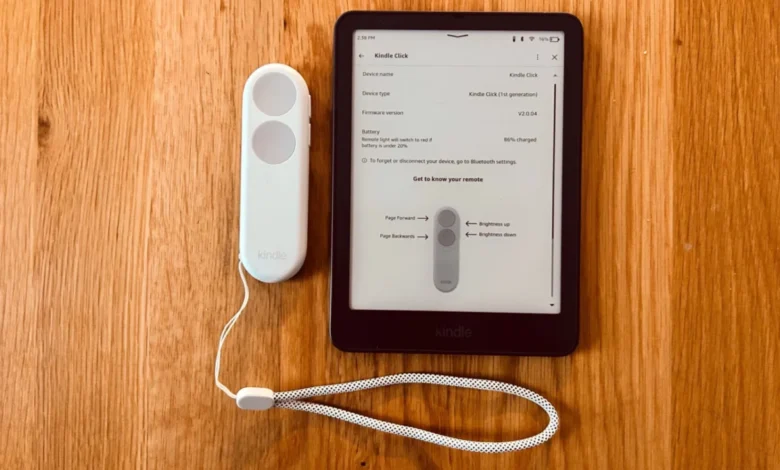
The Kindle has long maintained its position as the world’s most dominant e-reader, yet its market dominance has historically been coupled with a restrictive approach to hardware and peripheral support. For years, users have clamored for native Bluetooth integration that would allow for remote page-turning, a feature that has become a staple for competitors like Kobo and Boox. On October 28, 2026, Amazon officially addressed this gap in its ecosystem with the release of the Kindle Click, a dedicated Bluetooth remote designed to pair seamlessly with Kindle devices released in 2024 or later. This development marks a significant shift in Amazon’s product strategy, moving away from a closed-loop hardware philosophy toward a more modular experience for its user base.
The Chronology of Kindle Peripheral Development
To understand the significance of the Kindle Click, one must look at the historical constraints placed on the device. Since 2018, Amazon has equipped its e-readers with Bluetooth technology, but it was strictly siloed for the purpose of audio output, specifically for Audible integration via wireless headphones or speakers. For years, the only way for a user to remotely turn pages was through third-party "clip-on" clickers—mechanical devices that physically tapped the screen at the user’s command. These peripherals were cumbersome, often blocked portions of the text, and required physical contact with the display.
The rise of "BookTok" and other social media reading communities accelerated the demand for more sophisticated, wireless solutions. As competitors like Boox released specialized remotes that could toggle through pages, scroll web content, and navigate menus, the lack of a native Amazon equivalent became a notable point of contention among power users. The release of the Kindle Click follows an extensive firmware update that finally unlocks the Bluetooth protocol for human-interface devices (HID), signaling an end to the period where Amazon strictly prohibited third-party peripheral communication beyond audio.

Technical Specifications and Compatibility
The Kindle Click retails for approximately $35, positioning it as a premium accessory within the e-reader market. The device features a minimalist design with four primary buttons. Its functionality is specific: it allows users to navigate forward and backward through e-book pages and adjust front-light brightness.
The primary technical constraint of the new remote is its limited compatibility. By design, the firmware update enabling this functionality is restricted to Kindle models released from 2024 onward, including the latest iteration of the Kindle Paperwhite Signature Edition. This hardware gating has raised questions regarding whether legacy devices—which possess the necessary Bluetooth hardware—could technically support the device through future software patches, though Amazon has maintained that the current rollout is limited to the newest hardware architecture.
Analysis of the Remote’s Utility and Ergonomics
The integration of a remote control for an e-reader is not merely a novelty but a response to changing reading habits. Data from reader surveys suggest that "comfort reading" is a primary motivator for peripheral adoption. Scenarios such as reading while under blankets in cold environments or using an e-reader while engaged in stationary cardio exercise—where holding the device steady is difficult—are the primary use cases for the Click.
However, from an engineering perspective, the device is currently limited. While it successfully handles page turns, it lacks the multi-modal functionality seen in devices like the Boox Tappy. The Tappy, which often retails for lower price points, provides the ability to switch between navigation modes, such as scrolling web pages or moving between audiobook chapters. By contrast, the Kindle Click is locked into a singular mode of operation. Despite having the underlying capability to interact with Audible files, the Click cannot currently be used to skip audio chapters or adjust volume, a limitation that industry analysts suggest could be addressed in future firmware updates should user feedback demand it.

Official Responses and Market Impact
While Amazon has not released detailed internal sales projections for the Kindle Click, the move is widely viewed by tech analysts as a strategic effort to retain customer loyalty in an increasingly crowded market. By creating an official, first-party accessory, Amazon aims to standardize the user experience and maintain the "walled garden" that has historically defined its ecosystem.
Third-party peripheral manufacturers have responded with mixed signals. While some view the opening of the Bluetooth protocol as a welcome opportunity to sell compatible devices to the massive Kindle user base, others express concern that Amazon’s proprietary software may favor the Kindle Click over generic Bluetooth controllers. Initial reports from early adopters suggest that while the Kindle firmware does recognize some third-party remotes, the performance is inconsistent compared to the native Kindle Click, which offers a "plug-and-play" pairing process via the device’s dedicated "Accessories" menu.
Broader Implications for the E-Reader Industry
The release of the Kindle Click is emblematic of a broader trend in consumer electronics where manufacturers are gradually ceding control to users. By acknowledging that a large segment of their audience desires hands-free reading, Amazon is adjusting its strategy to accommodate power users. This shift has several implications:
- Hardware Lifecycle Management: By gating the remote to 2024-and-later devices, Amazon is effectively providing an incentive for users of older Kindles to upgrade their hardware, reinforcing the cycle of device replacement.
- Ecosystem Standardization: As the company expands its accessory line, it reinforces the value of remaining within the Amazon ecosystem rather than switching to independent e-ink platforms that might offer more flexibility but less integration.
- Software-Defined Features: The update proves that Amazon is willing to use software as a tool to unlock or restrict hardware features, a practice that will likely define the next generation of e-readers.
As the industry moves toward more sophisticated interfaces, the Kindle Click serves as a foundational step. Whether Amazon chooses to expand the functionality of this remote to include deeper audiobook control or more granular warmth adjustments remains to be seen. For now, the product serves as a direct response to a years-long consumer demand, closing the gap between the Kindle and its more experimental competitors. As the firmware evolves, users can likely expect further refinements to how these peripherals interact with the reading experience, marking a definitive evolution in how the world’s most popular e-reader is utilized.