Beyond Automation: Why Human Skills are the Ultimate Currency in the Age of Artificial Intelligence

The rapid integration of artificial intelligence into the global labor market has fundamentally altered the professional landscape, forcing a pivot in how educators and employers view workforce readiness. For years, the discourse surrounding AI centered on the displacement of human labor—a narrative defined by fear of technological obsolescence. However, as AI-driven automation becomes a standard operational component across industries ranging from finance to creative services, the conversation is shifting toward a more nuanced reality: the most effective way to insulate a career from technological disruption is to lean into the distinctly human competencies that algorithms cannot replicate.
This shift in priority is not merely theoretical; it is reflected in empirical hiring data. A recent analysis by PwC’s AI Jobs Barometer indicates that when employers incorporate AI into existing roles, the new responsibilities assigned to those positions are more than twice as likely to prioritize human-centric strengths such as empathy, nuanced judgment, and creative problem-solving. This trend is particularly pronounced at the entry level. Junior roles with high exposure to AI are seven times more likely than their less-exposed counterparts to demand leadership and strategic thinking—skills that historically were reserved for senior management.
The Evolution of the Skills Gap
The historical context of this transformation dates back to the early 2010s, when automation was primarily associated with manufacturing and routine, rule-based tasks. By 2017, the scope of AI capability had expanded into cognitive domains, leading to widespread anxiety regarding the future of white-collar work. The COVID-19 pandemic further accelerated this trajectory, as businesses digitized at an unprecedented rate, forcing a sudden reliance on digital infrastructure.
By 2023, the emergence of generative AI brought these concerns to the forefront of educational policy. The current challenge is that while technology evolves at an exponential rate, institutional education systems often move at a linear, slower pace. There exists a significant disconnect between the "hard" technical skills often emphasized in standardized testing and the "durable" skills required to manage an AI-integrated workplace.
A 2025 analysis conducted by America Succeeds and Lightcast, which examined 76 million job postings, found that 76 percent of roles required at least one durable skill. Furthermore, eight of the ten most requested skills were categorized as durable—those that remain relevant regardless of shifting technologies or job titles. These include communication, critical thinking, and collaborative problem-solving. Despite their high market value, these competencies remain largely absent from formal, explicit classroom instruction.
The Cost of Neglecting Human Agency
The economic implications of failing to cultivate these skills are substantial. A recent study commissioned by Workday revealed that workers who utilize AI to gain efficiency often see nearly 40 percent of those time savings neutralized by the need to correct, clarify, or rewrite low-quality, AI-generated content. This phenomenon, dubbed the "AI tax on productivity," suggests that technology does not eliminate the need for cognitive rigor; rather, it shifts the burden of verification and quality control downstream to the human operator.
Without the ability to critically analyze AI outputs, professionals become susceptible to algorithmic bias and hallucination, leading to systemic errors in judgment. This underscores the reality that domain knowledge and AI fluency are insufficient on their own. They must be coupled with the human capacity to apply that knowledge within a complex, often ambiguous, ethical and strategic framework.
Moving from Strategy to Classroom Integration
Recognizing this, educational policymakers in more than 20 states have adopted "Portrait of a Graduate" frameworks. These initiatives aim to codify competencies such as resilience, adaptability, and complex communication as central pillars of the K-12 experience. However, the translation of these strategic visions into daily classroom practice remains a significant hurdle.

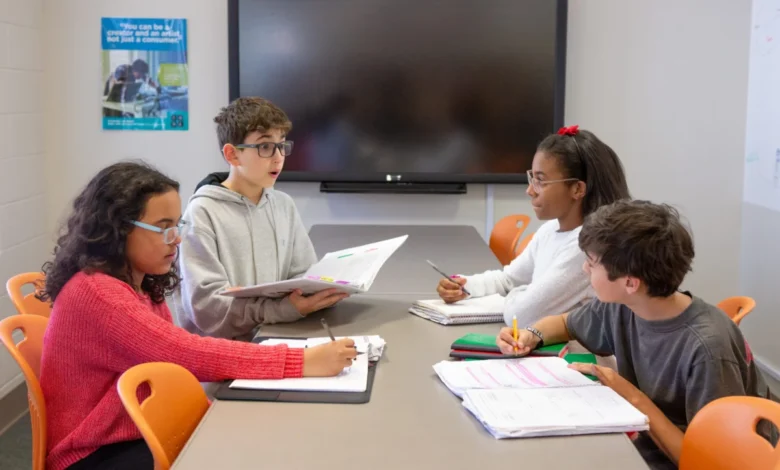
Educators frequently report that structural constraints—such as standardized testing schedules and rigid curricula—prevent the deep, project-based learning necessary to foster durable skills. In many districts, the "Portrait of a Graduate" remains an aspirational document rather than a functional pedagogical tool. To bridge this gap, experts suggest a transition in instructional design:
- Explicit Instruction: Durable skills should not be treated as implicit "byproducts" of education but as core subjects. Students must be explicitly taught how to evaluate competing evidence, construct logical arguments, and defend their decision-making processes.
- Curriculum Integration: Instead of adding "soft skills" as an extra-curricular module, they should be woven into existing subjects. For example, a science curriculum can emphasize critical thinking by requiring students to identify why an AI-generated conclusion might be scientifically flawed.
- Visible Assessment: Schools can implement curated portfolios of student work. By comparing and calibrating these examples against clear criteria, teachers can make abstract concepts like "collaboration" or "strategic thinking" tangible, helping students understand their own growth over time.
The Economic Imperative for Employers
The responsibility for this transition does not lie solely with the education system. Employers and hiring managers play a critical role in setting the tone for the future workforce. By engaging with local school districts, businesses can clarify the specific competencies they need to see in entry-level candidates, helping to align academic outcomes with labor market realities.
The urgency of this alignment is underscored by the changing nature of entry-level work. As AI takes over the execution of routine tasks—such as data entry or basic report drafting—the "entry-level" job is being redefined. New graduates are increasingly expected to function as editors, strategists, and coordinators from their first day of work. If they lack the communication skills to bridge the gap between AI analysis and stakeholder needs, they will struggle to add value in a modern corporate environment.
Fact-Based Implications for Future Readiness
The long-term impact of this shift is a fundamental restructuring of what it means to be "educated." In the past, education was often defined by the accumulation of static knowledge. In the future, education will be defined by the ability to navigate change.
The data confirms that while specific technical proficiencies—such as proficiency in a particular coding language or software platform—will continue to have a short shelf-life, the ability to synthesize information, collaborate across disciplines, and exercise sound judgment will remain the primary drivers of career longevity.
As we look toward the next decade, the uncertainty surrounding specific technological tools is a given. We cannot predict what software or hardware will dominate the industry by 2035. However, we can predict with a high degree of certainty that the professional who can identify an error in an automated process, communicate complex ideas to a team, and pivot their strategy in the face of new information will be the most valuable asset in the room.
Conclusion
Artificial intelligence has not created the need for human-centric skills; it has merely made them impossible to ignore. For decades, educators and business leaders have debated the merits of "soft skills," often relegating them to the periphery of professional development. Today, those skills have moved to the center.
The challenge for the current generation of students is to develop a hybrid set of capabilities: they must be technologically literate enough to leverage the power of AI, but humanly capable enough to lead, verify, and innovate beyond the reach of the algorithm. By formalizing the teaching of these skills within our K-12 systems and maintaining a strong dialogue between the classroom and the boardroom, society can ensure that the next generation is not replaced by the tools they use, but rather empowered by them.
The transition to an AI-augmented economy requires a rethink of our educational priorities, but the objective remains clear: to prepare students for a world where their ability to think, reason, and connect is their most significant competitive advantage. This evolution of the classroom is the most reliable "AI-proofing" strategy available, ensuring that the human element remains at the heart of our future prosperity.