P.J. Byrne Reflects on His Career-Defining Year and Portrayal of Producer Irwin Winkler in Peter Farrelly’s I Play Rocky

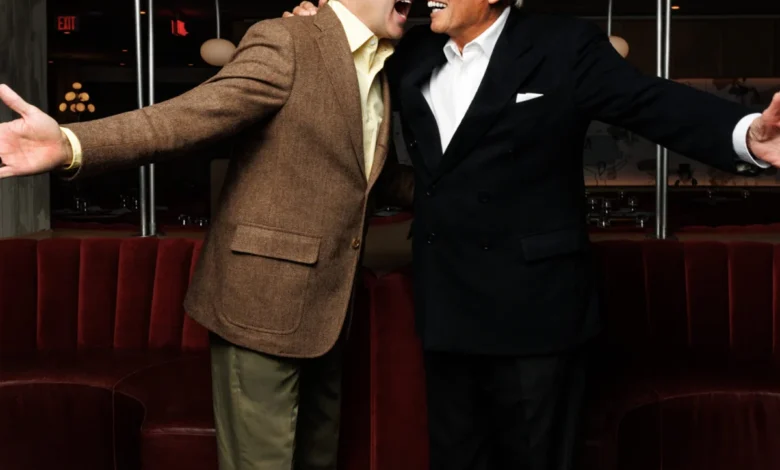
The year 2026 has proven to be a watershed moment for character actor P.J. Byrne. With eight distinct credits on his resume, Byrne has cemented his status as one of Hollywood’s most reliable and versatile performers. Among his robust slate of projects—which includes the conclusion of his recurring arc on Amazon’s The Boys, appearances in Coyote vs. Acme and The End of Oak Street, and a series-regular role on USA Network’s basic cable hit The Rainmaker—Byrne has delivered his most prominent film performance to date. He stars as Oscar-winning Rocky producer Irwin Winkler in Peter Farrelly’s biographical drama, I Play Rocky.
The role represents a significant milestone for a performer who has spent decades elevating supporting characters into memorable cinematic moments. By chronicling the arduous development of Sylvester Stallone’s 1976 masterwork, I Play Rocky offers a behind-the-scenes look at the high-stakes gamble required to bring one of cinema’s most enduring underdogs to the screen. For Byrne, the role serves as a fitting convergence of his background in finance, his deep-rooted industry experience, and his evolution as a master of improvisation.
A Foundational Shift and the Rise of a Character Actor
Byrne’s path to the upper echelon of Hollywood character actors was unconventional. Armed with a finance degree from Boston College, he initially sought a traditional corporate career. However, a brief stint navigating the high-pressure culture of the financial sector made it clear that boiler-room life was not for him. Encouraged by a Boston College professor in the mid-1990s to pursue the dramatic arts, Byrne relocated to Chicago to attend DePaul University’s prestigious theater school.
Relocating to Los Angeles at the turn of the century, Byrne immersed himself in the grueling world of commercial auditions. Recognizing the fierce competition within a deep talent pool, he cultivated a distinct performance style characterized by rapid-fire improvisation and creative script punch-ups. To support himself between acting gigs, Byrne worked in script coverage and development at the production company run by family friend and fellow Boston College alumnus Chris O’Donnell. Rising to the level of vice president, Byrne gained an invaluable understanding of studio politics, script structure, and production logistics. This foundational studio experience profoundly shaped his professional ethos, allowing him to approach every role with a holistic understanding of the immense financial and creative pressures placed upon directors and producers.

The Breakthrough and the Art of the Scene-Stealer
Byrne’s professional breakthrough arrived when Martin Scorsese cast him as Rugrat in the 2013 financial epic The Wolf of Wall Street. Drawing directly upon his discarded finance background, Byrne delivered a frantic, unhinged performance alongside Leonardo DiCaprio and Jonah Hill, highlighted by a chaotic trading-floor sequence. Byrne’s ability to inject authentic spontaneity into his scenes became his calling card. Scorsese, recognizing Byrne’s willingness to take creative risks, permitted significant improvisation on set, a dynamic that would define Byrne’s subsequent collaborations with visionary filmmakers.
Over the next decade, Byrne built an impressive filmography defined by standout performances in critically acclaimed projects. He appeared in Damien Chazelle’s Babylon, portraying a beleaguered executive in a showstopping, career-defining meltdown sequence that required three days of intense physical and vocal exertion. His credits further expanded with notable performances in Peter Farrelly’s Academy Award-winning Green Book, the festive comedy Dear Santa, and television hits such as Big Little Lies.
Bringing Irwin Winkler to Life in I Play Rocky
Byrne’s ongoing professional relationship with director Peter Farrelly ultimately paved the way for his casting as Irwin Winkler in I Play Rocky. Following their collaboration on Green Book, Farrelly advocated for Byrne to secure a substantial, career-elevating feature film role. When casting commenced for I Play Rocky, the production team initially sought a recognizable star to portray the veteran producer, aiming to anchor the surrounding cast opposite relative unknown Anthony Ippolito, who was cast as Sylvester Stallone.
Ultimately, the producers chose to mirror the historical ethos of the original Rocky production by gambling on proven talent over marquee status. Byrne secured the role, stepping into the shoes of a producer who, alongside partner Robert Chartoff, risked their personal fortunes to back an untested Sylvester Stallone. The historical narrative explores the immense resistance faced by Stallone and his producers from distributors like United Artists, who consistently attempted to cast established box-office commodities in the title role.
Set against the backdrop of late-1970s Hollywood, Byrne’s performance captures the pragmatic yet deeply committed nature of a producer determined to protect his investment and nurture genuine artistic vision. By analyzing archival footage and historical accounts of the 1977 Academy Awards—where Winkler famously invited Stallone on stage to share the Best Picture victory—Byrne grounded his performance in themes of mentorship, risk management, and paternal loyalty.

Improvised Brilliance and Behind-the-Scenes Realities
A hallmark of Byrne’s performance in I Play Rocky is a screening room sequence where Winkler explodes over the realization that his actors lack professional boxing experience. Farrelly encouraged Byrne to break free from the scripted dialogue, resulting in an entirely improvised rant comparing the project’s unique tone to The Godfather and famously ad-libbing observations about the physical architecture of the screening room as he exits. This moment of unscripted brilliance echoes Byrne’s philosophy on the craft: entering a psychological flow state, or "the zone," where distractions fade and an actor achieves peak performance in service of the director’s overarching vision.
The production of I Play Rocky also prioritized historical authenticity, utilizing the actual Philadelphia apartment complexes featured in the 1976 classic and filming scenes at the iconic Philadelphia Museum of Art steps alongside co-stars Anthony Ippolito and AnnaSophia Robb.
Broader Implications and Industry Impact
As I Play Rocky debuts in theaters nationwide, the film arrives at a time when audiences and critics increasingly value transparent, behind-the-scenes narratives detailing the arduous journey of artistic creation. Byrne’s prolific 2026 slate—comprising eight distinct television and film credits—underscores a broader industry shift toward honoring versatile character actors who anchor major studio productions with dependability and depth.
Byrne’s journey from a brief stint in finance to becoming one of Hollywood’s most sought-after scene-stealers highlights the enduring value of perseverance, preparation, and creative fearlessness. Through his portrayal of Irwin Winkler, Byrne not only pays homage to the risk-taking producers who shaped modern cinema but also solidifies his own legacy as an indispensable force within the contemporary entertainment landscape.