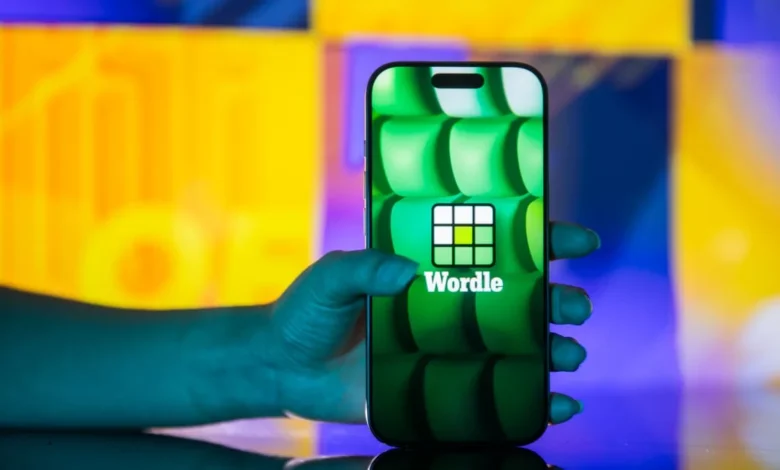
Daily Wordle Solution Revealed: Decoding Today’s Challenge as the Global Phenomenon Continues to Captivate Millions.

Today’s Wordle answer, SHILL, presents a unique linguistic challenge that savvy players might deduce with a bit of secrecy and strategic thinking. For those seeking assistance in their daily pursuit of the elusive five-letter word, subtle hints often prove invaluable. Today’s puzzle, for instance, subtly points to a word associated with a "decoy," further clarified by the presence of a double ‘L’ and an initial ‘S’. These clues, when meticulously analyzed, guide players toward the specific term, revealing a word that, while perhaps not in everyday conversation for all, holds a distinct meaning. Mastering Wordle involves not only a strong vocabulary but also an adeptness at pattern recognition and logical deduction, skills honed by millions worldwide who engage with this daily brain teaser.
The journey of Wordle from a personal project to a global sensation is a testament to the power of simple, engaging design and viral organic growth. Conceived by engineer Josh Wardle in 2021 as an intimate gift for his partner, Palak Shah, who enjoyed word games, Wordle was initially a private pastime. Wardle deliberately crafted the game with a singular daily puzzle to prevent obsessive play, a decision that inadvertently fueled its viral spread. The game’s minimalist interface and the ingenious sharing mechanism—allowing players to post their results as a grid of colored squares without revealing the word itself—sparked immense curiosity and a sense of shared community. This innovative approach to social sharing transformed Wordle from a niche online game into a cultural phenomenon, quickly becoming a daily ritual for countless individuals across continents.
The game’s rapid ascent into the mainstream was swift and unprecedented. By late 2021 and early 2022, social media platforms, particularly Twitter, were awash with the distinctive green, yellow, and grey grids, prompting many to discover and participate in the daily challenge. Its appeal lay in its accessibility, its lack of advertisements, and its democratic nature—everyone received the same word, fostering collective discussion and friendly competition. This period saw an explosion of fan-created variations, each building upon Wordle’s core mechanic while introducing new twists. Games like Squabble introduced a battle royale format, Heardle challenged players with music identification, while Dordle and Quordle amplified the complexity by requiring players to guess multiple words simultaneously, further illustrating the adaptable and enduring appeal of the underlying concept. The emergence of these variants underscored Wordle’s profound impact on casual gaming, inspiring a new wave of daily, low-commitment puzzle experiences.
Strategic thinking forms a core component of consistent Wordle success. While personal preference often dictates a player’s initial word choice, many adopt data-driven approaches to maximize their chances. Experts and enthusiasts have analyzed letter frequencies in the English language to identify optimal starting words. Common consonants like S, T, R, N, L, and D, combined with frequently used vowels such as E, A, O, and I, form the backbone of these strategies. Words like "CRANE," "SLATE," "ADIEU," and "ROAST" are frequently cited as statistically strong openers due to their inclusion of a high number of common letters, allowing players to quickly eliminate or confirm several potential letters and their positions within the five-letter target word. The goal is to maximize information gain with the first guess, narrowing down the possibilities significantly for subsequent attempts. Beyond initial strategy, successful Wordle play involves careful observation of the green (correct letter, correct position), yellow (correct letter, wrong position), and grey (incorrect letter) indicators, systematically refining guesses through each turn.
The immense popularity of Wordle did not go unnoticed by major media outlets. In January 2022, The New York Times announced its acquisition of Wordle from Josh Wardle for an undisclosed sum, reportedly in the "low seven figures." This strategic move was a clear indication of the game’s value and its potential to bolster the Times‘ growing portfolio of digital games and subscriber base. The acquisition was met with mixed reactions from the public. While many understood the commercial inevitability of such a popular product, some expressed concern that the game might lose its ad-free, simple charm, or that it might eventually be placed behind a paywall. The New York Times swiftly reassured players that Wordle would initially remain free to play, a promise that largely held true, although its integration into the NYT Games ecosystem has seen some changes over time. The acquisition solidified Wordle’s status as a mainstream cultural artifact, transforming it from a hobbyist’s creation into a valuable intellectual property for one of the world’s most renowned news organizations.
One of the more contentious aspects following the acquisition revolved around the availability of past puzzles. Initially, a fan-created archive existed, allowing players to access and solve every previous Wordle puzzle at their leisure. This archive served as a valuable resource for those who missed a day or simply wished to indulge in more Wordle beyond the daily offering. However, at the request of The New York Times, this unofficial archive was eventually taken down. The move, understandable from an intellectual property and monetization perspective, generated some disappointment among the dedicated player base who valued the unfettered access to past games. In response to this demand and as part of its broader digital strategy, The New York Times later rolled out its own official Wordle Archive. This archive, however, was made exclusively available to subscribers of NYT Games, integrating Wordle more deeply into the Times’ subscription model and incentivizing new sign-ups for its digital content. This shift highlighted the ongoing tension between open access and proprietary content in the digital age, particularly for popular online phenomena.
Despite perceptions among some players that Wordle has become increasingly difficult since its acquisition, analysis consistently demonstrates that the game’s inherent difficulty has not changed. The New York Times maintains the original curated list of five-letter words, and the algorithm for selecting the daily puzzle remains consistent. Any perceived increase in difficulty is often subjective, influenced by the specific word chosen on a given day or a player’s individual solving streak. For those actively seeking a greater cognitive challenge, Wordle offers a "Hard Mode" option. When activated, Hard Mode mandates that any revealed green or yellow letters must be used in subsequent guesses. This restriction significantly increases the mental complexity, forcing players to adapt their strategy and consider a more limited set of possibilities, appealing to veteran players who desire a more rigorous daily test of their lexical prowess.
Wordle’s success has been instrumental in The New York Times‘ broader strategy to enhance its digital subscriptions through its burgeoning games division. Alongside its iconic Crossword, the Mini Crossword, Spelling Bee, and Sudoku, Wordle has become a cornerstone of the NYT Games ecosystem. The company leverages these popular puzzles to drive engagement and convert casual players into loyal, paying subscribers. The recent introduction of Strands, another innovative word puzzle game, further diversifies the Times’ offerings, demonstrating a clear commitment to expanding its digital entertainment portfolio. This strategic bundling of high-quality, engaging games positions The New York Times not just as a news provider, but as a comprehensive digital content platform, offering a compelling value proposition that extends beyond traditional journalism. For players seeking diverse mental stimulation, Mashable also offers a dedicated games hub, featuring Mahjong, Sudoku, free crossword puzzles, and more, catering to a wide array of puzzle enthusiasts.
The enduring appeal of Wordle lies in its perfect blend of simplicity, challenge, and social connectivity. It offers a brief, satisfying mental workout that fits seamlessly into the daily routines of millions. As the digital landscape continues to evolve, Wordle stands as a prime example of how a well-designed, accessible game can transcend its initial purpose to become a cherished global phenomenon. Its legacy is not just in its individual puzzles, like today’s word "SHILL," but in its contribution to fostering a shared sense of community and the collective joy of daily problem-solving. Whether players rely on strategic starting words, pure intuition, or a careful deciphering of hints, the allure of guessing the day’s secret word remains a powerful motivator, ensuring Wordle’s continued prominence in the world of casual gaming.
Reporting by Chance Townsend, Caitlin Welsh, Sam Haysom, Amanda Yeo, Shannon Connellan, Cecily Mauran, Mike Pearl, and Adam Rosenberg contributed to this article.