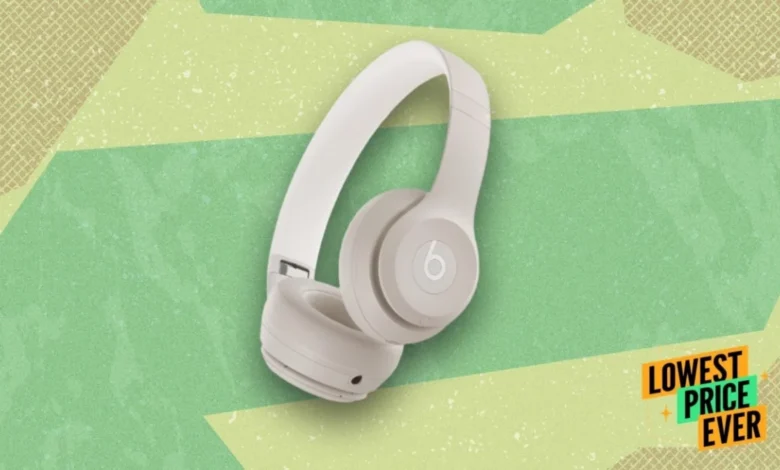
The retail landscape for Black Friday 2026 has officially entered its peak phase, and consumer electronics remain the most aggressively priced category across major big-box retailers. In a significant move for audio enthusiasts, Walmart has slashed the price of the Beats Solo 4 headphones to $99.95. This price point represents a discount of exactly 50% off the standard manufacturer’s suggested retail price of $199.95. The promotion applies to the black, pink, and slate blue colorways, signaling a strategic push to clear inventory of one of Apple’s most recognizable audio accessories before the end of the fiscal year.
A Chronology of the Beats Solo Evolution
To understand the significance of this discount, one must look at the trajectory of the Beats Solo line. Since Beats Electronics was acquired by Apple in 2014 for $3 billion, the Solo series has served as the entry-level benchmark for the company’s lifestyle audio portfolio. The Solo 4, released earlier in the product cycle, represents the latest iteration in a long-standing lineage that prioritizes portability and brand aesthetic.
Historically, the transition from the Solo 3 to the Solo 4 saw significant engineering overhauls. While the design language remained largely consistent with the previous generation, internal components were upgraded to support modern connectivity standards. The integration of Bluetooth 5.3 and the adoption of USB-C for both charging and high-resolution wired audio marked a shift toward universal compatibility—a departure from the proprietary Lightning-centric architecture favored by Apple in previous years.
The timeline of this specific promotion mirrors broader retail trends observed during the 2026 holiday season. Retailers began signaling early-access Black Friday events in late October, with aggressive price drops on mid-range consumer electronics beginning in mid-November. By positioning the Beats Solo 4 at the sub-$100 threshold, Walmart is effectively targeting the high-volume "giftable" category, a segment that traditionally drives foot traffic during the week of Thanksgiving.
Technical Specifications and Performance Metrics
The Beats Solo 4 distinguishes itself through a focus on endurance and physical ergonomics rather than active noise cancellation (ANC). In an era where many flagship headphones are defined by their digital signal processing and complex noise-dampening microphones, the Solo 4 relies on passive isolation. This design choice, while polarizing for commuters who prioritize total silence, provides a specific utility for users who prefer a more natural listening experience and a lighter chassis.
From a technical perspective, the hardware supports the AAC and SBC codecs. While it lacks the high-bitrate LDAC or aptX support found in some audiophile-grade competitors, the tuned sound signature—characterized by pronounced low-end frequencies and crisp, energetic highs—aligns with the expectations of the core Beats demographic.
The most notable improvement in the Solo 4, compared to the Solo 3, is battery efficiency. The current model offers approximately 50 hours of playback time, representing a 25% increase over the previous generation’s 40-hour limit. Furthermore, the inclusion of "Fast Fuel" charging technology allows for five hours of playback from a mere 10-minute charge, a feature that significantly lowers the friction of daily use for mobile users. The integration with the Apple ecosystem, including one-touch pairing and hands-free Siri functionality, remains a primary value proposition for those already embedded in the iOS or macOS environments.
Market Positioning and Competitive Analysis
The decision to discount the Solo 4 to $99.95 places the headphones in a highly competitive bracket. At this price, they compete directly with lower-tier offerings from brands like Soundcore, JBL, and Skullcandy. However, the "Beats" brand name carries a distinct premium equity that analysts argue justifies the price drop as a tactical move to reclaim market share from emerging competitors.

Market analysts observe that the headphone market has become bifurcated. On one end, there is a surge in demand for premium, feature-rich headphones with sophisticated ANC and spatial audio. On the other, there is a massive volume of demand for reliable, branded "lifestyle" gear that serves as a status symbol while providing functional utility. By dropping the price to $99, Walmart and Beats are effectively bridging these two markets.
In terms of build quality, the Solo 4 utilizes a lightweight plastic construction that balances durability with the need for comfort during long listening sessions. The headband features a soft-touch finish, and the ear cushions are designed to provide a seal that, while passive, is sufficient for most office and casual home environments. The absence of an adjustable EQ within the native firmware is a common critique, yet at a 50% discount, the barrier to entry for casual consumers is substantially lowered, making the lack of advanced software features a secondary concern.
Broader Economic Implications
The timing of this discount also speaks to the broader economic climate of 2026. Retailers are facing increased pressure to move inventory as consumer spending patterns become more cautious. By offering steep discounts on recognized brand names, stores like Walmart are attempting to secure consumer loyalty and maintain high inventory turnover rates.
Industry reports suggest that the audio hardware segment has seen a stabilization in sales following the post-pandemic surge. Manufacturers are now pivoting toward lifecycle management, where software updates and minor hardware refinements are used to keep legacy products relevant. The Beats Solo 4, through its support for both wired and wireless audio, offers a degree of "future-proofing" that is often lacking in cheaper, purely wireless models.
Expert Reception and Consumer Sentiment
Professional reviews from industry publications, such as PCMag, have generally categorized the Beats Solo 4 as a "sculpted" audio experience. Critics emphasize that while the sound profile is not strictly "neutral"—often leaning into the bass-heavy signature synonymous with the Beats brand—it is highly engaging for popular music genres.
Consumer sentiment, as aggregated through retail platforms, reflects a satisfaction with the battery life and the tactile nature of the physical controls. In an industry moving rapidly toward touch-capacitive interfaces, the retention of physical buttons on the Solo 4 has been noted as a positive ergonomic feature, particularly for users who frequently operate their devices in cold weather or while wearing gloves.
Strategic Outlook for the Holiday Season
As the 2026 Black Friday period continues, the $99.95 price point for the Beats Solo 4 is likely to remain a benchmark for the category. While pricing and availability are subject to change based on supply chain fluctuations and inventory depletion, the current offer represents one of the most accessible entry points for consumers looking to purchase premium-branded audio equipment.
For the average consumer, the purchase of the Beats Solo 4 at this reduced price represents a compromise between the high cost of flagship ANC models and the performance limitations of budget-tier hardware. As shoppers navigate the crowded marketplace of the upcoming weeks, the combination of brand recognition, reliable battery performance, and significant price reduction positions the Beats Solo 4 as a top-tier contender for holiday gift lists. Whether the strategy of aggressive discounting will lead to long-term brand dilution or, conversely, a revitalized user base for the Beats ecosystem, remains a subject of ongoing debate among retail strategists. For now, the consumer remains the primary beneficiary of this competitive pricing strategy.