While contemporary political discourse often centers on the impact of migration on national infrastructure and traffic patterns, a retrospective look at automotive history reveals that some of the most significant contributions to American mobility came from those who crossed borders to reach these shores. Among these figures, Zora Arkus-Duntov stands as a monumental, if unconventional, icon. Widely celebrated as the "Father of the Corvette," Arkus-Duntov transformed Chevrolet’s flagship model from a lackluster boulevard cruiser into a genuine world-class performance machine. His trajectory—from a Belgian-born immigrant raised in Russia to the chief engineer who defined the American supercar—mirrors the broader story of 20th-century innovation driven by global talent.
Born in Brussels in 1909 to Jewish parents, Arkus-Duntov’s life was defined by intellectual rigor and a refusal to bow to geopolitical adversity. Before he ever touched a wrench at General Motors, he had already navigated the turbulence of pre-war Europe, studied mechanical engineering at the prestigious University of Charlottenburg in Berlin, and served as a tail gunner in the French Air Force. His story is one of relentless pursuit, bridging the gap between European technical refinement and American industrial ambition.
A Chronology of Resilience and Engineering Prowess
Arkus-Duntov’s journey to the helm of the Corvette project was neither linear nor predestined. His early life was marked by the upheaval of the Second World War. When France fell to Nazi Germany, Arkus-Duntov and his wife, Elfi, were separated, only to reunite in a dramatic escape that saw Elfi navigating the backroads of France in a pre-war MG roadster to reach Toulouse. The couple, alongside Zora’s brother Yura, eventually secured passage on a refugee ship to New York in 1940.
Upon arriving in the United States, Arkus-Duntov did not immediately enter the automotive industry. Instead, he and Yura founded Ardun Mechanical, a firm that pivoted from munitions manufacturing for the war effort to high-performance automotive engineering. It was here that Arkus-Duntov first displayed his innovative spirit. Recognizing the limitations of Ford’s flathead V8 engines, which were restricted by side-mounted valves and poor airflow, he designed cast-aluminum cylinder heads. These "Ardun heads" essentially modernized the combustion chamber, introducing overhead valves and hemispherical designs that were years ahead of their time. Though initially marketed to truck fleets, these components would eventually become cornerstones of the post-war hot-rodding culture, laying the groundwork for the high-performance engines that would later define the American muscle car era.
The Path to General Motors and the Corvette Vision
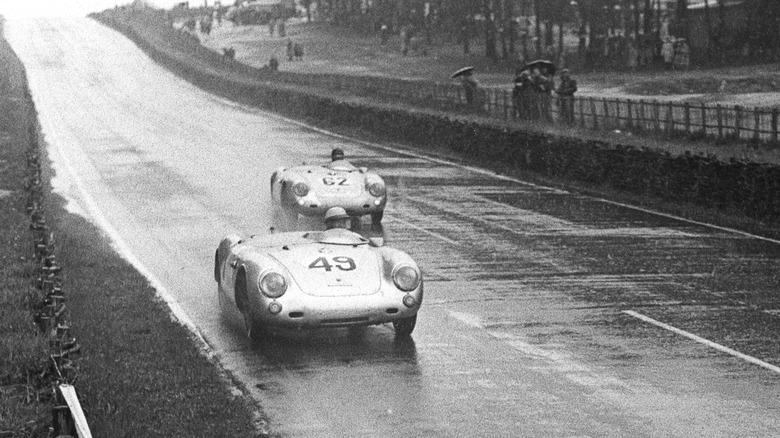
The association between Arkus-Duntov and Chevrolet was not an immediate marriage of convenience. After the closure of Ardun Mechanical due to capital constraints, Arkus-Duntov moved to London to work for Sydney Allard, a noted British sports car manufacturer. This period allowed him to maintain his racing credentials, leading to his participation in the Le Mans 24-hour race. His performance on the track eventually caught the attention of the Porsche factory team, leading to a class victory in a Porsche 550 at Le Mans in 1954—an achievement that occurred while he was technically already under the employ of General Motors.
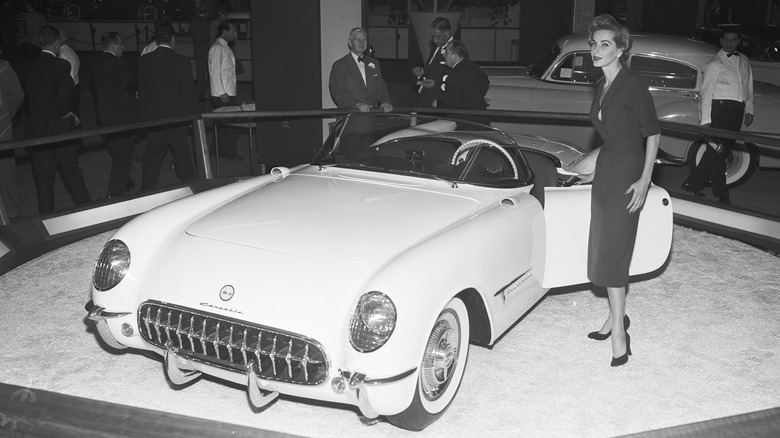
His entry into GM was initiated by a fortuitous encounter with the 1953 Motorama, where he witnessed the debut of the Chevrolet Corvette. Recognizing that the car possessed aesthetic promise but lacked the mechanical bite to compete with European sports cars, Arkus-Duntov sent a now-legendary letter to Maurice Olley, the director of Research and Development at GM. This three-page document, authored in December 1953, articulated a roadmap for the Corvette’s future, advocating for the integration of V8 power and a more aggressive engineering philosophy. His vision was clear: the Corvette needed to move beyond its status as a "style exercise" and become a legitimate high-performance contender.
Technical Contributions and Legacy
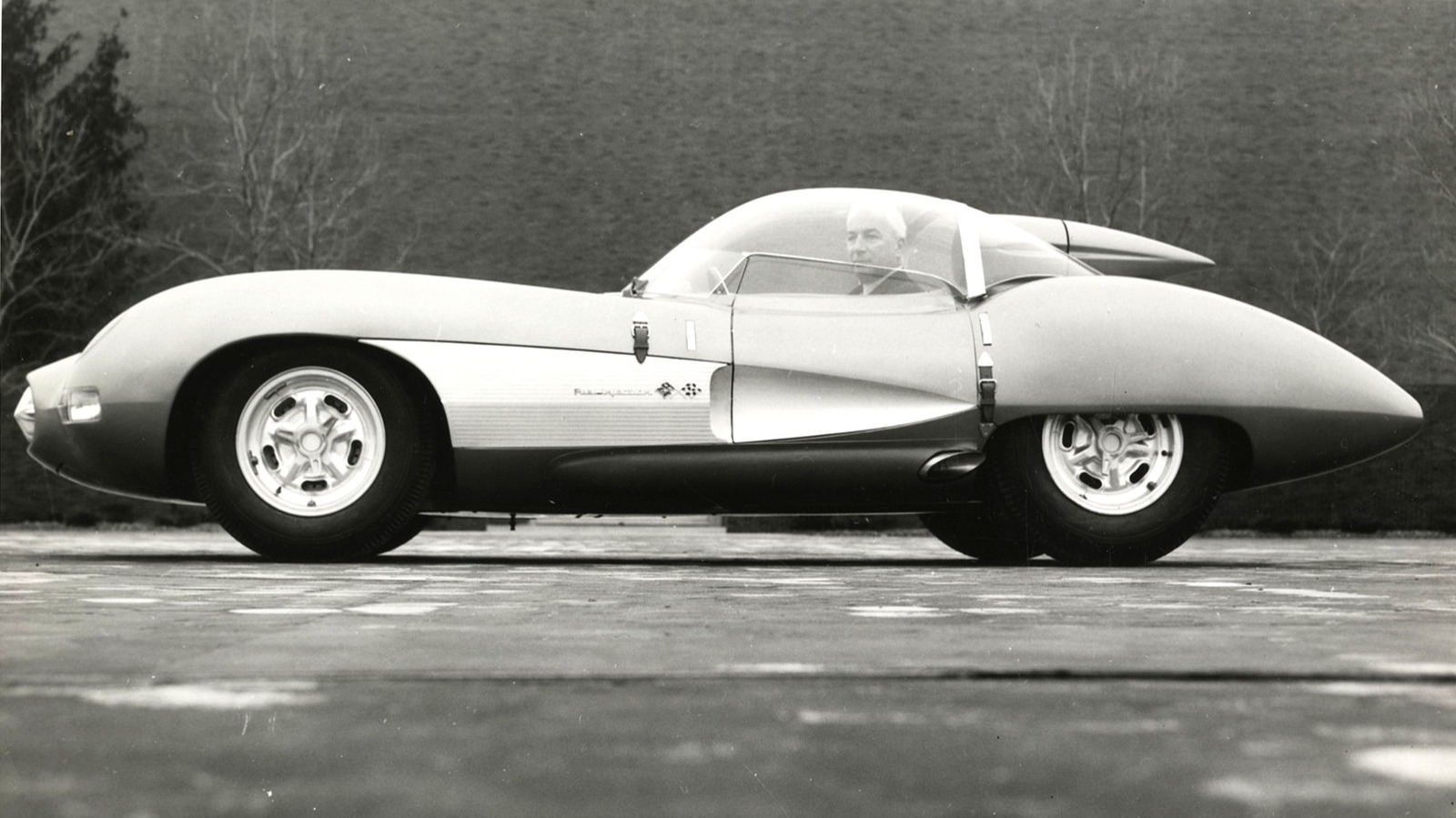
The impact of Arkus-Duntov’s influence is best measured by the technical evolution of the Corvette throughout the 1960s and 70s. He championed the transition toward more sophisticated suspension geometry and the pursuit of mid-engined architectures—concepts that were, at the time, considered radical within the conservative corporate structure of Detroit.
Among his personal preferences, the 1965 model year remained his benchmark for refinement. During that period, the introduction of the Ramjet fuel-injection system represented a significant leap in efficiency and power delivery, despite its high production cost of $538. While today’s collectors view these fuel-injected models as pinnacle achievements, they were expensive options at the time, competing against the raw, carbureted horsepower of the 396-cubic-inch big-block engines. This internal competition showcased Arkus-Duntov’s commitment to offering consumers choices that balanced technical sophistication with traditional American displacement.
The Human Element: Anomaly and Intrigue
Despite his central role in the Corvette’s development, the personal life of Arkus-Duntov was marked by contradictions. Perhaps most surprising to enthusiasts is the fact that he personally owned only one Corvette during his life—a 1974 Stingray with an automatic transmission and air conditioning. The nature of this ownership, whether it was a parting gift from General Motors or a private purchase, remains a subject of historical debate. Its departure from the high-performance manuals he championed in his professional life serves as a reminder that even the most dedicated engineers occasionally prioritized comfort and convenience in their private time.
Furthermore, his history contains a surprising intersection with the dark side of Cold War espionage. During his time at Ardun Mechanical, Arkus-Duntov’s company was contracted for metal-grinding work by Julius Rosenberg. Following Rosenberg’s arrest and subsequent execution for passing atomic secrets to the Soviet Union, the FBI investigated Arkus-Duntov’s connections to the couple. Yura Arkus-Duntov provided testimony that clarified their interactions were strictly business-related, likely sparing Zora from a scrutiny that could have derailed his career at General Motors before it truly began.
Broader Implications and Historical Context
The narrative of Zora Arkus-Duntov is emblematic of the American automotive industry’s mid-century expansion. By bringing European engineering rigor to American manufacturing, he helped curate a distinct automotive identity that balanced performance with mass-market appeal. His work with the Flathead V8, his racing successes at Le Mans, and his relentless lobbying for the Corvette’s performance potential highlight the necessity of diverse perspectives in engineering.
From a contemporary perspective, his life serves as a factual counterpoint to anti-immigrant rhetoric regarding economic contributions. Arkus-Duntov not only generated significant economic activity through Ardun Mechanical but also helped secure the global prestige of the Corvette, which remains a cornerstone of Chevrolet’s market presence. The history of the Corvette is, in many ways, the history of a man who looked at an unfinished, underpowered idea and saw the potential for a legend.
As the automotive industry pivots toward electrification and autonomous driving, the principles championed by Arkus-Duntov—efficiency, power-to-weight optimization, and a commitment to continuous improvement—remain relevant. He was a proponent of "hop-upping" and constant technical refinement, a philosophy that continues to guide performance engineering across the globe. His legacy is not merely the cars he built, but the culture of innovation he fostered, proving that the most enduring American success stories are often those that incorporate the world’s best ideas, regardless of their origin.
In retrospect, Arkus-Duntov’s career provides a case study in corporate navigation. He operated within the massive, often slow-moving hierarchy of General Motors while maintaining the agility of a racing driver. His ability to reconcile the conflicting interests of management, marketing, and engineering resulted in a vehicle that has survived for over seven decades. The story of the "Father of the Corvette" is a testament to the fact that talent, when given the space to flourish, can define the culture of an entire nation.