BYD Set to Launch the Great Han Flagship Electric Sedan on October 13 with Over 1,000 Kilometers of Range and Ultra-Fast Charging Capabilities

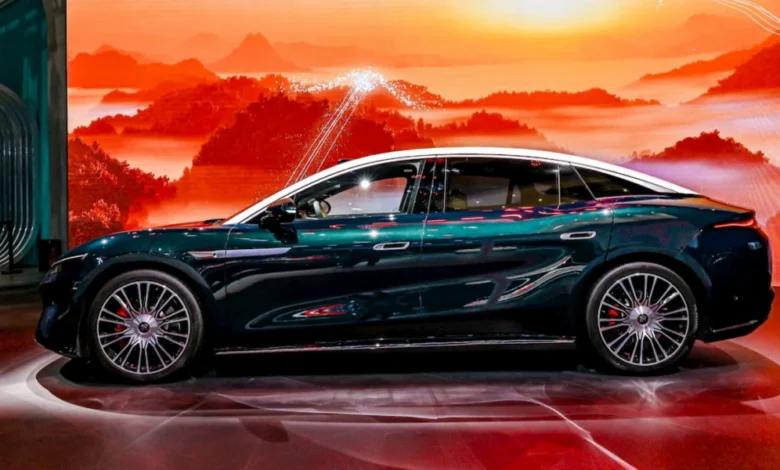
The global electric vehicle landscape is bracing for a significant disruption as BYD, one of the world’s leading manufacturers of new energy vehicles, prepares for the official commercial launch of its newest luxury offering. Scheduled for an October 13 debut, the Great Han—known domestically in China as the Da Han—represents a pivotal milestone for the automaker. As BYD’s first D-segment flagship sedan within its prestigious Dynasty family, the vehicle combines staggering driving range, ultra-fast charging infrastructure integration, and dimensions that rival established heavyweights in the global executive car segment.
The upcoming market entry underscores a broader industry trend of legacy and emerging automakers pushing the boundaries of battery technology and aerodynamic efficiency. With pre-orders having officially opened on August 21 during the Chengdu Auto Show starting at an aggressive price point of roughly $37,200 (249,900 yuan), the Great Han is positioned not only to challenge domestic competitors in China but also to send a clear signal to legacy European and American luxury brands regarding the cost-to-performance ratio achievable in modern electric mobility.
Chronology and Development Timeline of BYD’s Flagship Sedan
The journey of the Great Han from concept approval to its imminent October release has moved at a pace characteristic of China’s hyper-competitive automotive sector. The earliest public indications of the vehicle’s existence emerged in June, when detailed specifications and homologation filings appeared within a batch of new energy vehicles approved for sale by China’s Ministry of Industry and Information Technology (MIIT). These regulatory filings provided industry analysts with their first concrete glimpse of the full-size sedan’s proportions and powertrain configurations.
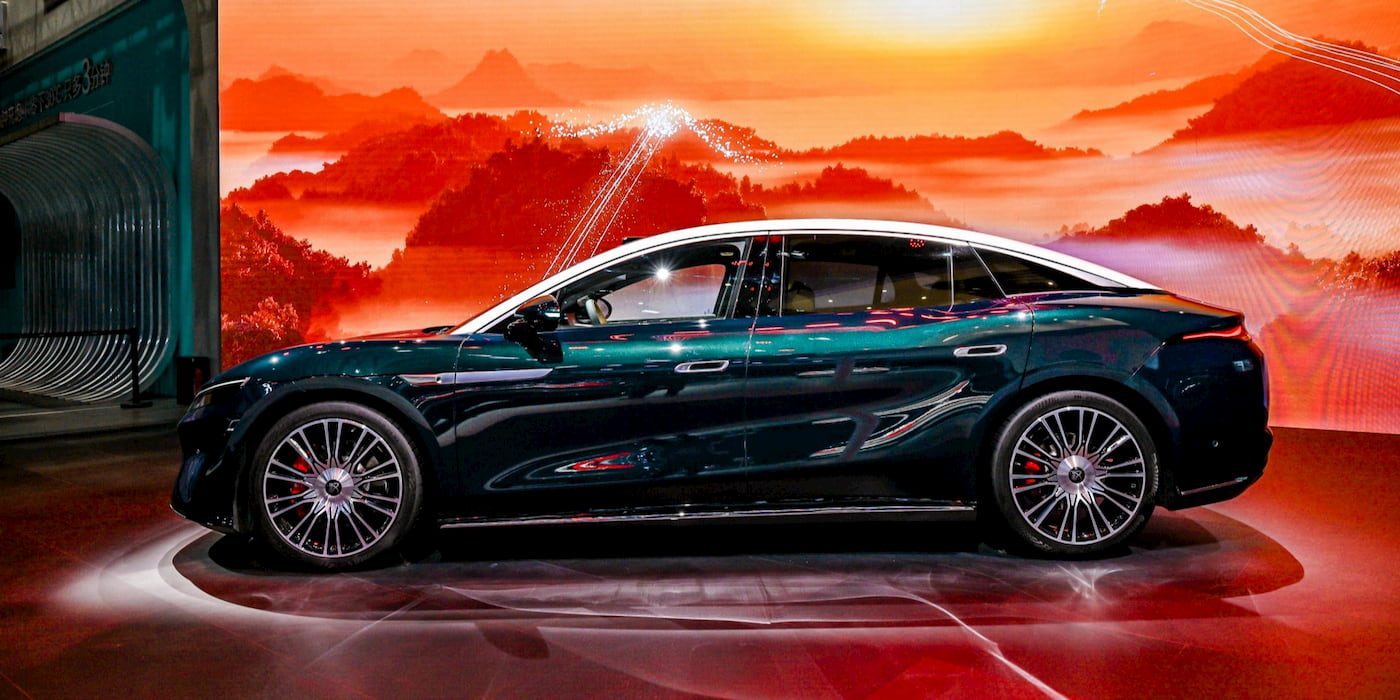
Following the MIIT disclosure, BYD officially pulled the covers off the vehicle during the late-August Chengdu Auto Show. Lu Tian, the general manager of BYD’s Dynasty series, used the platform to confirm the vehicle’s official market launch date of October 13, while simultaneously opening the order books to eager consumers. This compressed timeline—spanning barely four months from regulatory approval to full market availability—demonstrates BYD’s advanced manufacturing agility and supply chain dominance, anchored by its vertically integrated business model.
Comprehensive Technical Specifications and Powertrain Variants
The Great Han is engineered to cater to diverse consumer demands through a meticulously structured three-tier variant lineup, encompassing both single-motor rear-wheel-drive (RWD) and dual-motor all-wheel-drive (AWD) configurations.
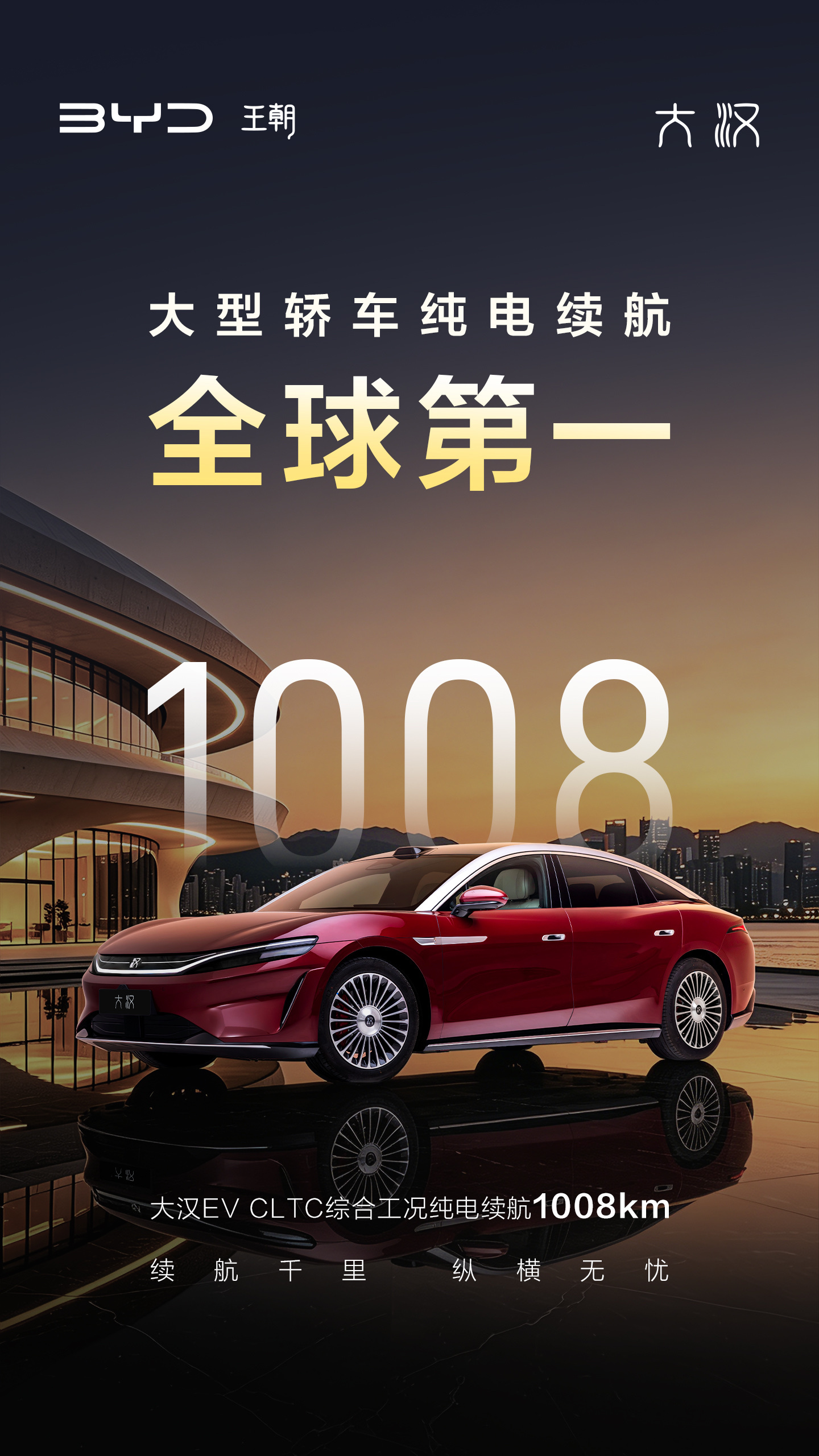
The entry-level Premium variant and the step-up Flagship variant both utilize a single rear-mounted electric motor capable of delivering an impressive 370 kilowatts—equivalent to approximately 496 horsepower. These RWD models are powered by a substantial 102.326 kWh battery pack. This combination yields a staggering CLTC (China Light-Duty Vehicle Test Cycle) driving range of up to 1,008 kilometers, translating to roughly 626 miles on a single charge. The Premium RWD model starts at 249,900 yuan ($37,200), while the higher-tier Flagship RWD variant is priced at 269,900 yuan ($40,200).
For drivers seeking enhanced traction and performance, BYD offers an AWD variant that incorporates an additional front electric motor. This dual-motor setup elevates the vehicle’s combined output to a formidable 570 kilowatts, or roughly 764 horsepower. Despite utilizing the identical 102.326 kWh battery pack found in its RWD counterparts, the increased energy demand of the dual-motor system results in a slightly reduced, yet highly competitive, CLTC driving range of 880 kilometers, or approximately 546 miles.
Revolutionary Battery and Charging Architecture
At the core of the Great Han’s exceptional performance metrics is BYD’s proprietary engineering, specifically the integration of the Blade Battery 2.0 and cutting-edge Flash Charging technology. While early electric vehicles often forced consumers to choose between massive battery capacities and reasonable replenishment times, the Great Han’s electrical architecture seeks to eliminate this compromise.
According to technical disclosures from BYD, the vehicle’s advanced charging system is engineered to support ultra-fast DC infrastructure capable of delivering up to 1,500 kW charging power. In real-world application, this technology allows the battery pack to replenish its energy reserves from 10% to 70% in a mere five minutes. Furthermore, a complete recharge from 10% to 97% is accomplished in just nine minutes, a development that dramatically narrows the operational refueling gap between battery-electric vehicles and traditional internal combustion engine automobiles.
Dimensions and Exterior Footprint
In terms of physical scale, the Great Han is classified as a true full-size executive sedan. Measuring 5,256 millimeters in length, 1,999 millimeters in width, and 1,510 millimeters in height, with a wheelbase stretching to 3,130 millimeters, the vehicle occupies a formidable footprint on the road.

These dimensions place the Great Han firmly ahead of established global electric benchmarks such as the Tesla Model S and the Lucid Air in terms of overall length and interior spatial potential. Analysts have noted that its physical dimensions align more closely with the long-wheelbase variants of legacy executive flagships, such as the Mercedes-Benz S-Class, signaling BYD’s intention to capture market share traditionally dominated by German luxury manufacturers.
Chassis Dynamics, Interior Luxury, and Autonomous Driving Systems
Beyond its raw powertrain and battery metrics, the Great Han is equipped with an array of advanced chassis control and driver-assistance technologies designed to elevate the occupant experience. Following the design philosophy established by BYD’s flagship Great Tang SUV, the sedan includes high-end mechanical and digital amenities as standard equipment across its lineup.
Vehicle stability and ride comfort are managed by BYD’s DiSus-A dual-chamber air suspension system, which dynamically adjusts damping characteristics to suit varying road surfaces and driving modes. This is complemented by an integrated rear-wheel steering system, which enhances low-speed maneuverability and high-speed stability by adjusting the rear wheel angle in tandem with the front steering assembly. Inside the cabin, occupants are treated to zero-gravity front seats designed to minimize fatigue during long-distance travel.
On the technological front, all variants of the Great Han feature BYD’s proprietary God’s Eye B smart driving system. This advanced driver-assistance system (ADAS) suite provides sophisticated capabilities, including Navigation on Autopilot (NOA) for highway and urban environments, as well as automated remote parking functions, reflecting the industry-wide shift toward software-defined vehicle architectures.

Strategic Implications and Market Impact
The introduction of the Great Han is not merely an isolated product launch; it represents a calculated strategic manoeuvre by BYD to solidify its presence in the upper echelons of the automotive market. Having already achieved dominant sales volumes in the mass-market and mid-tier segments, the company has systematically expanded upward through vehicles like the Great Tang SUV and the dedicated luxury offerings of its Denza brand.
Industry observers note that the combination of a 1,000-kilometer driving range, sub-ten-minute ultra-fast charging, executive-class dimensions, and aggressive pricing starting at $37,200 presents a formidable challenge to international automakers. As legacy brands grapple with the complexities of transitioning to electric mobility while maintaining profit margins, BYD’s vertically integrated manufacturing model allows it to absorb development costs and pass significant value directly to the consumer.
As the October 13 launch date approaches, attention will turn to how traditional luxury competitors respond to the escalating technological benchmarks set by Chinese manufacturers. If the pre-order enthusiasm observed at the Chengdu Auto Show is any indication, the Great Han is poised to redefine consumer expectations of what a flagship electric sedan can deliver in terms of range, infrastructure compatibility, and luxury appointments.