XCMG Unveils the SDA411: A Fully Electric, Cab-Less Autonomous Terminal Truck Set to Redesign Port and Yard Logistics

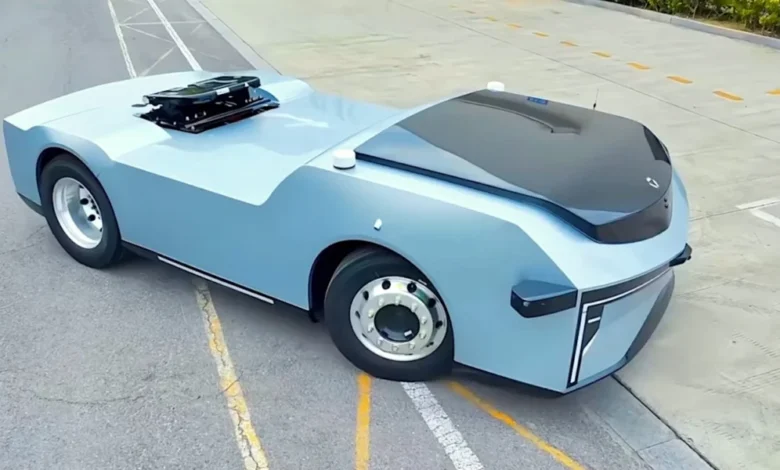
The global logistics and drayage sectors are undergoing a profound technological transformation, driven by the convergence of strict decarbonization mandates and pervasive labor shortages. In response to these complex industry pressures, Chinese heavy machinery manufacturer XCMG has officially revealed the SDA411, a concept terminal truck designed entirely from the ground up for unmanned operations. Featuring a fully electric powertrain, the complete omission of a driver’s cab, and a Level 4 (L4) autonomous driving technology stack, the SDA411 represents a bold vision for the future of material handling in ports, rail yards, distribution hubs, and manufacturing campuses.
Terminal trucks—frequently referred to in the industry as yard trucks, yard goats, or hostlers—perform tasks that industry analysts universally recognize as prime candidates for early electrification. Their operational profile consists almost entirely of repetitive, low-speed, high-torque, and short-distance movements. Unlike long-haul freight trucks that require massive battery packs to sustain highway speeds over hundreds of miles, yard trucks operate within confined, predictable perimeters. This makes them ideally suited for the instantaneous torque, zero tailpipe emissions, and vibration-free performance characteristic of battery-electric drivetrains.
While several established brands, such as Orange EV and Kalmar, have made significant strides in deploying battery-electric terminal trucks globally—such as DHL’s recent large-scale fleet integrations—XCMG’s SDA411 pushes the envelope significantly further. By removing the cabin entirely, the manufacturer has eliminated the ergonomic and spatial constraints associated with human drivers, optimizing the vehicle purely for payload efficiency, sensor placement, and structural integrity.
Anatomy of an Autonomous Yard Hauler
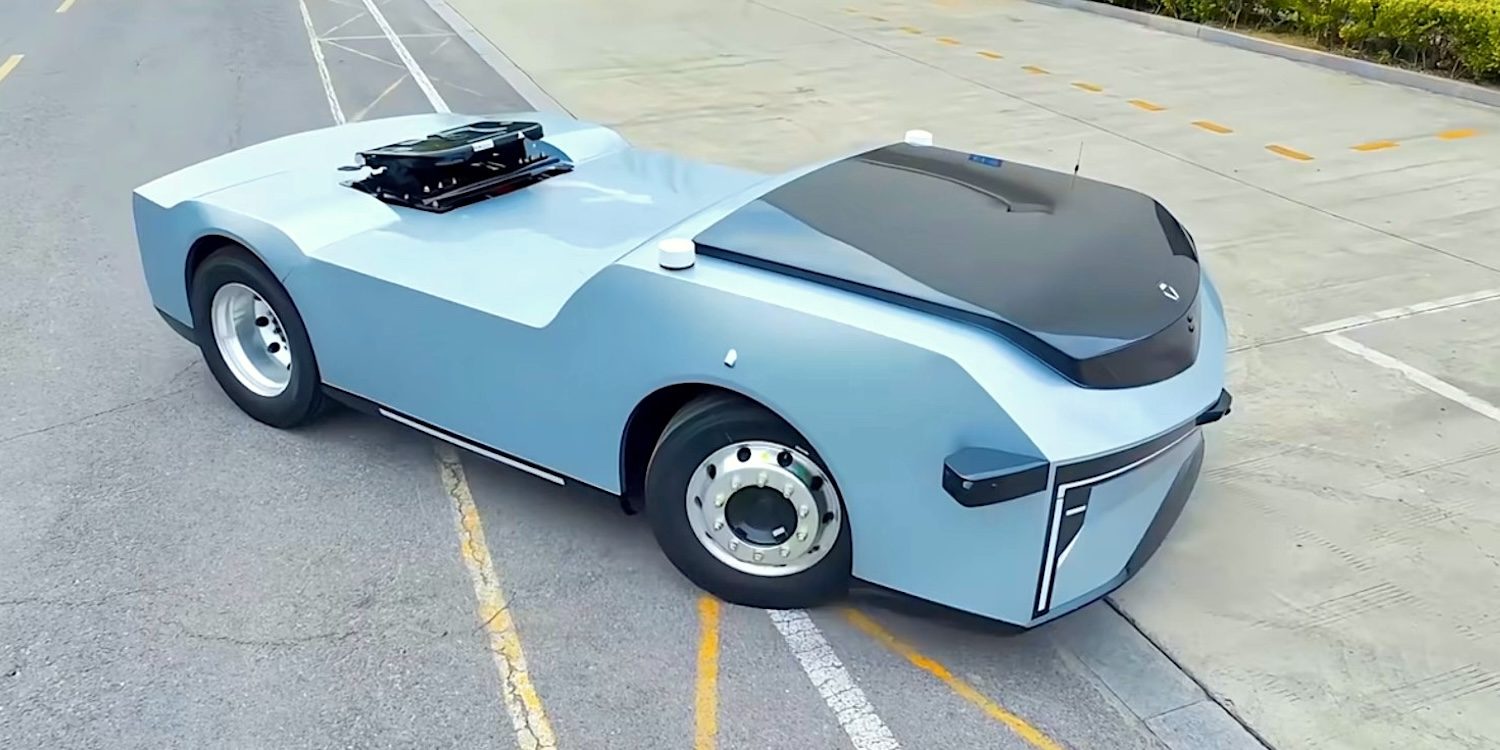
The core innovation of the SDA411 lies in its purpose-built architecture for autonomous logistics. According to technical disclosures provided by XCMG via corporate communications, the platform relies on an advanced Level 4 autonomous driving system. Level 4 autonomy denotes a vehicle that can perform all safety-critical driving functions and monitor roadway conditions for an entire trip under specific operational parameters, requiring zero human intervention within those boundaries.
To navigate complex and dynamic industrial environments, the SDA411 is equipped with a comprehensive 360-degree sensor perception suite. This multi-layered sensor array—typically combining LiDAR, radar, high-definition optical cameras, and ultrasonic sensors—enables the vehicle to execute precise autonomous navigation, dynamic obstacle avoidance, complex task execution, and automated trailer coupling and parking. The system is engineered to support continuous, round-the-clock mixed-traffic operations alongside human-driven vehicles, pedestrians, and automated guided vehicles (AGVs) in demanding logistics environments.
Demonstration footage released by XCMG showcases the SDA411 successfully executing intricate maneuvers across the company’s corporate and industrial campus. The video highlights the vehicle’s robust safety protocols, including responsive emergency stopping capabilities when encountering unexpected obstacles. Interestingly, the demonstration also underscored certain transitional phases of automation: upon depleting its battery reserves, the cab-less truck autonomously navigated to a charging station, where a human attendant was still required to manually plug in the power cable. While automated robotic charging solutions—such as induction pads or mechanical robotic arms like those developed by heavy industry players like Fortescue—are beginning to emerge, manual intervention remains a common interim step for many autonomous heavy equipment deployments.
Addressing the Global Industrial Labor Shortage
The unveiling of the SDA411 arrives at a critical juncture for the global supply chain. Across North America, Europe, and Asia, the logistics sector faces an acute demographic crisis characterized by an aging workforce and a severe deficit of new recruits. Despite carriers offering historically high wages, including six-figure compensation packages and improved benefits in some regions, younger generations are increasingly hesitant to enter the trucking profession. The demanding, repetitive nature of yard work—often performed in harsh weather conditions and during grueling overnight shifts—has exacerbated high turnover rates.

Consequently, industrial enterprises across manufacturing, warehousing, and intermodal transport are struggling with persistent operator shortages that threaten throughput capacity. Autonomous equipment like the SDA411 offers a viable technological countermeasure to these labor deficits. By automating repetitive yard movements—such as shuffling containers between staging areas and loading docks—facilities can maintain continuous, 24/7 operations regardless of labor availability.
Rather than viewing automation strictly as a mechanism for workforce displacement, industry analysts suggest that technologies like the SDA411 will fundamentally reshape the operational role of human workers. Experienced terminal truck drivers can transition from manual operators into remote supervisors, overseeing fleets of autonomous vehicles simultaneously from centralized control rooms. This shift not only extends the careers of seasoned logistics professionals by eliminating the physical strain of long shifts in vibrating truck cabs, but it also opens up critical supply chain roles to individuals with physical disabilities or lifestyle constraints that previously precluded them from heavy vehicle operation.
Broader Industry Implications and Competitive Landscape
The introduction of the SDA411 places XCMG in direct, forward-looking competition with established terminal tractor manufacturers and specialized autonomous driving tech firms. Companies such as Outrider, which has integrated its self-driving software into electric yard trucks like the Orange EV YMX, are similarly racing to commercialize autonomous yard operations. Meanwhile, legacy industrial giants like Kalmar continue to refine their electric offerings to meet strict corporate ESG (Environmental, Social, and Governance) targets.
However, the complete removal of the cab represents a paradigm shift. Traditional hybrid autonomous trucks often retain a driver’s compartment to allow human operation during public road transit or unexpected system overrides. A strictly cab-less vehicle like the SDA411 commits entirely to a closed-loop or geofenced operational model, trading on-road versatility for maximum efficiency within controlled industrial properties. This design philosophy reduces aerodynamic drag, lowers vehicle weight, and maximizes interior packaging efficiency for powertrain components and structural reinforcements.

As port authorities and major logistics conglomerates face mounting pressure to achieve net-zero carbon emissions while simultaneously increasing cargo throughput, the demand for smart, electrified, and automated yard infrastructure is projected to accelerate exponentially over the remainder of the decade.
Outlook and Next Steps
XCMG has not yet announced a definitive commercial release date or commercial pricing structure for the SDA411 series, framing the vehicle currently as an advanced concept and technological showcase. However, given the rapid pace of autonomous pilot programs deployed in controlled environments globally, market observers anticipate that pilot trials with select logistics partners and port operators could commence in the near future.
As the industry weighs the operational readiness of Level 4 autonomous systems against legacy safety regulations and infrastructure limitations, the SDA411 serves as a clear indicator of where heavy equipment engineering is heading. Whether terminal trucks of the future are managed by fleets of remote supervisors or operate as fully independent nodes in a digitized supply chain, the era of the automated, electric yard dog is rapidly transitioning from science fiction into commercial reality.
Related posts: