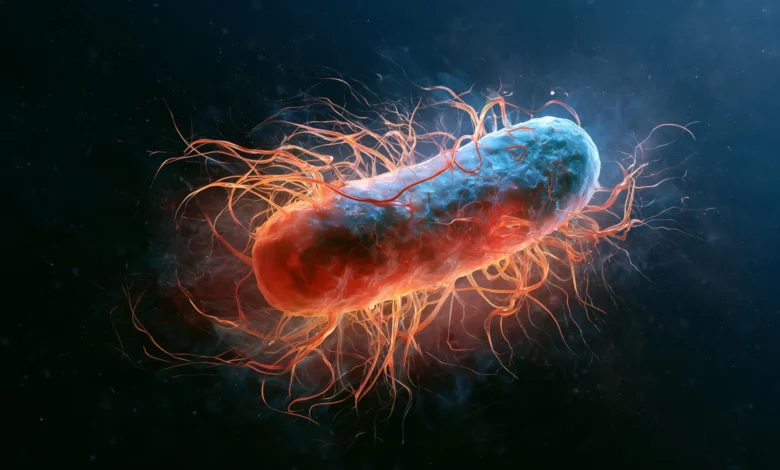
Researchers led by Professor An Xu at the Hefei Institutes of Physical Science (HFIPS) of the Chinese Academy of Sciences have achieved a significant breakthrough in the field of geroscience, identifying a novel biological intervention that significantly extends the lifespan of the nematode Caenorhabditis elegans. By utilizing the magnetotactic bacterium Magnetospirillum magneticum AMB-1, the research team demonstrated a robust capacity to delay the aging process, primarily through the suppression of ferroptosis—a specific, iron-dependent form of programmed cell death. The findings, published in the journal Free Radical Biology and Medicine, represent a pivot toward microbial-based interventions in the study of healthy aging and chronic disease mitigation.
The Challenge of Biological Aging
Aging is characterized by a progressive decline in physiological integrity, leading to impaired function and an increased vulnerability to death. This biological process is the primary risk factor for major human pathologies, including cancer, diabetes, cardiovascular disorders, and neurodegenerative diseases. For decades, the scientific community has pursued various pharmacological and genetic strategies to modulate the rate of aging, yet these interventions are often hindered by issues regarding toxicity, systemic side effects, and the complexities of human clinical translation.
As the global population ages, the demand for safe, sustainable, and effective therapeutic approaches has never been higher. While dietary restriction and compounds like rapamycin or metformin have shown promise in laboratory models, the quest for novel mechanisms remains a high priority for researchers. It is within this landscape that the unique properties of magnetotactic bacteria (MTB) have emerged as a potential, albeit unconventional, candidate for anti-aging research.
Understanding Magnetotactic Bacteria
Magnetotactic bacteria are a diverse group of microorganisms that possess the unique ability to navigate along geomagnetic field lines. This capability is mediated by specialized intracellular organelles known as magnetosomes—membrane-bound crystals of magnetic minerals such as magnetite or greigite. Historically, interest in these bacteria has been confined to biophysics and materials science, particularly their potential applications in targeted drug delivery, hyperthermia cancer therapy, and environmental remediation.
Because of their inherent biocompatibility and their ability to interact with iron metabolism at a cellular level, these organisms present a fascinating case study for biological regulation. Unlike synthetic nanoparticles, which can sometimes trigger inflammatory responses, AMB-1 has shown a remarkable ability to integrate into biological systems without causing significant systemic toxicity. This natural profile makes them an ideal subject for testing whether biological magnetism—or the metabolic processes associated with magnetosome production—can influence the systemic aging of an organism.
Chronology and Methodology of the Study
The research conducted at the Hefei Institutes of Physical Science followed a rigorous, multi-stage methodology designed to quantify the longevity effects of AMB-1 in a standardized model. The study utilized Caenorhabditis elegans, a microscopic nematode that serves as the gold standard for aging research due to its short lifespan, well-mapped genome, and high degree of physiological similarity to higher organisms.
- Initial Screening: The researchers introduced the wild-type AMB-1 strain to the nematode population to establish a baseline for survival and physiological health.
- Comparative Analysis: To determine if the magnetosomes were the driving force behind the observed longevity, the team introduced two modified strains: the reversibly non-magnetotactic RNM-AMB-1 and the completely non-magnetotactic NM-AMB-1.
- Physiological Assessment: Beyond simple survival counts, the team measured neurological function (movement and response) and intestinal integrity, markers which typically degrade significantly as the nematode reaches the end of its natural lifespan.
- Molecular Profiling: Using genetic analysis, the team interrogated the pathways associated with iron metabolism and lipid peroxidation to pinpoint the precise mechanism of action.
Empirical Findings: A 43% Extension
The results of the study were striking. The nematode group treated with wild-type AMB-1 exhibited an average lifespan extension of 43.39% compared to the control group. More importantly, this was not merely a prolongation of life in a debilitated state; the treated worms retained superior neurological function and intestinal structure well into what would typically be considered their late life.
The researchers observed a clear correlation between the presence of magnetosomes and the longevity benefit. While wild-type AMB-1 provided the maximum benefit, the reversibly non-magnetotactic strain (RNM-AMB-1) offered a diminished but still positive effect. Crucially, the non-magnetotactic strain (NM-AMB-1) failed to extend the lifespan of the nematodes at all. This data suggests that the biological machinery required for magnetotaxis—specifically the iron-processing capabilities inherent in magnetosome formation—is a critical factor in the longevity-promoting properties of the bacteria.
The Ferroptosis Connection
The most significant contribution of this research is the identification of ferroptosis as the key target for AMB-1. Ferroptosis is a form of cell death that occurs when iron-dependent lipid peroxidation reaches a threshold that the cell can no longer neutralize, leading to the collapse of the cell membrane. It has recently become a major focus of study in the context of degenerative aging, as it is implicated in the death of neurons and the degradation of tissues over time.
The data gathered by Prof. Xu’s team indicates that AMB-1 functions as a biological regulator of iron homeostasis. By reducing the buildup of excess iron and subsequently lowering lipid peroxidation, the bacteria effectively shield the nematode’s cells from the lethal cascade of ferroptosis. Through transcriptomic analysis, the researchers identified the modulation of specific genes—including ftn-1 (involved in iron storage), bli-3 (involved in oxidative stress response), and ads-1 (associated with lipid metabolism)—as the primary regulatory network through which AMB-1 exerts its protective effects.
Implications for Geriatric Medicine
The potential implications of these findings are substantial. If a microbial intervention can effectively tune iron metabolism to prevent cellular decay, it could pave the way for a new class of "biotic" therapies. While translating findings from C. elegans to humans is a significant leap, the discovery provides a conceptual framework that could be applied to more complex organisms.
From a clinical perspective, the use of bacteria to manage iron-related damage could offer a non-invasive way to mitigate age-related decline. Chronic diseases such as Parkinson’s and Alzheimer’s are frequently characterized by localized iron accumulation and oxidative stress, suggesting that an intervention targeting these pathways could have therapeutic potential. Furthermore, the biocompatibility of AMB-1 suggests that it could be utilized as a delivery vehicle, combining its natural longevity-promoting effects with the targeted transport of therapeutic compounds to specific tissues.
Future Research Directions
While the results are promising, the research team at the Hefei Institutes of Physical Science acknowledges that much work remains. Future studies will need to focus on:
- Dose-response curves: Determining the optimal concentration of AMB-1 for maximum efficacy while minimizing potential microbial overgrowth or colonization.
- Safety profiles in mammals: Transitioning from C. elegans to murine models to evaluate how the mammalian immune system interacts with these magnetotactic bacteria over long periods.
- Mechanistic nuances: Further clarifying the specific signaling molecules or metabolites produced by the bacteria that interact with the host’s genetic machinery.
Conclusion: A New Frontier
The work led by Prof. An Xu represents a bold departure from traditional gerontological research. By viewing the gut microbiome not just as a metabolic partner, but as a potential regulator of fundamental cell-death pathways, the study opens a new chapter in anti-aging science. If the protective effects of AMB-1 can be replicated in higher organisms, it could fundamentally change the approach to treating age-related pathologies, shifting the focus from reactive symptom management to proactive cellular maintenance. The integration of magnetotactic bacteria into the medical toolkit for healthy aging is a testament to the power of cross-disciplinary research, bridging the gap between microbiology, biophysics, and medicine to address one of the most complex challenges of human existence.
Related posts: