WHO Director-General Concludes High-Level Visit to Jordan Highlighting Universal Health Coverage, Refugee Support, and Mental Health Initiatives

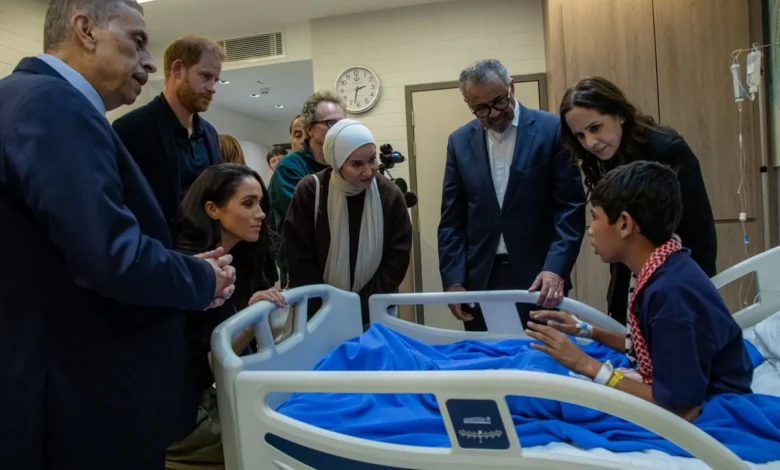
The Director-General of the World Health Organization (WHO), Dr. Tedros Adhanom Ghebreyesus, successfully concluded the first leg of a landmark two-day state visit to the Hashemite Kingdom of Jordan today. The visit served to underscore the enduring and robust partnership between the global health body and the Jordanian government, focusing heavily on advancements in universal health coverage (UHC), comprehensive mental health frameworks, and critical humanitarian health actions in a region profoundly impacted by conflict and displacement.
Throughout the opening day of the itinerary, discussions and site visits converged on Jordan’s exemplary role as a regional leader in humanitarian assistance. The Hashemite Kingdom continues to provide refuge and healthcare services to millions of displaced individuals, despite facing its own domestic economic and infrastructural challenges. The visit also drew international attention through the participation of Prince Harry, the Duke of Sussex, and Meghan, the Duchess of Sussex, who accompanied the WHO delegation in their capacity as founders of Archewell Philanthropies and long-standing advocates for global health equity and psychological support systems.
A Royal Audience and Strategic Health Discussions
The cornerstone of the first day’s official engagements was a high-level bilateral meeting between Dr. Tedros and His Majesty King Abdullah II. The audience highlighted the Hashemite Kingdom’s enduring dedication to positioning healthcare access as a paramount national security and global humanitarian priority.
Discussions during the royal audience centered primarily on the fortification of national health systems, the expansion of equitable access to primary and specialized medical care, and the urgent necessity of sustaining robust emergency responses across the Middle East. Particular emphasis was placed on the ongoing plight of the Palestinian population, specifically addressing the mechanisms required to support patients evacuated from the Gaza Strip into Jordan for specialized medical treatment. Furthermore, the dialogue addressed the immense pressures and responsibilities shouldered by Jordan as it continues to host millions of refugees from neighboring nations.
Dr. Tedros expressed deep gratitude during the meeting, acknowledging the Kingdom’s unwavering moral compass. "I wish to express my appreciation to His Majesty King Abdullah II for his commitment to advancing universal health coverage," Dr. Tedros stated. "I also extend my thanks to His Majesty and the people of Jordan for their solidarity and generosity in providing health services to more than three million refugees, primarily from Gaza and Syria, who are living in the country."
The WHO chief specifically highlighted the operational efficacy of the Hashemite Kingdom’s humanitarian initiatives, pointing directly to His Majesty’s Medical Corridor initiative. This critical operational pathway has facilitated the transit and delivery of urgent medical interventions for critically ill and injured children evacuated from active conflict zones in Gaza. By maintaining these channels, Jordan continues to demonstrate to the international community the pragmatic application of putting health and humanity above political divisions.
Frontline Realities: Pediatric Care and Medical Evacuations
Moving beyond diplomatic and administrative chambers, Dr. Tedros transitioned from high-level meetings to direct field engagement by visiting a specialized, WHO-supported hospital facility in Jordan. The hospital plays a pivotal role in administering complex medical interventions to pediatric patients who have been evacuated from Gaza.
During the hospital tour, Dr. Tedros engaged directly with young patients, their families, and the frontline medical personnel who work around the clock to deliver life-saving treatments. The facility manages severe polytrauma, advanced oncological cases, and other critical medical conditions that cannot be treated locally due to the systemic collapse of health infrastructure in conflict-affected areas.
This visit served to emphasize the indispensable nature of the medical evacuation corridor operating through Jordan. Public health experts note that without such logistical pathways, the mortality rate among transferred pediatric and vulnerable patients would escalate exponentially. Dr. Tedros underscored the urgent need for the international donor community to step up and provide predictable, sustained financial and logistical support to ensure that these humanitarian corridors remain open and fully operational.
Mobilizing Resources: High-Level Partner and Donor Roundtable
In an effort to translate political goodwill and operational necessity into sustainable financial commitments, Dr. Tedros convened a high-level roundtable meeting later in the day. The gathering brought together key international health partners, donor governments, United Nations agencies, and philanthropic organizations.
The core agenda of the roundtable was the formulation of robust financing priorities aimed at reinforcing Jordan’s domestic health infrastructure while simultaneously underwriting ongoing regional humanitarian health operations. Key focus areas included scaling up specialized mental health services—which remain critically underfunded in emergency contexts—and securing burden-sharing mechanisms to assist nations hosting exceptionally large refugee populations.
Participants at the roundtable examined the long-term economic and social dividends of investing proactively in health systems rather than relying exclusively on reactive emergency aid. Dr. Tedros welcomed the strong collaborative spirit demonstrated by international stakeholders, emphasizing that sustained investment in Jordan acts as a strategic stabilizer for health security across the entire Eastern Mediterranean region.
Advancing Universal Health Coverage and Mental Health Integration
Earlier in the day, the WHO Director-General held intensive bilateral consultations with Jordan’s Minister of Health. The dialogue drilled down into the mechanics of strengthening Jordan’s national health architecture to achieve comprehensive universal health coverage.
Jordan has consistently garnered international praise for its pioneering primary healthcare approach, which serves as the bedrock of its UHC strategy. Notably, the Jordanian health sector has successfully integrated mental health services directly into routine primary care clinics. This integration ensures that patients seeking routine physical checkups or specialized care can simultaneously access psychological support without facing social stigma or structural barriers.
This progressive policy alignment is heavily supported by the WHO, specifically through the implementation of the Director-General’s Special Initiative for Mental Health. Public health analysts point out that Jordan’s model offers a scalable blueprint for low- and middle-income countries seeking to bridge the historical gap between physical and psychological medicine.
The Role of Philanthropy and Global Advocacy
A notable dimension of the state visit was the active participation of Prince Harry, the Duke of Sussex, and Meghan, the Duchess of Sussex. Travelling in their capacity as co-founders of Archewell Philanthropies, the couple joined Dr. Tedros for multiple engagements, leveraging their global platform to draw attention to vulnerable populations and neglected health crises.
Archewell Philanthropies has maintained a long-standing collaborative partnership with the WHO, contributing financial resources and advocacy support to initiatives ranging from equitable distribution frameworks for pandemic countermeasures to medical evacuation operations and community-level mental health programs.
During the engagements, Prince Harry participated as a vocal ally of WHO’s global mental health advocacy campaigns. He emphasized the imperative of investing in psychological resilience across communities experiencing chronic trauma and emergency settings, with targeted outreach directed toward men, adolescents, and children.
Reflecting on the partnership, Dr. Tedros remarked, "I want to thank our partners, including Prince Harry, Duke of Sussex and Meghan, Duchess of Sussex, whose commitment to mental health and humanitarian action has helped bring visibility, resources and hope to some of the world’s most vulnerable communities. Their collaboration is helping to advance WHO’s mission to ensure health for all."
Adding his perspective to the collective mission, Prince Harry stated: "It is an honour to join the Director-General of the World Health Organization in Jordan, a country that is leading by example in compassion, resilience and innovation. Through our work with Archewell Philanthropies, my wife and I have seen first-hand the impact of WHO’s efforts to support mental health and deliver life-saving care in emergencies. We remain deeply committed to advancing awareness, reducing stigma and expanding access to mental health support for all those affected by conflict and crisis. Mental health is fundamental to recovery, dignity and long-term peace, and we are proud to stand with WHO and partners around the world to make it a global priority."
Chronology and Forward-Looking Itinerary
The comprehensive two-day state visit is structured to provide the WHO leadership with a 360-degree view of Jordan’s health ecosystem, spanning acute humanitarian interventions, specialized tertiary care, and community-based preventative initiatives.
As the itinerary transitions into its second and final day, Dr. Tedros is scheduled to visit several key institutions that highlight Jordan’s multifaceted approach to public health and social welfare:
- The National Center for Rehabilitation of Addicts: Supported extensively by the WHO, this specialized center provides integrated medical, psychological, and social rehabilitation services, addressing substance use disorders through a compassionate, health-centered lens.
- Community and Civil Society Engagements: The Director-General will meet with grassroots community leaders and women’s advocacy groups, including key representatives from the Jordanian Hashemite Fund for Human Development (JOHUD), to evaluate grassroots resilience models.
- The King Hussein Cancer Center: Dr. Tedros will tour this internationally recognized institution to discuss cutting-edge advancements in regional cancer treatment, patient care protocols, and cross-border research collaborations.
The state visit will officially conclude with final strategic consultations involving international partners dedicated to sustaining humanitarian supply chains and medical operations.
Broader Implications and Strategic Analysis
Public health analysts observing the visit emphasize that Jordan occupies a uniquely critical geopolitical and humanitarian nexus. Bordering several nations experiencing prolonged civil unrest and active conflict, Jordan has historically absorbed waves of displacement that place immense, sustained fiscal and physical strain on its public utilities, water grids, and healthcare networks.
Despite these systemic pressures, the Kingdom has consistently maintained an open-door policy for refugees, integrating millions into its national vaccination drives, primary healthcare clinics, and educational frameworks. The high-level validation provided by the WHO Director-General and prominent international philanthropies serves a dual purpose: it publicly honors Jordan’s humanitarian sacrifices while issuing a clarion call to the wider international community.
Experts warn that without predictable multilateral burden-sharing and increased donor appropriations, frontline states like Jordan risk severe operational fatigue. The discussions held during this state visit aim to solidify long-term financial commitments, ensuring that the infrastructure supporting medical evacuations, chronic disease management, and psychological trauma recovery remains resilient against future regional shocks.
Ultimately, Dr. Tedros’s visit reinforces a central tenet of modern global health governance: that health security is indivisible. By spotlighting Jordan’s innovative integration of primary health care, mental health services, and refugee-inclusive policies, the WHO is signaling to global policymakers that localized resilience, backed by international solidarity, remains the most effective antidote to humanitarian crises.