Unveiling a Hidden Regulatory Mechanism: How NUDT5 Protein Influences Leukemia Drug Resistance Beyond Traditional Enzymatic Pathways

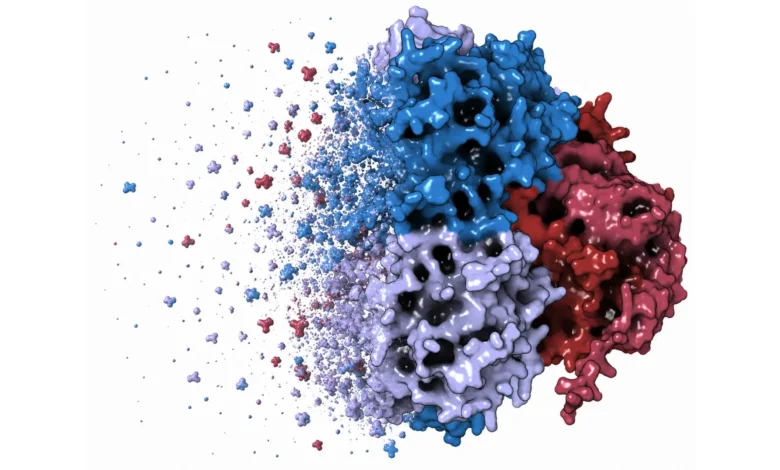
For more than seven decades, 6-thioguanine (6-TG) has served as a cornerstone in the pharmacological arsenal against leukemia. Despite its long-standing clinical history and the extensive documentation regarding its efficacy in treating various hematological malignancies, the precise molecular mechanisms that dictate why certain leukemia cells succumb to the drug while others develop robust resistance have remained a significant point of inquiry. Recent collaborative research led by the CeMM Research Center for Molecular Medicine of the Austrian Academy of Sciences, in partnership with the University of Oxford, the Weizmann Institute of Science, and the University of Dundee, has unveiled a previously unrecognized factor in this process: the protein NUDT5. This discovery challenges conventional understandings of how cells process chemotherapeutic agents and suggests that the physical presence of a protein—independent of its chemical catalytic activity—can act as a critical determinant in drug sensitivity.
A Legacy of Thiopurine Treatment
Thiopurines, the class of drugs to which 6-TG belongs, have been instrumental in improving survival rates for pediatric and adult leukemia patients since the mid-20th century. By interfering with DNA synthesis, 6-TG forces cancer cells to undergo apoptosis. However, clinical outcomes have historically been inconsistent, with physicians often observing that patients metabolize and respond to these drugs in vastly different ways. While the enzyme NUDT15 has long been recognized as a primary regulator of thiopurine toxicity—whereby variations in NUDT15 levels directly correlate with drug tolerance—the current study highlights that the landscape of drug resistance is far more complex than previously assumed. By introducing NUDT5 into the equation, researchers have identified a biological "scaffold" that operates in parallel to, and often in opposition to, known pathways.
The Shift from Inhibition to Degradation
Historically, pharmaceutical research has focused on the inhibition of enzymes. The logic is straightforward: if an enzyme is driving a harmful process or facilitating resistance, blocking its active site with a small molecule inhibitor should neutralize the threat. However, this study, published in Science in 2025, posits that this approach is fundamentally limited when dealing with proteins that possess secondary, non-catalytic functions.
The research team, spearheaded by the Huber and Kubicek laboratories, embarked on a journey to understand whether NUDT5 influenced 6-TG efficacy through its standard enzymatic role. Initial experiments were met with surprising results: suppressing the enzymatic activity of NUDT5 yielded almost no change in how leukemia cells responded to 6-TG treatment. This discrepancy forced a shift in methodology. If the enzyme’s chemical output was not the culprit, the physical protein itself had to be the variable of interest.
To test this hypothesis, the researchers employed targeted protein degradation (TPD), an emerging technology that goes beyond inhibition. By utilizing a "degrader" molecule—a synthetic compound designed to tag the protein for destruction by the cell’s own waste-disposal system (the proteasome)—the team could effectively erase NUDT5 from the cell. This allowed them to isolate the "scaffold" function of the protein from its catalytic function, revealing a stark contrast in biological outcomes.
Chronology of the Discovery
The research trajectory spanned several years and integrated multidisciplinary expertise:
- Early 2020s: Preliminary investigations into NUDT5 reveal its role as a molecular scaffold, shifting the perspective from its known catalytic function to its potential structural role in cellular metabolism.
- 2023–2024: The Huber laboratory at the University of Oxford initiates a medicinal chemistry program to develop highly selective NUDT5 degraders. These molecules, such as the prototype dNUDT5, are engineered to distinguish between NUDT5 and other proteins in the NUDT family.
- Late 2024: Comparative studies are conducted, pitting conventional inhibitors against the new degraders. The data reveals that while inhibitors leave the protein physically intact, the degraders remove it, resulting in a significantly heightened resistance to 6-TG in the treated cell lines.
- Early 2025: Findings are published in Science, detailing the "hidden layer" of biological interaction that governs drug sensitivity.
The Tug-of-War: NUDT5 vs. NUDT15
One of the most compelling aspects of the study is the identified interaction between NUDT5 and NUDT15. While NUDT15 is well-documented for its role in thiopurine metabolism, the study suggests a nuanced interplay. Genetic experiments confirmed that the loss of NUDT15 sensitizes cells to 6-TG, making them more vulnerable to the treatment. Conversely, the reduction or removal of NUDT5 makes cells increasingly resistant to the drug.
This opposing relationship suggests that these two proteins may function as a biological thermostat, fine-tuning the cell’s internal environment in response to chemotherapeutic stress. For clinicians, this underscores a critical reality: the sensitivity of a tumor to chemotherapy may not be the result of a single protein’s activity, but rather the net effect of a complex protein network acting in concert or opposition.
Implications for Future Cancer Therapeutics
The significance of this study extends well beyond the specific interaction between NUDT5 and 6-TG. It serves as a proof-of-concept for the utility of targeted protein degradation in drug discovery. Traditional drug development has been constrained by the "druggability" of proteins—meaning only those with well-defined enzymatic pockets could be targeted. By focusing on degraders, scientists can now target proteins that were previously considered "undruggable" or whose functions were thought to be purely structural rather than enzymatic.
"Chemical degraders give us a way to separate what a protein does as an enzyme from what it does as a physical presence in the cell," noted Professor Kilian Huber. This distinction is the catalyst for a potential paradigm shift in oncology. By understanding that proteins can act as structural scaffolds, researchers can now re-evaluate other resistance mechanisms that have historically eluded explanation through traditional enzymatic inhibition.
Addressing the Clinical Gap
While these findings do not yet translate into a direct clinical application or a new drug on the pharmacy shelf, they provide a necessary roadmap for future precision medicine. If clinicians can profile the NUDT5 expression levels in a patient’s leukemia cells, they may eventually be able to predict which patients are likely to be resistant to 6-TG, or identify patients who would benefit from combination therapies that account for this hidden scaffold effect.
The study underscores the necessity of continuous, foundational research into the molecular machinery of cancer. As cancer cells evolve and develop resistance, the biological "shortcuts" they utilize—such as the non-catalytic scaffolding provided by NUDT5—become the new frontiers for therapeutic intervention.
Funding and Collaborative Effort
The scope of this research highlights the importance of international cooperation in modern biomedical science. The project was supported by a wide array of prestigious institutions, including the European Research Council (ERC) under the Horizon 2020 framework, the Austrian Science Fund (FWF), the Vienna Science and Technology Fund (WWTF), and the Marie Skłodowska-Curie Actions. Furthermore, the involvement of major pharmaceutical entities such as Merck Sharp & Dohme Corp. and Janssen Pharmaceutica NV reflects the industry’s growing interest in targeted protein degradation as a viable path for developing the next generation of cancer treatments.
In summary, the identification of NUDT5 as a non-catalytic regulator of 6-TG sensitivity marks a sophisticated step forward in our understanding of leukemia drug response. By moving past the limitations of traditional enzyme inhibitors and embracing the power of protein degradation, the scientific community has uncovered a hidden mechanism that may, in time, lead to more effective, personalized, and robust treatment strategies for those battling blood cancers. This work stands as a testament to the fact that in the molecular world, the presence of a protein can be just as consequential as the chemical work it performs.