NASA and United Launch Alliance Pivot to Low-Lunar Orbit Strategy to Bolster Artemis Lunar Landing Capabilities

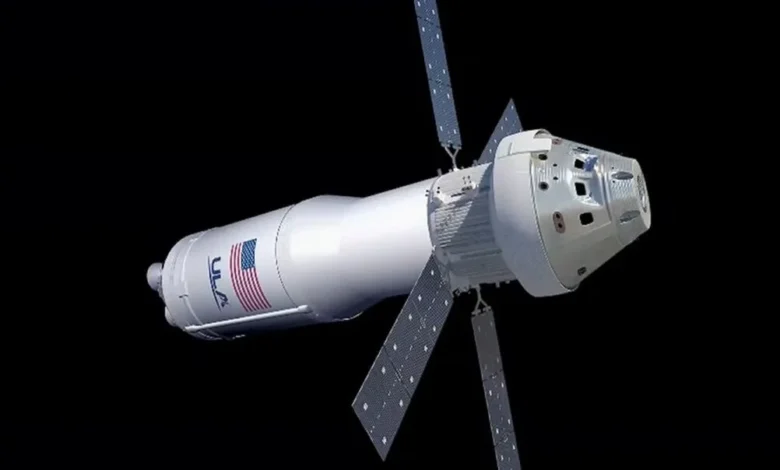
In a significant shift in operational strategy for the Artemis program, NASA has announced a concerted effort to enable the Orion crew capsule to dock with lunar landers—specifically Blue Origin’s Blue Moon—in low-lunar orbit (LLO) rather than the previously planned high-altitude elliptical orbits. This adjustment, aimed at increasing mission flexibility and reducing the technical burden on commercial partners, involves a major technical collaboration with United Launch Alliance (ULA) to develop an "extended" version of the Centaur V upper stage.
The transition marks a departure from years of reliance on the Lunar Gateway and high-altitude, near-rectilinear halo orbits. By closing the gap between the Orion spacecraft and the lunar surface, NASA intends to optimize the fuel efficiency of commercial landers and enhance the safety margins for crewed missions.
The Shift from Elliptical Orbit to Low-Lunar Operations
Under the initial Artemis architecture, the Orion spacecraft was tasked with meeting lunar landers in a distant, elliptical orbit approximately 8,500 kilometers above the Moon’s surface. This high-altitude approach was largely dictated by the inherent propulsion limitations of the Orion Service Module, which lacked the necessary delta-V—the change in velocity required to perform orbital maneuvers—to descend into a lower orbit and return safely to Earth.
However, recent analysis conducted by NASA’s program managers indicates that this high-altitude rendezvous imposes a significant performance tax on private contractors like Blue Origin. Jeremy Parsons, the manager of the Artemis Program, noted that transitioning to an orbit only a few hundred kilometers above the surface would drastically reduce the propellant requirements for the Blue Moon lander.
When a lander is required to bridge the gap from a high orbit, it must carry massive amounts of additional fuel, which in turn necessitates more robust propulsion systems and complex integration. By lowering the docking point, the lander can redirect that mass toward other critical systems, such as life support, cargo capacity, or enhanced scientific instrumentation. Furthermore, a low-lunar orbit provides superior abort-to-orbit capabilities; should an emergency occur on the surface, the crew would have significantly more frequent and faster windows to return to the Orion vessel.
Engineering the Extended Centaur V
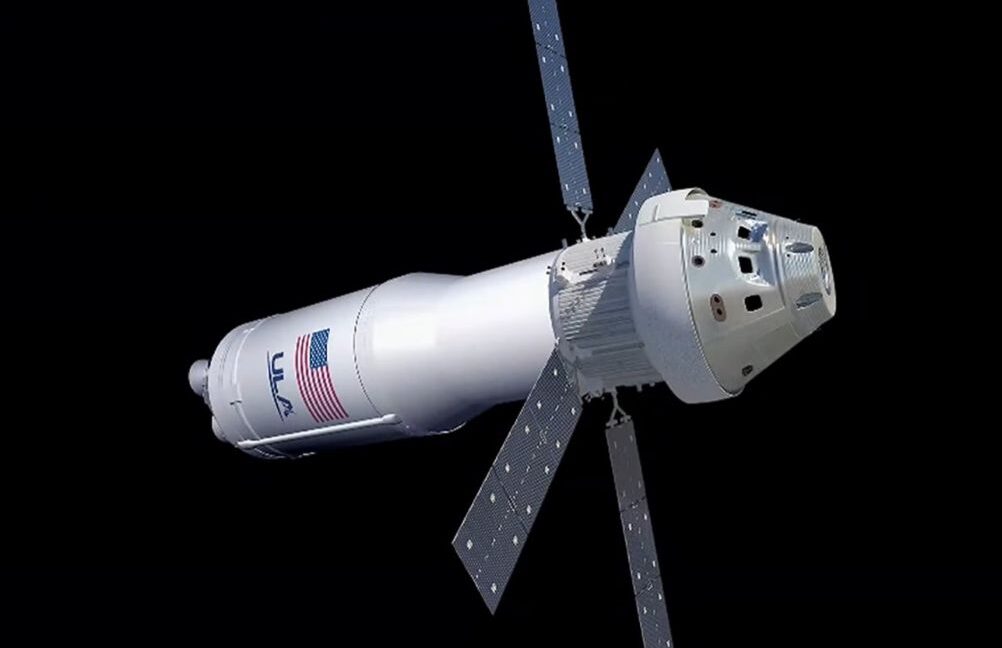
The cornerstone of this strategic pivot is the development of an "extended" Centaur V upper stage. The Centaur V, currently designed for use on ULA’s Vulcan Centaur launch vehicle, is a high-performance, liquid hydrogen/liquid oxygen stage. NASA’s partnership with ULA aims to modify this stage to operate in conjunction with the Space Launch System (SLS) core stage.
This upgrade is widely viewed as a long-overdue rectification of the Orion spacecraft’s performance profile. Since the inception of the Orion program, critics have pointed to the service module’s inability to conduct a complete lunar mission—launching, entering low-lunar orbit, and performing a return-to-Earth injection—as a fundamental design constraint. By outsourcing the necessary delta-V boost to an enhanced Centaur stage, NASA effectively bypasses the performance limitations of the original Orion design without requiring a complete redesign of the capsule itself.
Historical Context and the Gateway Compromise
The decision to rely on high-altitude orbits was not originally the preferred architecture for lunar exploration. During the early planning stages of Artemis, NASA faced significant hurdles regarding the propellant capacity of the SLS and the weight of the Orion vehicle. To circumvent these constraints, the agency proposed the Lunar Gateway, a space station in a near-rectilinear halo orbit (NRHO).
The NRHO was selected primarily because it was accessible to the Orion capsule with its existing propulsion system. However, this choice pushed the burden of performance onto the lunar landers, which had to be designed to travel from the station down to the surface and back up. This created a "performance squeeze" for companies like SpaceX (with Starship HLS) and Blue Origin (with Blue Moon), who had to optimize their vehicles for a much longer transit distance.
Industry observers have noted that this change reflects a pragmatic realization by NASA leadership: the agency’s original constraints were becoming a bottleneck for its private-sector partners. By "turning the knobs" to assist contractors, NASA is attempting to synchronize its infrastructure with the actual development timelines and capabilities of its partners, rather than forcing those partners to overcome the agency’s own technical shortcomings.
Strategic Implications for Artemis
The decision to lower the rendezvous altitude has profound implications for the overall timeline of the Artemis program. By making the landing process "significantly easier," NASA is attempting to mitigate the risk of schedule slips that have plagued the lunar program.
"We’re listening to the data, and looking at what’s happening around us," a senior NASA official noted during the announcement. "Their lives get easier if we can get Orion closer to the Moon, substantially. We could choose to continue on our track and say, maybe they’ll show up and meet our timelines. Or we can say, well, let’s start turning those knobs to help."
This philosophy of "helpful intervention" marks a shift in the NASA-commercial relationship. Rather than acting as a rigid customer with fixed requirements, NASA is increasingly acting as an integrated partner that can modify its own systems to ensure the success of the broader mission architecture.
Supporting Data and Performance Metrics
The physics of lunar orbital mechanics dictates that every kilometer of altitude reduced in the rendezvous orbit saves hundreds of kilograms of propellant for the lander. In the context of a lunar lander, where the mass-to-payload ratio is extremely sensitive, these savings are transformative.
Current mission models suggest that by docking in a 100-200 km orbit, the total propellant mass required for the Blue Moon lander could be reduced by as much as 15 to 20 percent. This extra weight capacity is equivalent to adding several tons of scientific cargo or extending the duration of the surface mission.
Furthermore, the integration of the extended Centaur V provides a level of redundancy. If the SLS core stage encounters a shortfall in performance, the extended upper stage acts as a high-thrust buffer, ensuring that the Orion capsule retains enough energy to complete its mission-critical objectives. This is particularly important for the planned crewed missions, where safety and the ability to return home are non-negotiable requirements.
Looking Ahead: The Path to the Surface
While the development of the extended Centaur V is a significant undertaking, it is arguably a faster and more cost-effective solution than redesigning the Orion Service Module or developing a new lunar transportation vehicle. ULA’s experience with the Centaur platform, which has been the "workhorse" of the U.S. space program for decades, provides a degree of confidence in the feasibility of these modifications.
The coming months will likely see rigorous testing of the new stage integration and further simulations of the low-lunar orbit docking procedures. As NASA moves toward the later stages of the Artemis program, this pivot toward low-lunar rendezvous will be scrutinized by the aerospace community as a key test of whether the agency can successfully adapt its legacy infrastructure to the realities of a modern, commercial-driven lunar economy.
By reducing the performance demands on the Blue Moon lander and enabling more flexible docking scenarios, NASA is not only smoothing the path for the next lunar landing but is also establishing a more sustainable and robust model for deep-space exploration. The shift to low-lunar orbit is a tactical correction that acknowledges the inherent trade-offs of the Artemis architecture and prioritizes mission success through technical flexibility and inter-agency collaboration.