Emily Osment Requested an Intimacy Coordinator on Young Sheldon Due to Age Gap With Co-Star Montana Jordan

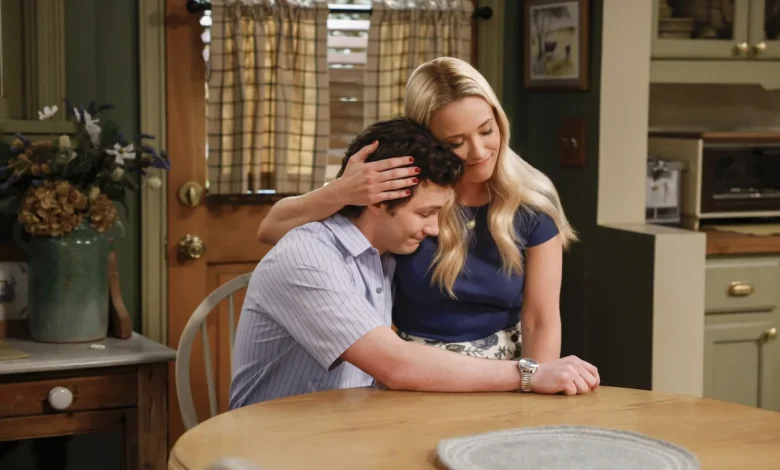
The evolution of modern television production has ushered in sweeping changes across sets worldwide, prioritizing actor safety, transparent communication, and psychological comfort above traditional norms. Nowhere has this cultural shift been more visible than in the integration of intimacy coordinators into television and film crews. While these professionals are most frequently associated with explicit romantic or sexual content on premium cable and streaming platforms, their utility extends far beyond graphic scenes. A striking example of this proactive approach to workplace boundaries has recently come to light concerning the hit CBS sitcom Young Sheldon, where star Emily Osment advocated for an intimacy coordinator despite the family-friendly nature of the network broadcast.
According to behind-the-scenes revelations detailed in Jessica Radloff’s newly published comprehensive book, Young Sheldon: The (Juicier-Than-Meemaw’s-Brisket) Inside Story of the Hit Comedy, Osment felt immediate apprehension regarding the romantic trajectory of her character, Mandy McAllister, and her on-screen partner, George "Georgie" Cooper Jr., played by Montana Jordan. When the actors began filming their initial romantic sequences together, a notable age gap existed between them: Jordan was 18 years old, while Osment was 30. This reality prompted Osment to speak up to production leadership to ensure that both she and her young co-star were adequately supported as their characters’ storyline evolved from an unexpected pregnancy into a committed relationship and subsequent marriage.
The Background of the On-Screen Romance and Real-World Dynamics
Young Sheldon, which served as a hugely successful prequel spin-off to the blockbuster comedy The Big Bang Theory, chronicled the early life of child prodigy Sheldon Cooper. However, as the series progressed over its seven-season run on CBS, the ensemble cast expanded significantly, and narrative arcs began branching out to explore the lives of Sheldon’s older siblings. Among the most prominent secondary storylines was the relationship between Georgie Cooper and Mandy McAllister, a pairing that initially raised eyebrows within the narrative due to an age discrepancy between the characters.
In the real world, the casting choices brought together an adult professional actress in Osment—who had spent decades in the public eye navigating child stardom and mature television roles—and Jordan, a young actor who had practically grown up on the Young Sheldon set. When their romantic dynamic was introduced, Jordan was a teenager navigating the early stages of adulthood, while Osment was a seasoned veteran in her thirties.
Reflecting on the initial days of shooting their kissing scenes, Osment articulated her immediate discomfort candidly in Radloff’s book. Describing her reaction to the situation, Osment noted the stark difference in their life stages at the time, referring to her co-star with protective affection mixed with disbelief at the casting dynamic. Recognizing that the narrative would only push the characters closer together, Osment approached executive producer and director Tim Marx to request professional oversight for their upcoming scenes.
The Production Response and Evolving Protocols on Set
When Osment first raised her concerns, the production team faced logistical hurdles inherent to network television schedules. Because the request came late in the day during active shooting blocks, an intimacy coordinator could not be immediately deployed for that specific moment. However, production leadership recognized the validity of her request and swiftly incorporated an intimacy coordinator for subsequent episodes where the relationship between Mandy and Georgie escalated.
Osment emphasized that having an intimacy coordinator present fundamentally transformed the work environment, making the process significantly smoother and more professional. Beyond her own comfort, Osment expressed concern for her younger co-star, noting that Jordan’s sweet and accommodating nature might have led him to suppress any personal discomfort rather than speak up for himself. By institutionalizing the presence of an intimacy coordinator, production inadvertently provided a safety net for both actors, establishing clear boundaries and open channels of communication that neither performer had to navigate alone.
Director Alex Reid acknowledged that the production crew initially overlooked the necessity of an intimacy coordinator because Young Sheldon lacked explicit or sexual content. In traditional broadcast television settings, romantic intimacy—especially on a network with strict family-oriented standards like CBS—was often treated casually, with directors assuming that simple kissing scenes required no specialized mediation. Reid reflected on a specific piece of visual evidence from their early days on set, highlighting a behind-the-scenes photograph of Osment and Jordan sitting in a car between takes, looking in opposite directions.
According to Reid, when he later showed that photograph to Osment, she recalled the palpable awkwardness of those early moments. Because the actors barely knew each other when they were thrust into romantic scenes, the experience carried an element of professional embarrassment that extended beyond the mere absence of an intimacy coordinator. Over time, however, both actors cultivated a strong working rapport and undeniable on-screen chemistry, successfully pushing past the initial awkwardness.
Co-creator Steve Molaro also addressed the situation in Radloff’s chronicle, validating Osment’s proactive stance. Molaro asserted that Osment possessed every right to request an intimacy coordinator, noting that as production progressed and mutual trust was established, the actors ultimately reached a point of comfort where the specialized coordinator was no longer strictly necessary for every sequence.
Broader Industry Implications and the Future of the Franchise
The behind-the-scenes disclosure regarding Young Sheldon arrives at a fascinating juncture for the broader television landscape. The conversation surrounding intimacy coordinators has historically centered on dramatic, high-stakes streaming content featuring nudity and graphic sexuality. However, incidents like this demonstrate that the value of an intimacy coordinator is equally applicable to network comedies, romantic subplots, and younger casts where power dynamics, age disparities, and professional boundaries require careful navigation.
Furthermore, the narrative arc established in Young Sheldon has transcended the original series entirely. The characters of Georgie and Mandy proved so popular among viewers that CBS greenlit a direct spin-off series, Georgie & Mandy’s First Marriage, placing Osment and Jordan at the absolute center of their own multi-camera comedy. According to Radloff’s book, network executives initially harbored reservations about anchoring a new series around a relationship defined by a significant age gap, reflecting the cautious nature of broadcast programming when handling unconventional dynamics.
Despite initial executive hesitancy, the proven chemistry between Osment and Jordan, coupled with the supportive on-set protocols that allowed them to build mutual trust, helped pave the way for the new series’ success. By prioritizing actor comfort and open communication—even in the absence of explicit content—the production team of Young Sheldon established a blueprint for how broadcast television can adapt to modern standards of workplace safety.
As television production continues to refine its approach to interpersonal boundaries, the willingness of established stars like Emily Osment to advocate for structural support serves as a watershed moment. It signals a permanent departure from the old-school mentality of enduring professional discomfort for the sake of art, replacing it with an industry standard where safety, consent, and mutual respect are treated as non-negotiable components of the creative process.