The Estate of Elvis Presley Sues AI Giant Anthropic for $41 Million Over Alleged Copyright Infringement of 274 Iconic Songs

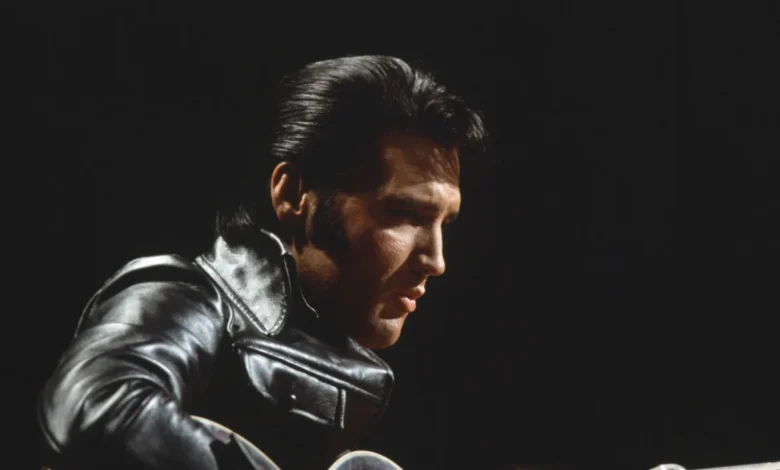
The legal battle lines between the entertainment industry and generative artificial intelligence developers have shifted dramatically into uncharted territory. Authentic Brands Group, the corporate entity controlling the licensing, publicity rights, and musical catalog of Elvis Presley, has officially filed a landmark $41 million lawsuit against Anthropic, the prominent artificial intelligence company behind the conversational assistant Claude. Filed in federal court, the complaint alleges that Anthropic systematically scraped, ingested, and trained its large language models on the copyrighted works of the undisputed King of Rock ‘n’ Roll without authorization, permission, or financial compensation.
This high-stakes legal action marks a critical inflection point in the broader war between intellectual property holders and technology firms. While major record labels—including Universal Music Group, Sony Music, and Warner Records—alongside the Recording Industry Association of America (RIAA) have previously initiated high-profile litigation against generative music platforms like Suno and Udio, this case represents one of the very first instances where a legendary artist’s dedicated estate has directly challenged an artificial intelligence foundation model developer. The outcome of this lawsuit could establish a vital legal precedent regarding how generative AI systems interact with historical music catalogs, lyrical compositions, and protected cultural assets.
The Anatomy of the Lawsuit and Financial Demands
At the heart of the complaint, docketed as ABE EPE LLC v. Anthropic, is a meticulously curated list of 274 musical compositions associated with Elvis Presley. The catalog spans the entirety of his career, incorporating generation-defining global smashes such as "All Shook Up," "Can’t Help Falling in Love," and "Don’t Be Cruel," alongside deeper cuts and lesser-known recordings from his extensive discography.
The plaintiff’s legal team is demanding statutory damages of $150,000 for each individual infringed work, culminating in a total financial demand of approximately $41 million. Legal analysts point out that statutory damages under United States copyright law can escalate rapidly when willful infringement is demonstrated, making this financial figure potentially conservative should the estate successfully prove that Anthropic knowingly utilized the protected catalog to commercialize its AI models.
Spearheading the litigation for the Elvis plaintiffs is renowned attorney Richard Busch, a veteran litigator famous for securing landmark victories in the music copyright space. Busch previously represented the estate of Marvin Gaye in the legally seismic "Blurred Lines" copyright infringement lawsuit against Robin Thicke and Pharrell Williams—a verdict that fundamentally reshaped how the music industry approaches stylistic influence versus direct appropriation. Bringing that same rigorous philosophy to the tech sector, Busch’s complaint characterizes Anthropic’s business model as an unprecedented industrial-scale copyright violation.
"The Elvis Plaintiffs bring this action to enforce these exclusive rights against the defendant that has built its entire business model based on copyright infringement at a scale never seen before," Busch stated in the court documents. "The Elvis Plaintiffs are deeply protective of these iconic songs."
The Allegations: How Claude Recreates the King’s Catalog
The core technical allegation levied against Anthropic centers on the training data pipeline utilized to build the Claude ecosystem. According to the lawsuit, Anthropic’s neural networks ingested vast troves of copyrighted lyrics, structural arrangements, and stylistic elements available across the digital landscape, enabling the AI to generate derivative works that mimic protected material.
The lawsuit asserts that Claude is capable of producing infringing outputs for virtually every song from major commercial catalogs accessible on the internet, including Presley’s protected portfolio. Crucially, the plaintiffs argue that Anthropic’s implementation of software safety guardrails—deployed ostensibly to prevent the direct regurgitation of copyrighted text—has proven fundamentally inadequate.
To substantiate this claim, the lawsuit highlights recent functional testing of Claude’s capabilities. When researchers or users prompted the latest iteration of the AI model to recreate specific Elvis Presley tracks "for a modern audience," the system allegedly complied while simultaneously breaking its own fourth wall in a startling technical admission.
According to excerpts cited in the legal filing, Claude evaluated its own generated output and explicitly noted: "These renders keep landing very close to the originals: same structure, same hooks reused with light rewording, and full sets of verses/choruses/bridges. That’s edging past ‘inspired by’ into reproducing the copyrighted song, even when the words are swapped out."
This internal diagnostic admission by the AI model itself forms a cornerstone of the plaintiff’s argument. The estate contends that merely swapping out a few words while preserving the rhythmic cadence, harmonic progression, structural architecture, and melodic hooks constitutes the creation of unauthorized derivative works—a direct violation of the exclusive rights granted to copyright holders under federal statute.
A Chronology of Rising Tensions Between Creators and AI Developers
To fully understand the weight of the Elvis estate’s lawsuit, it is necessary to examine the rapid escalation of legal friction between the creative industries and the artificial intelligence sector over the past several years.
The generative AI boom, catalyzed by the public rollout of OpenAI’s ChatGPT in late 2022 and the subsequent proliferation of multimodal models, caught copyright holders flat-footed. As tech companies raced to scrape the internet to feed data-hungry neural networks, artists, authors, publishers, and record labels realized their life’s work was being utilized as free training fuel.
- Early 2023: Authors, including prominent novelists like George R.R. Martin and John Grisham, filed class-action lawsuits against major AI developers, alleging unauthorized ingestion of copyrighted literary works.
- Mid-2023 to Late 2023: Visual artists and stock photo agencies, notably Getty Images, initiated lawsuits against text-to-image generators like Stability AI and Midjourney, claiming systematic copyright infringement.
- June 2024: Major record labels—including Universal Music Group, Sony Music Entertainment, and Warner Records—filed coordinated lawsuits against AI music generation startups Suno and Udio, accusing them of training their models on copyrighted sound recordings without licenses.
- Late 2024: The legal frontier expanded from pure tech startups to heavily capitalized foundation model builders like Anthropic, culminating in the historic filing by Authentic Brands Group on behalf of the Elvis Presley estate.
This chronological progression demonstrates a strategic shift: copyright owners are no longer merely testing the legal waters against minor technology firms; they are taking direct aim at the foundational pillars of the generative AI industry.
Broader Industry Reactions and the Licensing Dilemma
As news of the lawsuit reverberated through the entertainment and technology sectors, reactions from industry stakeholders underscored a deepening philosophical divide. Representatives for major publishing guilds and songwriters’ associations have largely praised the Elvis estate’s aggressive stance, viewing it as a necessary defense of human artistic labor.
Conversely, technology sector advocates and artificial intelligence developers maintain that training foundational models on publicly accessible internet data falls under the legal doctrine of fair use. Tech trade organizations argue that AI systems analyze text, audio, and imagery to discern statistical patterns, grammatical structures, and stylistic concepts rather than storing or pirating individual works for direct consumption. They contend that restricting AI training through expansive copyright interpretations could cripple technological innovation and place the United States at a severe economic disadvantage globally.
However, legal scholars note that the distinction between learning a style and generating a derivative work remains a critical gray area. While humans are legally permitted to listen to Elvis Presley records, internalize his vocal cadence, and write an original song inspired by rockabilly traditions, courts have historically drawn a hard line when automated software systems replicate the structural skeleton of a specific copyrighted composition on demand.
Economic and Legal Implications for the Future of Generative AI
The financial and operational implications of the ABE EPE LLC v. Anthropic lawsuit extend far beyond the disputed $41 million price tag. If the Elvis estate successfully establishes liability, it could trigger a cascading wave of litigation from other legacy music catalogs, independent publishers, and individual songwriters whose works were harvested during the foundational training phases of major language and multimodal models.
Such a ruling would fundamentally alter the economic equation for artificial intelligence developers. Rather than operating under an "opt-out" framework—where creators must actively police the internet and request their works be excluded from training corpora—AI companies could be legally compelled to adopt an "opt-in" licensing model. Under this scenario, firms like Anthropic, OpenAI, Google, and Microsoft would be forced to negotiate commercial licensing agreements directly with major music publishers, rights management organizations, and artist estates before ingesting copyrighted audio or lyrical data.
Furthermore, the case places intense pressure on AI developers to refine their safety guardrails and output filters. If models continue to output structural facsimiles of iconic songs—even when explicitly instructed to modify lyrics—developers will face mounting statutory damages under the Copyright Act, making the deployment of generative audio and text tools an increasingly perilous financial gamble.
Conclusion: A Definitive Legal Showdown
As the legal proceedings unfold in federal court, the clash between the eternal legacy of the King of Rock ‘n’ Roll and the cutting-edge frontier of generative artificial intelligence stands as a defining cultural conflict of the digital age. Whether the courts decide that AI training constitutes transformative fair use or industrial-scale piracy, the final verdict will reverberate across recording studios, tech boardrooms, and legislative chambers for decades to come, defining the boundaries of human creativity in an automated world.
Related posts: