China’s new-energy vehicle market hits record sixty-seven percent share as combustion engine sales plummet amidst global energy volatility

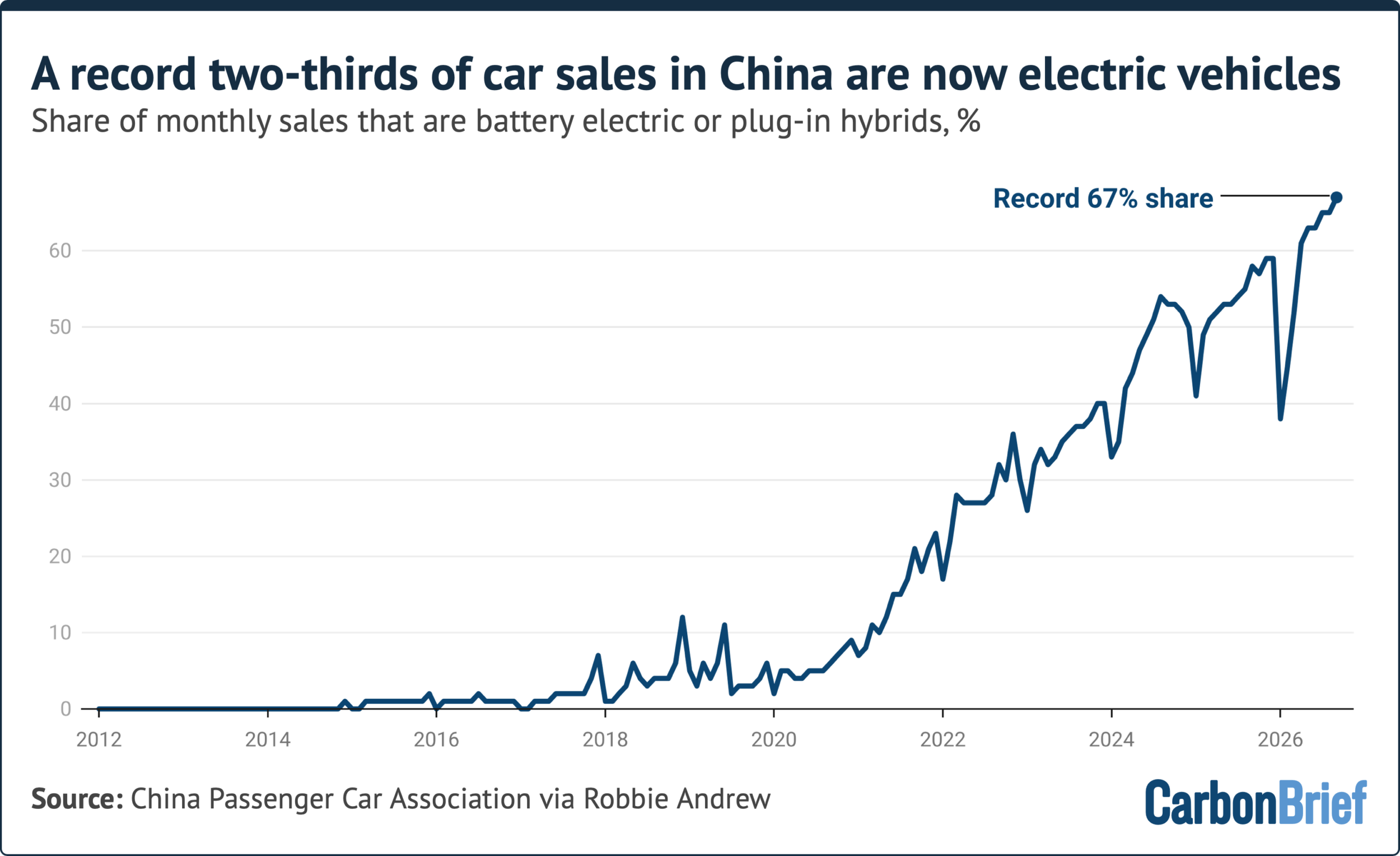
In a watershed moment for the global automotive industry, new-energy vehicles (NEVs)—encompassing battery electric vehicles (BEVs) and plug-in hybrids (PHEVs)—captured a staggering 67% of all new car sales in China during September 2026. This milestone, confirmed by data from the China Passenger Car Association (CPCA), represents the highest market penetration for electric-drive technology in the nation’s history. The achievement underscores a profound structural shift in the world’s largest car market, where the traditional internal combustion engine (ICE) is rapidly being relegated to the periphery of consumer choice.
The surge in market share for NEVs is particularly striking given that the overall automotive market in China has experienced a contraction. While fewer vehicles were sold in absolute terms compared to the same period in 2025, the composition of those sales has undergone a radical transformation. The decline in the broader market is being driven almost entirely by the accelerated obsolescence of fuel-only vehicles, which suffered a 43% year-on-year sales decline in September alone.
A Chronology of Transition: From Niche to Dominance
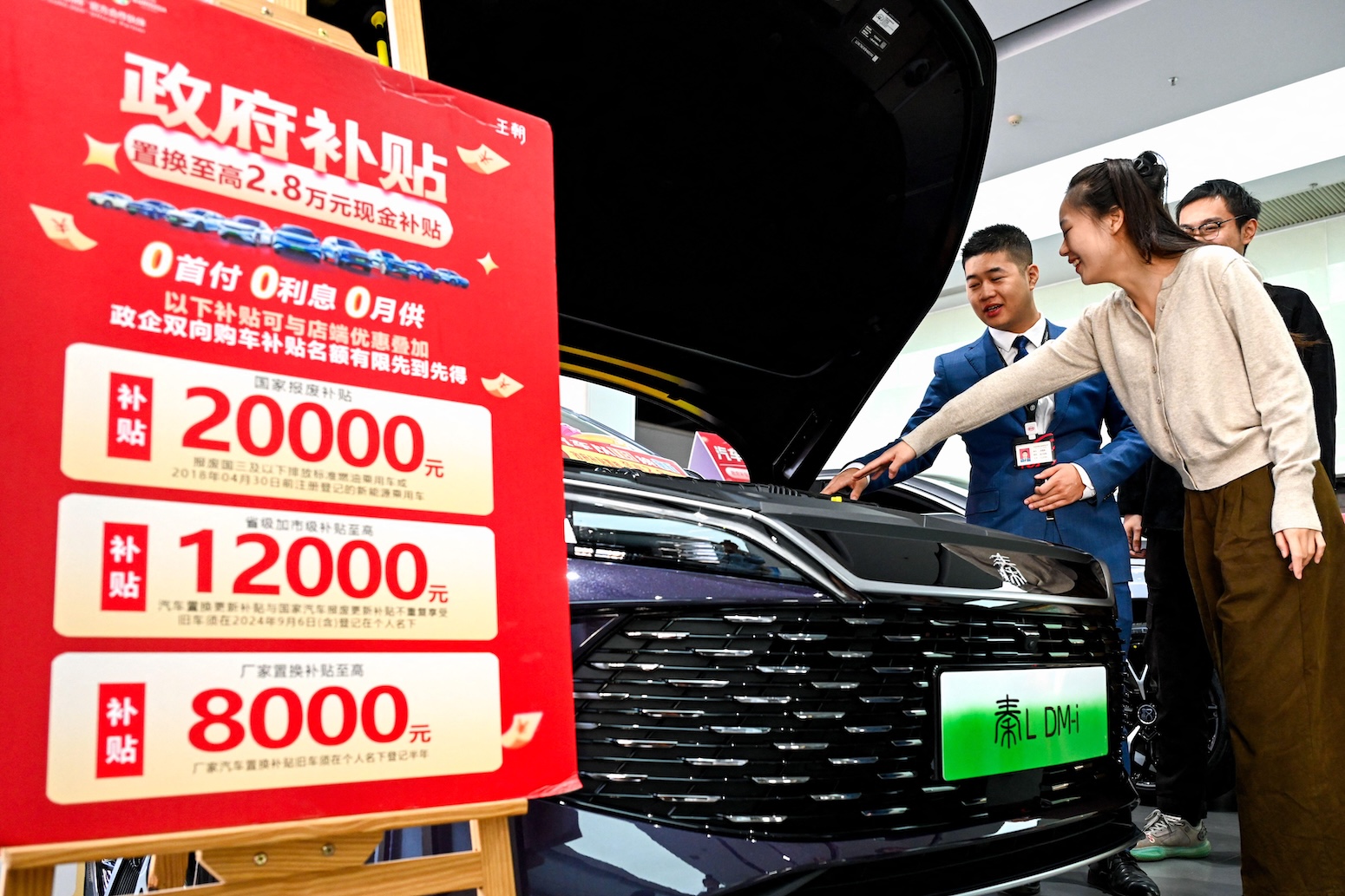
The trajectory of China’s automotive sector over the last six years serves as a case study in industrial transformation. In 2020, NEVs accounted for a mere 6% of new car sales. By early 2026, that figure had climbed to 58%, culminating in the record-breaking 67% peak seen in September. This rapid ascent was not linear; it faced a significant hurdle in January 2026, when NEV market share dipped to 39% following the expiration of a long-standing, comprehensive purchase tax exemption that had concluded in December 2025.
However, the market displayed remarkable resilience. Despite the cessation of major subsidies, consumers have increasingly gravitated toward electrified transport, a trend now being heavily influenced by the macroeconomic fallout of the ongoing Hormuz crisis. The instability in global oil markets, which has constrained energy supplies and elevated petrol prices, has acted as a powerful catalyst for consumers to abandon fossil-fuel-dependent vehicles in favor of electric alternatives.
The Hormuz Effect and Energy Security
The geopolitical tensions surrounding the Strait of Hormuz have sent shockwaves through global energy markets, and China—as the world’s largest importer of oil—has felt the impact acutely. According to customs data, China’s oil imports between January and September 2026 fell by 15% compared to the previous year, a reduction equivalent to approximately 470 million barrels.
This external pressure has accelerated domestic policy shifts and consumer behavior. Analysts suggest that the crisis has served as a validation of China’s long-term strategic investment in electric mobility. By decoupling road transport from oil dependence, the country is effectively insulating its economy from the volatility of international oil prices. Euan Graham, a senior energy analyst at the thinktank Ember, estimates that China’s expanding fleet of passenger NEVs has successfully displaced demand for 143 million barrels of oil since the onset of the Hormuz crisis. This displacement accounts for roughly 12% of the total reduction in China’s oil consumption during this period, turning what was once an environmental policy into a pillar of national energy security.
Data Analysis: The Decline of the Combustion Engine
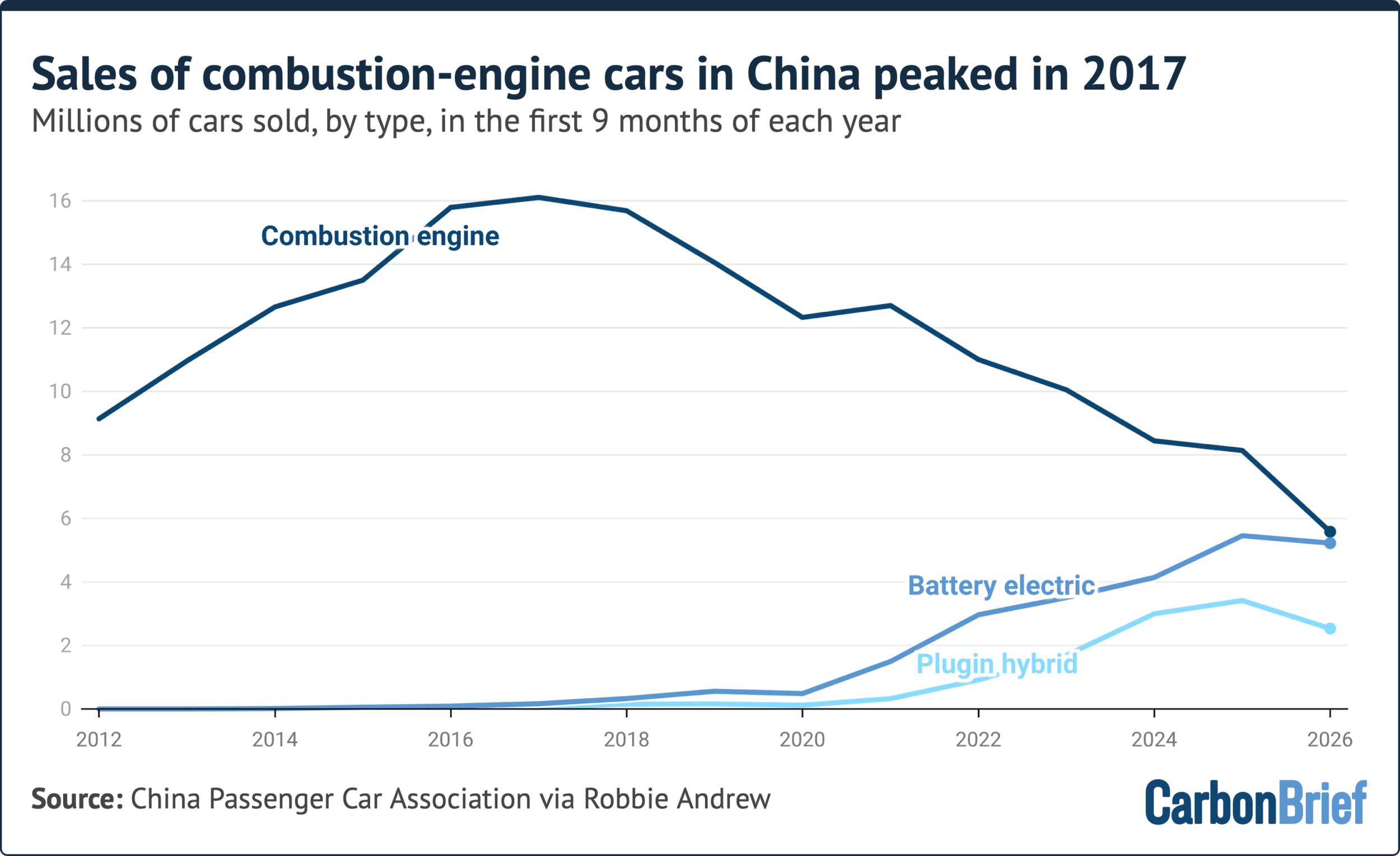
The divergence between the performance of NEVs and combustion-engine vehicles has become the defining feature of the Chinese automotive sector. Sales of fuel-only vehicles have been in a state of terminal decline since their peak in 2017, but the current year has seen a marked acceleration of this trend. In the first nine months of 2026, sales of combustion-engine cars plummeted by 31%.
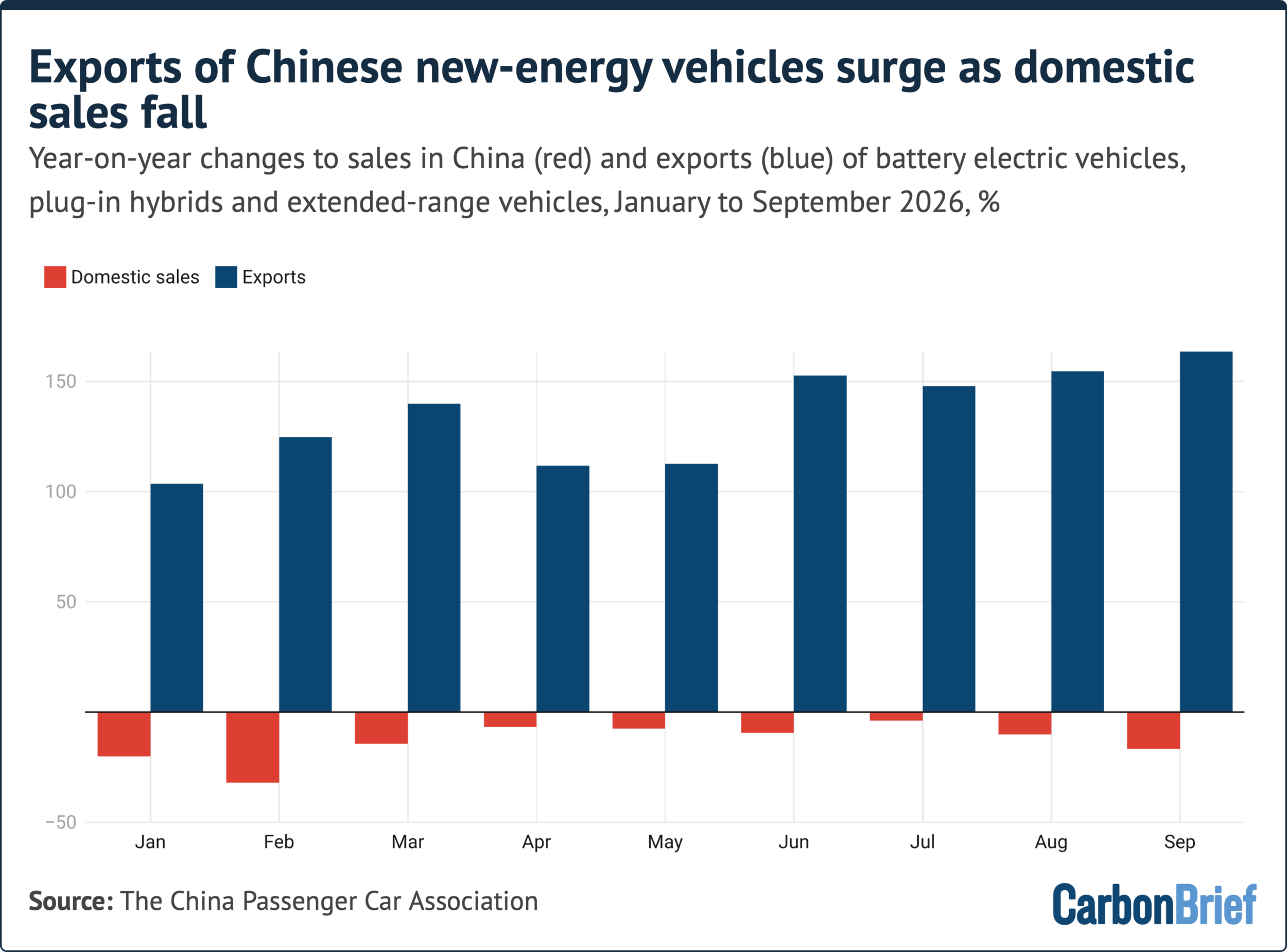
While the NEV segment has not been entirely immune to the broader economic slowdown, its performance has been significantly more robust. Battery electric vehicles, in particular, have demonstrated greater stability, recording only a 4% year-on-year decline in sales volume for the first three quarters of 2026, compared to a 26% drop for plug-in hybrids.
Consultants and industry observers point to several factors for this discrepancy. Zhang Yichao, a partner at AlixPartners, notes that aggressive government trade-in policies and a high-frequency cycle of new model releases have provided a "strong pipeline" of innovation, keeping consumer interest alive even in a lukewarm economic climate. Conversely, the combustion-engine market is suffering from a "demand pull-forward" effect, where consumers purchased vehicles in 2025 to beat the end of certain incentives, leaving less latent demand for the current year.
The Export Surge and Global Trade Friction
As domestic demand faces a period of cooling, Chinese automakers are increasingly looking toward international markets to sustain their high production capacities. Exports of NEVs more than doubled in 2026, serving as a vital release valve for the cut-throat domestic competition that has compressed profit margins for many manufacturers. In September alone, China exported 558,000 NEVs, a figure that highlights the global ambitions of Chinese brands.
This export surge has triggered a significant trade backlash. The European Union, a key target for Chinese manufacturers, has implemented tariffs on imports of electric vehicles, with further restrictions on hybrid technology currently under discussion. Similar protectionist measures have been adopted in markets like Mexico and Turkey, as nations attempt to shield their domestic industries from the rapid influx of competitively priced Chinese EVs.
In a move that has left analysts divided, the Chinese government has begun to modify its own export incentives, including potential cuts to VAT export rebates. Some experts argue that these measures will have a negligible impact on overall export volumes, while others believe that the resulting rise in the retail price of exported vehicles could slow the expansion of Chinese brands in Western markets. The policy shift suggests a delicate balancing act: the government aims to manage global trade tensions while continuing to prioritize the domestic electrification of its transport sector.
Implications for the Future
The long-term outlook for the Chinese automotive market remains a subject of intense debate among industry analysts. While the growth in NEV market share has been unprecedented, some experts believe the market is approaching a ceiling. Zhang Yichao suggests that an 80% market share for NEVs may represent the upper limit, as certain premium segments and specific industrial use cases may continue to require the range and refueling characteristics of internal combustion engines for the foreseeable future.

Nevertheless, the shift observed in September 2026 is unlikely to be reversed. The combination of sustained high energy costs, maturing technology, and the strategic imperative of energy security ensures that the transition to electric mobility remains central to China’s industrial policy. The "Hormuz effect" has effectively compressed a decade of transition into a few short months, forcing manufacturers and consumers alike to adapt to a reality where electric power is no longer an alternative, but the standard.
As China moves toward the end of its 15th five-year plan cycle, the focus will likely shift from market acquisition to the integration of these vehicles into a wider smart-grid ecosystem. The challenge for the next phase of development will be maintaining this momentum while navigating a increasingly complex global trade landscape and ensuring that the infrastructure—ranging from charging networks to battery recycling facilities—can support such a rapid and massive transition in the nation’s primary mode of transport. The data from September 2026 stands as a testament to the speed of this evolution, signaling that the era of the combustion engine in China is nearing its conclusion.