
The fundamental mechanisms of decision-making have long been observed through the lens of primate studies. For decades, neurobiologists relied on the random-dot-motion task—a gold-standard experiment where subjects observe flickering, drifting specks—to understand how the brain accumulates evidence. In primates, this process involves the neocortex, where neurons fire with increasing intensity until a threshold is crossed, signaling a choice. However, new research published in the journal Science indicates that the avian brain, which lacks a neocortex entirely, manages to achieve the same cognitive outcome with significantly higher efficiency, processing information at speeds roughly double those of their mammalian counterparts.
A Divergent Evolutionary Path
The study, led by neurobiologist Andreas Nieder and his colleague Philipp Schmidbauer at the University of Tübingen, sought to resolve a long-standing mystery in neuroscience: how a differently organized brain achieves comparable, or even superior, cognitive performance. Birds and mammals diverged from a common ancestor over 360 million years ago, leading to vastly different neuroanatomical structures. While the mammalian brain is defined by a six-layered neocortex, the avian brain is characterized by dense, non-layered clusters of neurons.
To test whether this structural difference hindered cognitive capacity, the researchers trained two carrion crows to perform the exact random-dot-motion task used in primate research. The birds were placed before a touch-sensitive monitor and presented with a field of white dots on a black background. A fraction of these dots moved in a coherent direction, while the rest flickered randomly. The crows were required to indicate the direction of the movement by pecking at designated targets. Success was rewarded with a mealworm, providing a consistent incentive structure similar to that used in previous monkey studies.
Chronology of the Experiment
The experimental phase was designed to mirror primate trials as closely as possible, with the primary variable being the method of response—pecking for birds versus eye movement for primates. The researchers presented the stimuli at varying degrees of difficulty, ranging from 81 percent coherence (high ease) to 3 percent coherence (high difficulty), alongside a zero-percent condition where no coherent direction existed.
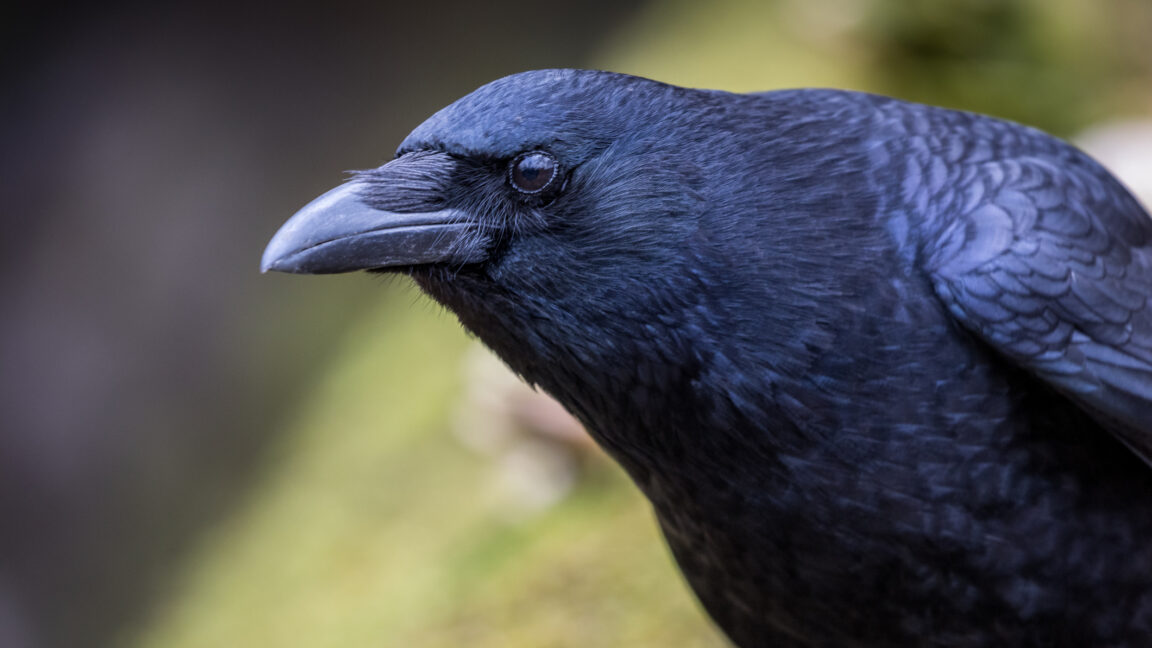
The data revealed a striking temporal advantage for the crows. From the onset of the visual stimulus to the initiation of the physical movement, the crows averaged 235 milliseconds. In comparison, established data from three separate primate studies showed reaction times of 410, 490, and 600 milliseconds for the same task. Critically, this speed did not result in a degradation of accuracy. The crows performed with a level of precision that matched or exceeded human and primate subjects, demonstrating that their speed was not a byproduct of impulsive guessing but rather a highly optimized processing capability.
Neuronal Evidence Accumulation
To understand the underlying physiology, the team recorded the activity of 248 neurons in the nidopallium caudolaterale (NCL). This region is widely recognized as the avian functional equivalent of the primate prefrontal cortex. The recordings provided direct evidence of "decision variables"—the mathematical process of accumulating sensory data until a threshold for action is met.
Roughly 25 percent of the sampled neurons showed distinct firing patterns correlated with the specific direction the bird was about to choose. These signals appeared approximately 70 milliseconds after the dots were displayed, and roughly 170 milliseconds before the bird initiated its physical response. This timeline confirms that the crows are indeed accumulating evidence in a manner functionally identical to the primate neocortex, despite the radical differences in brain architecture. This suggests that evolution has independently arrived at the same efficient physiological mechanism for decision-making twice.
The Mechanisms of Speed
The question of why avian brains operate at such higher velocities remains a subject of ongoing investigation. Dr. Nieder and his team posit that the speed is likely not the result of a single "faster" neural pathway, but rather a cascade of biological advantages.
- Physical Miniaturization: Flight necessitates strict weight constraints, resulting in smaller brains with more densely packed neurons. Because these brains are smaller, the axons—the fiber-optic-like connections between neurons—are shorter. In the realm of neural signaling, shorter distances equate to faster transmission times.
- Thermal Advantage: Birds maintain a significantly higher baseline body temperature than mammals, often ranging between 41 and 42 degrees Celsius, compared to the human norm of 36.6 degrees. This thermal elevation accelerates chemical reactions, including the opening and closing of ion channels and the diffusion of neurotransmitters across the synaptic cleft.
- Integrated Biological Efficiency: This "life in the fast lane" appears to extend beyond the brain. The cardiovascular and respiratory systems of birds are similarly optimized for rapid performance, suggesting that the entire avian physiological architecture is tuned for high-speed, high-stakes environmental interaction.
Implications and Scientific Caveats
While these findings are groundbreaking, researchers acknowledge certain constraints. The study sample size of two birds is small, though it is consistent with the standard practice for complex electrophysiological studies in primates, where the intensive nature of training and recording makes larger cohorts difficult to manage. Furthermore, it remains unclear whether these results are representative of all avian species or if they are unique to the highly intelligent corvid family.

Corvids, including crows and ravens, have long been documented as having exceptional cognitive flexibility and problem-solving abilities. It is possible that the speed observed is a trait specific to this family of birds, or perhaps even an outlier performance within the species. Dr. Nieder notes that because other, less intelligent bird species are difficult to train for such complex tasks, the current evidence is limited to the "geniuses" of the bird world.
Broader Impact on Cognitive Science
The discovery that the NCL in birds performs the same decision-making tasks as the primate prefrontal cortex, despite lacking the layered structure of the neocortex, challenges the long-held assumption that a layered cortex is a prerequisite for high-level cognition. This finding suggests that "intelligence" is not tied to a specific anatomical blueprint but can emerge from diverse, convergent evolutionary designs.
From an engineering perspective, these results provide a fascinating case study in system optimization. By achieving high-accuracy decisions in a fraction of the time required by primates, the crow brain demonstrates a level of processing efficiency that is rarely seen in mammalian biological systems. As the field of artificial intelligence continues to seek more efficient models for decision-making, the study of the avian brain may offer new insights into how to pack high-speed computational power into compact, energy-efficient architectures.
The research also underscores the necessity of moving beyond the primate-centric view of neurobiology. As scientists continue to explore the capabilities of non-mammalian brains, the traditional hierarchy of "intelligent" vs. "simple" organisms is increasingly being replaced by a more nuanced understanding of how different species have solved the universal challenges of survival. In the case of the crow, the solution was not to mimic the architecture of the primate, but to build a system that—through thermal optimization and minimized physical distances—could outpace the fastest mammalian brains on the planet.
Moving forward, the scientific community is expected to focus on whether this speed advantage applies to other cognitive domains, such as memory recall or spatial navigation. If the same high-speed, high-efficiency processing holds true across different cognitive functions, it would necessitate a complete re-evaluation of the energetic costs and evolutionary benefits of avian brain structure. For now, the crow stands as a testament to the fact that, in the natural world, biological efficiency can lead to performance levels that defy our traditional expectations of cognitive speed.