Neil Young Files $10 Million Copyright Infringement Lawsuit Against Donald Trump Campaign Over Unauthorized Use of Rockin in the Free World

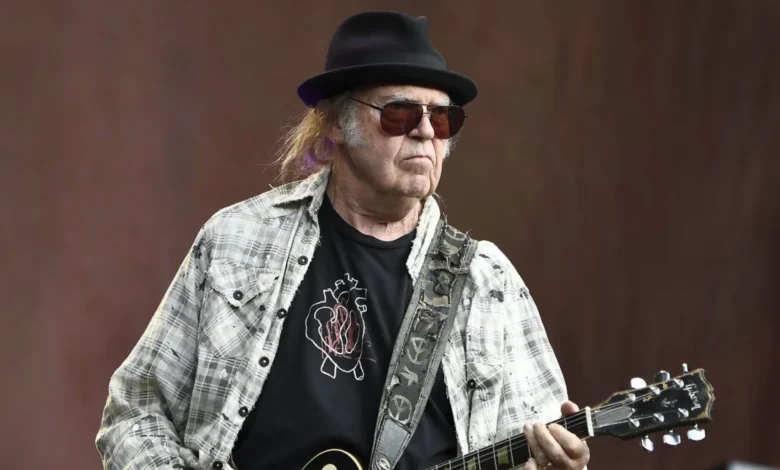
Legendary singer-songwriter Neil Young has escalated his long-running legal battle with Donald Trump, filing a sweeping $10 million copyright infringement lawsuit against the Trump 47 Committee Inc. The legal action, lodged in the U.S. District Court for the Eastern District of Virginia, centers on the unpermitted use of Young’s seminal 1989 anthem, “Rockin’ in the Free World,” as walkup and rally music during political events.
For followers of both the music industry and American politics, the development feels distinctly familiar. This marks the second time Young has taken legal action against Trump over the exact same song. The current lawsuit alleges not only fresh copyright violations at recent political rallies—such as an October event in Youngstown, Ohio—but also a direct breach of a prior settlement agreement reached between Young and the Trump campaign apparatus in 2020.
As artists and political campaigns increasingly clash over the boundaries of copyright law, public performance rights, and brand association, this high-profile case highlights the complex intersection of intellectual property and modern political campaigning.
Main Facts of the Lawsuit and Allegations
According to court documents reviewed by legal analysts and media outlets, Neil Young’s legal team is pursuing both financial restitution and injunctive relief. The lawsuit specifically asks the federal court to award $10 million in statutory and actual damages for copyright infringement, alongside a permanent injunction barring the Trump campaign and its affiliated political committees from ever publicly performing the track for political purposes.
The complaint details that the song has been played repeatedly at various rallies designed to mobilize conservative and Republican voters. Particular emphasis is placed on an October 12 rally in Youngstown, Ohio, where the recording echoed through the arena as a walkup track.
Central to Young’s complaint is the assertion that the campaign’s continued utilization of the track is entirely willful. The lawsuit explicitly states that Donald J. Trump was personally aware—both during previous campaigns and throughout the current election cycle—that securing a proper license was mandatory to lawfully play the song at public events. Furthermore, the filing underscores that Young has never granted such a license, nor would he ever consent to the association.
Beyond traditional copyright claims, the lawsuit introduces arguments regarding reputational harm. The filing contends that Young has suffered direct damage to his personal brand, artistic integrity, and public reputation due to the persistent implication among voters and media observers that he endorses Donald Trump’s political platform or candidacy. Given Young’s decades-long career as an outspoken political activist and progressive voice, such associations are argued to cause tangible harm to his commercial and artistic standing.
A History of Legal Conflict: The 2020 Precedent
To fully understand the gravity of the current $10 million lawsuit, one must examine the legal history between the musician and the former president. The animosity over “Rockin’ in the Free World” dates back years, finding its first major courtroom expression during the turbulent 2020 presidential election cycle.
In August 2020, Young filed a federal copyright infringement lawsuit against Donald J. Trump for President Inc. in the U.S. District Court for the Southern District of New York. That initial complaint targeted the unauthorized use of two specific tracks: “Rockin’ in the Free World” and “Devil’s Sidewalk.” At the time, the campaign had utilized the songs at high-profile events, most notably during a controversial campaign rally in Tulsa, Oklahoma.
Unlike many protracted celebrity-versus-politician legal disputes, the 2020 litigation was resolved with surprising swiftness. Shortly after being formally served with the lawsuit, the Trump campaign corporation mounted virtually no substantive legal defense. Instead, the parties reached an out-of-court settlement. While the specific financial terms of that 2020 agreement remain confidential, the functional outcome was explicit: the campaign organization agreed to cease and desist all unauthorized public performances of Young’s catalog, acknowledging that future usage required explicit licensing and permission.
However, the formation of new campaign entities—such as the Trump 47 Committee Inc.—appears to have created a loophole or a renewed willingness within the political operation to utilize the track once again. Young’s latest legal filing argues that the current violations directly bypass the spirit and terms of the 2020 settlement, prompting this aggressive financial escalation.
The Ideological Paradox of the Song
Perhaps the most compelling dimension of the dispute is the stark ideological mismatch between the song’s lyrical content and its utilization at conservative political rallies. In the legal filing, Young’s attorneys took unusual care to articulate the thematic gravity of the composition, positioning the track as the structural antithesis of the political platform it has accompanied.
Released in 1989 on Young’s album Freedom, “Rockin’ in the Free World” is widely recognized by music critics as a masterpiece of satirical protest music. The newly filed lawsuit describes the track as “a blistering anthem that contrasts the hollow promises of American political rhetoric with the harsh realities faced by the poor, homeless, and forgotten.”
The legal brief highlights the song’s gritty, street-level vignettes: a mother discarding her baby, drug addicts lost in despair, and urban decay accumulating in the shadows of national prosperity. The recurring chorus—featuring the celebratory refrain “Keep on rockin’ in the free world”—is deployed with heavy, blistering irony, highlighting a national freedom that remains inaccessible to marginalized communities.
Throughout his career, Neil Young has been remarkably consistent in his political stances. A Canadian-born artist who has spent decades living and working in the United States, Young has repeatedly used his platform to champion environmentalism, native rights, and progressive political candidates, while vocalizing fierce opposition to conservative administrations. Given this documented history, political scientists and cultural commentators have frequently expressed bafflement over why political campaigns repeatedly select polarizing protest anthems without clearing the rights—a phenomenon that routinely results in public embarrassment and legal liability.
The Broader Context: Musicians vs. Politicians
Neil Young is far from the only high-profile artist to lock horns with political campaigns over unauthorized musical usage. Over the past several election cycles, the intersection of copyright law and campaign rallies has transformed into a regular battleground, with musical icons routinely stepping forward to demand that politicians cease using their work.
Prominent artists—ranging from rock legends like The Rolling Stones, Queen, and Tom Petty’s estate to pop stars like Rihanna, Adele, and Beyoncé—have frequently issued cease-and-desist letters or public rebukes after discovering their songs featured at political rallies.
The legal mechanisms governing these disputes are rooted in United States copyright law, specifically the rights of public performance. While political venues often purchase blanket licenses from Performing Rights Organizations (PROs) such as ASCAP and BMI to cover general musical playback, these standard licenses rarely suffice for campaign rallies. Legal experts note that political campaigns often require specific "political use" licenses or direct synchronization permissions from copyright holders and publishers. Furthermore, artists frequently rely on the federal Lanham Act, claiming false endorsement or trademark dilution when their music is paired with political ideologies they oppose.
Despite these legal precedents and the frequent public relations backlash, political campaigns continue to utilize unauthorized music. Some campaigns rely on the defense that large arenas possess umbrella performance licenses, while others appear to calculate that the promotional value of a high-energy track outweighs the risk of eventual legal settlements. In the case of the Trump administration and its successor committees, critics have often pointed to a broader strategy of cultural confrontation, where campaigns actively utilize contested pop culture artifacts and subsequently dismiss or mock the ensuing protests from liberal artists on social media.
Official Responses and Immediate Implications
As of this reporting, representatives for the Trump 47 Committee Inc. have not issued a formal, comprehensive legal response to the newly filed $10 million lawsuit in the U.S. District Court for the Eastern District of Virginia. Historically, political action committees facing such intellectual property challenges often seek to resolve matters swiftly through arbitration or settlement, much like the 2020 campaign organization did.
However, the sheer financial demand of $10 million signals that Neil Young’s legal representation is looking to impose a substantial deterrent. Rather than a modest settlement or a quiet compliance letter, this multimillion-dollar figure aims to establish a clear punitive boundary against repeat copyright infractions.
The implications of this lawsuit extend far beyond the immediate parties involved. As the midterm and general election cycles progress, legal scholars will be closely monitoring the Virginia federal court to see how judges interpret the lingering obligations of past settlement agreements when transferred to newly formed campaign committees. If Young successfully secures his requested injunction or extracts a massive financial penalty, it could fundamentally alter how political campaigns curate their rally playlists, forcing them to institute rigorous compliance protocols to avoid catastrophic copyright liabilities.
For Neil Young, the lawsuit represents a continuation of a lifelong commitment to artistic autonomy and political integrity. Whether the case ultimately heads to a rare trial or concludes with another negotiated settlement, it reinforces the enduring tension between the commercial protections of creators and the high-stakes world of modern American political pageantry.
Related posts: